

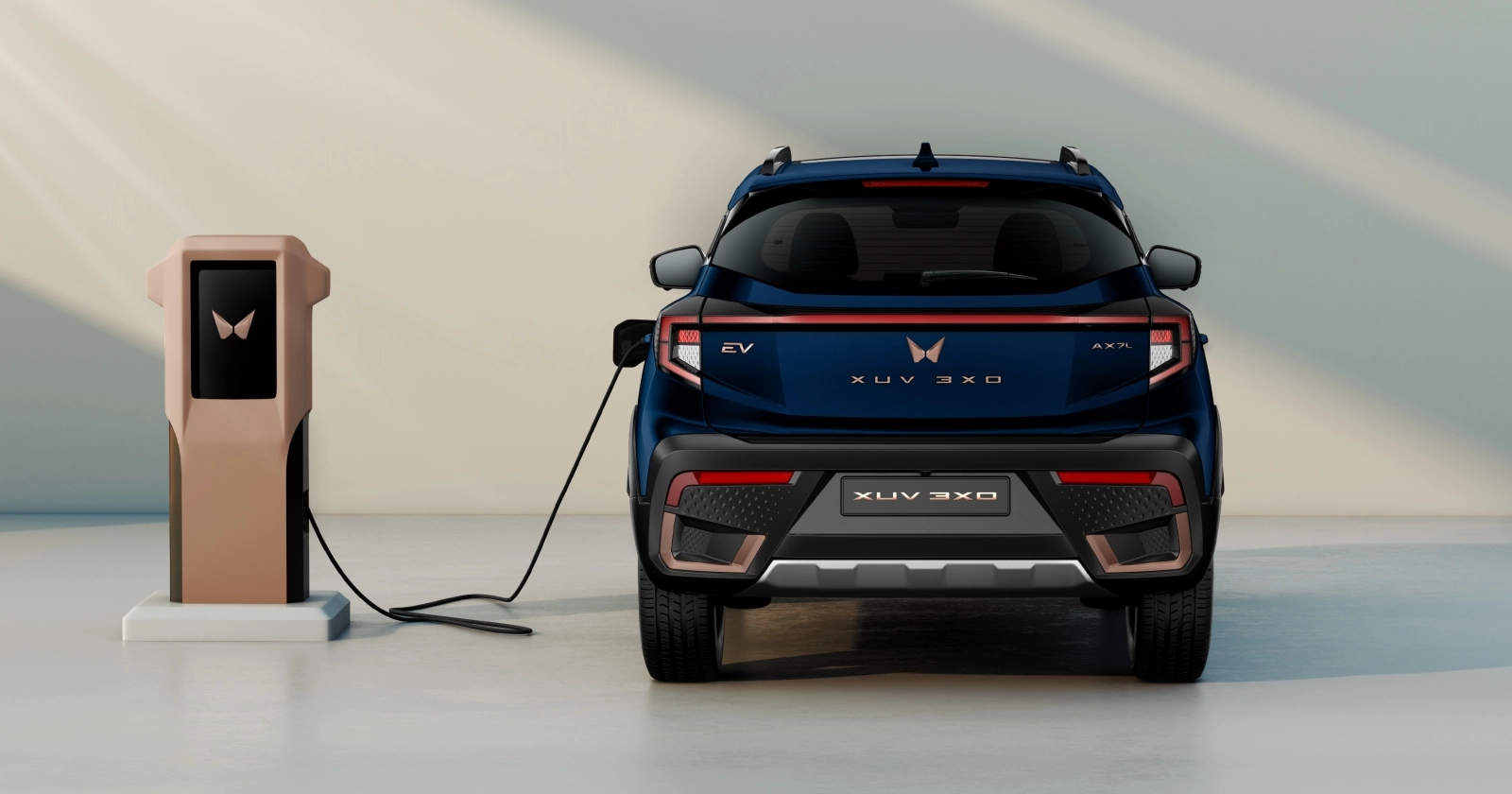
To secure EV-era inputs, the Rare Earth Permanent Magnets initiative will be supported through dedicated Rare Earth Corridors in Odisha, Kerala, Andhra Pradesh and Tamil Nadu to promote mining, processing, R&D and manufacturing.

Share Post
To secure EV-era inputs, the Rare Earth Permanent Magnets initiative will be supported through dedicated Rare Earth Corridors in Odisha, Kerala, Andhra Pradesh and Tamil Nadu to promote mining, processing, R&D and manufacturing.
Budget 2026 reinforces priorities for India’s automobile and auto-components sector, i.e., vehicles are increasingly electrified and software-led, and supply chains remain exposed to swings in critical materials and imported sub-systems. The Finance Bill and customs changes respond with a familiar, but consequential mix of policy continuity for clean mobility, tariff simplification, and extensions of key customs reliefs that shape domestic cost structures and localisation plans.
Budget 2026 strengthens the “future-ready” manufacturing stack behind next-generation vehicles. The India Semiconductor Mission will advance through ISM 2.0 to build domestic capability in equipment and materials, develop full-stack Indian IP, and create industry-led R&D and training centres.
Also read: No Fireworks for Auto, but Some Fuel for EVs and Infrastructure
The Electronics Components Manufacturing Scheme, launched in April 2025, is proposed to be scaled up with the outlay raised from ₹22,919 crore to ₹40,000 crore, reflecting strong investment traction. To secure EV-era inputs, the Rare Earth Permanent Magnets initiative will be supported through dedicated Rare Earth Corridors in Odisha, Kerala, Andhra Pradesh and Tamil Nadu to promote mining, processing, R&D and manufacturing. Alongside, sustained public capex, spanning freight corridors, waterways, city economic regions and public transport (including e-buses) is expected to make commercial vehicles and buses the near-term demand beneficiaries.
Also read: Budget 2026: Auto PLI Allocation Rises to ₹5,940 Crore, No Policy Change
Over the last few years, India’s auto policy has leaned heavily on electrification, through demand-side programmes for EV adoption and production-linked incentives for EV and component manufacturers. Budget 2026 continues that direction by focusing on manufacturing economies, particularly around batteries. A critical extension in the customs framework is the continued support for lithium‑ion cell manufacturing till 2028 and widening of customs duty benefits for capital goods used for Battery Energy Storage Systems (BESS); as the same is important because the ecosystem (cells, separators, chemicals, coatings) services both EVs and storage. Further, the concessional 5% import duty on lithium‑ion cells has been extended till 2028 and new exemption from import duty for Compounds, inorganic or organic of rare earth metals, provides a crucial bridge until India’s domestic cell‑manufacturing ecosystem scales up.
Even as EV penetration rises, India’s large internal-combustion fleet ensures continuing demand for emission-control systems. Inputs tied to catalytic converters, such as washcoat materials (including zeolite and cerium/ceria-zirconia compounds) and precious-metal-linked catalyst value chains are provided with customs duty exemptions. This underscores that localization is not just about batteries; it extends to legacy component chains where India can build deeper capability, including recycling and recovery loops.
The broader customs package also provides benefits to upstream inputs that feed auto components, i.e., graphite (natural and artificial), cobalt forms, copper and alloys, polymers such as EPDM and PVC, and metal scrap streams supporting recycling. For domestic manufacturers, this matters because vehicles increasingly combine metal, polymer, electronics and chemistry at scale will support competitiveness.
A major feature of the 2026 package is tariff simplification by shifting effective duty rates from exemption notifications into the tariff schedule and rationalizing entries through removals and mergers. For OEMs and Tier‑1 suppliers, this reduces classification ambiguity and makes landed-cost planning more predictable. In the same spirit, the Finance Bill introduces more granular tariff lines for select items in Chapters 84 and 85, reflecting the rising electronics and climate-control content in modern vehicles.
Bottom line: Budget 2026 may not be a single “big-bang” announcement, but it reinforces the direction of travel with deeper localization, clearer tariff architecture, and a more resilient supply chain. For domestic OEMs, the immediate task is to re-cost imports and re-check classifications; for Tier‑1s and MSMEs, the opportunity lies in moving upstream into battery sub-systems, catalyst supply chains, engineered polymers and high-quality components aligned to the EV transition.
(Written by Saurabh Agarwal, Partner EY; Parul Nagpal, Partner EY; and Soumya Murthy, Director EY)

Nembharat App Announced with Zero Commission Model for Drivers
Acko Drive Team 23 Feb, 2026, 12:10 PM IST
Automakers Pursue Eyes-Off Driving Systems Amid Debate on Viability
Acko Drive Team 23 Feb, 2026, 12:06 PM IST
Mumbai to Get Unified Public Transport Services Across Rail, Metro, Bus, Taxi Networks
Acko Drive Team 23 Feb, 2026, 10:42 AM IST
New MG Plug-In Hybrid SUV Spotted In India For First Time
Acko Drive Team 23 Feb, 2026, 10:35 AM IST
Omega Seiki Files Patent for E-Rickshaw with Air Conditioner
Acko Drive Team 23 Feb, 2026, 8:02 AM IST

Looking for a new car?
We promise the best car deals and earliest delivery!
