
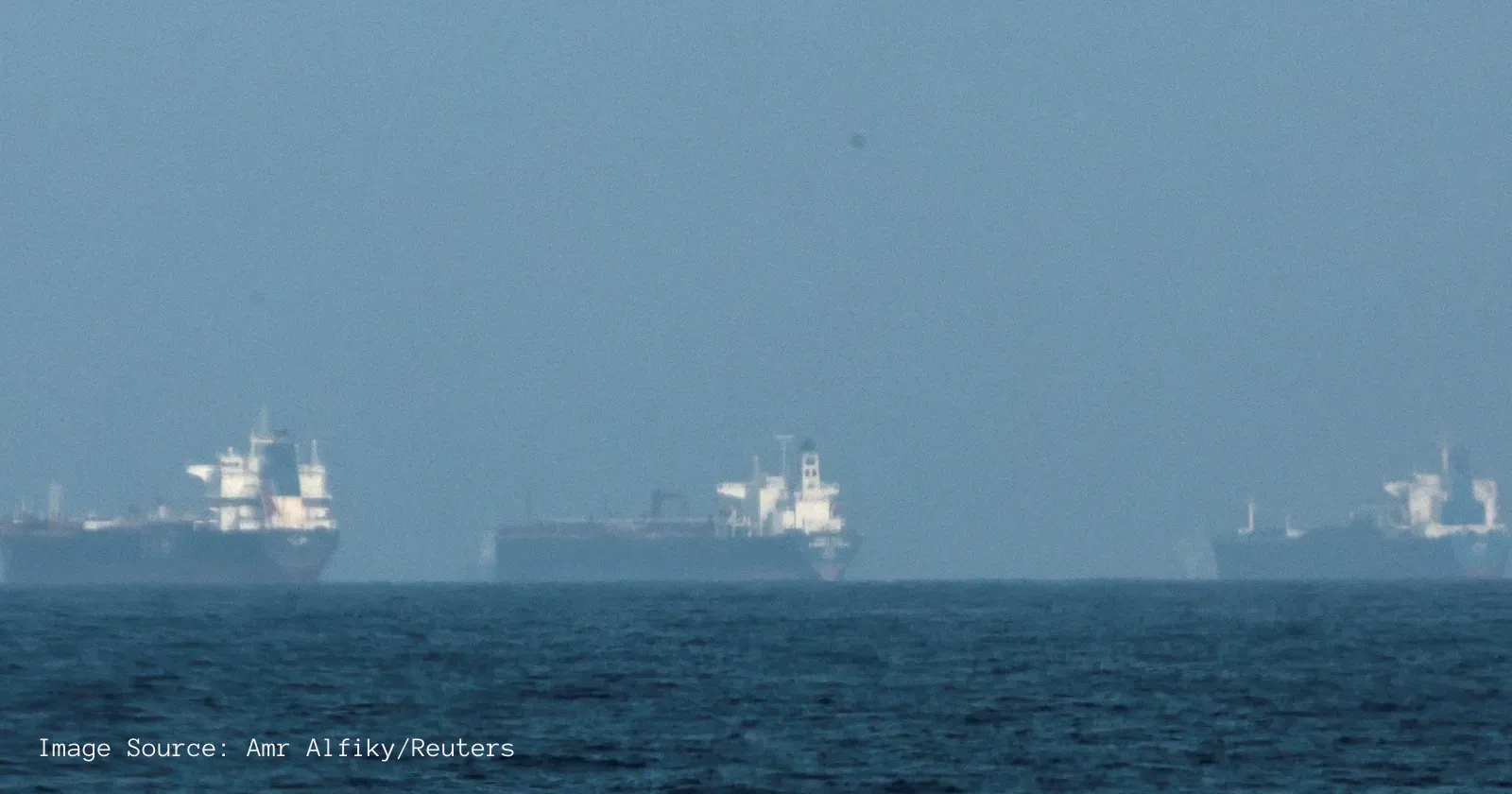
Iran has reprimanded all countries, except China, from passing through the Strait of Hormuz — a key passage for global maritime trade.


Share Post
Iran has reprimanded all countries, except China, from passing through the Strait of Hormuz — a key passage for global maritime trade.
Several automakers in India have begun postponing vehicle shipments to the Middle East and North Africa (MENA) as rising geopolitical tensions disrupt shipping routes and push freight costs higher, according to a recent report by Bloomberg.
As the conflict involving the United States, Israel and Iran entered its sixth day, companies including Tata Motors, Maruti Suzuki, Hyundai and the Volkswagen Group have held back dispatches of passenger vehicles and commercial vehicles to the region, the people said.
The move is aimed at avoiding additional shipping expenses that have emerged amid the crisis. Shipping companies have reportedly introduced emergency surcharges of up to $2,000 (approx. ₹1.80 lakh) per container, while war-risk insurance premiums have also increased as container availability tightens.
Speaking on this crisis, Vinnie Mehta, Director General ACMA, said, “While the crisis in the Middle East and rising crude prices may create some near-term cost pressures, the industry today is far more resilient and better prepared to manage volatility. Demand fundamentals remain strong, and we expect growth momentum to continue. At the same time, we will continue to closely monitor geopolitical developments and global energy trends that could impact the sector.”
At the centre of the disruption is the Strait of Hormuz — a narrow maritime passage at the entrance to the Persian Gulf and one of the world’s most critical trade corridors. Iran warned earlier this week that ships attempting to pass through the waterway could face attacks, effectively rendering the route unsafe for commercial vessels.
For automakers, rerouting cargo around southern Africa would significantly increase transportation costs. As a result, several companies have opted to temporarily delay shipments bound for the region rather than absorb the additional expenses.
According to Bloomberg, the industry believes that most automakers can typically pause exports for around two to three weeks before logistical pressures start to build. After that point, limited storage space and higher working-capital requirements could become a concern. A prolonged disruption may also affect sales, given that the MENA region is an important export market for India’s automobile industry.
Two-wheeler manufacturer Bajaj Auto has already halted shipments to Gulf countries, which account for roughly 3 percent of its export volumes, one person said. Exports to certain African markets have also been affected because of container shortages and challenges in berthing ships at ports.
Also READ: MRF Inks ₹5,300 Crore Tyre Plant MOU In Tamil Nadu
During a recent virtual media interaction on March 1, Maruti Suzuki said that the Middle East contributed about 12.5 percent of its exports for the financial year ended March 31. The main concern for automakers is the potential increase in logistics costs, which could compress margins if the conflict continues for an extended period. Freight expenses usually account for around 1 to 3 percent of revenue for most automakers, but those costs are expected to rise due to vessel rerouting and higher insurance premiums.
Tyre manufacturers could face additional pressure as well, given their reliance on petroleum-based raw materials. Any rise in crude oil prices tends to push up input costs for the sector. According to a recent report by CRISIL, nearly half of the tyre industry’s operating costs are tied to crude oil prices. While manufacturers can offset some of the increase by raising product prices, the pass-through is not always immediate.
This delay is particularly evident in the OEM segment, which accounts for roughly 35% of industry revenue, where price adjustments tend to take longer compared with the replacement tyre market. These concerns have also been reflected in equity markets with the NSE Nifty Auto Index fallen about 3.9 percent since the conflict escalated over the weekend.

The ePlane Company Partners With HENSOLDT Avionics For Advanced Electronics Management For Upcoming e200X eVTOL Aircraft
Acko Drive Team 5 Mar, 2026, 2:53 PM IST
Indian OEMs Delay Shipments to Middle East, Africa as Geopolitical Tensions Intensify
Acko Drive Team 5 Mar, 2026, 2:29 PM IST
Ultraviolette F77 & X-47 Electric Motorcycles Introduced With BaaS, Prices Now Start At ₹1.49 Lakh
Acko Drive Team 5 Mar, 2026, 11:39 AM IST
MG e-Hub Becomes India’s Largest EV Charging App With 22,500 Charging Points
Acko Drive Team 5 Mar, 2026, 11:00 AM IST
New-Generation Lexus ES India Launch Confirmed For March 20
Acko Drive Team 5 Mar, 2026, 11:00 AM IST

Looking for a new car?
We promise the best car deals and earliest delivery!
