
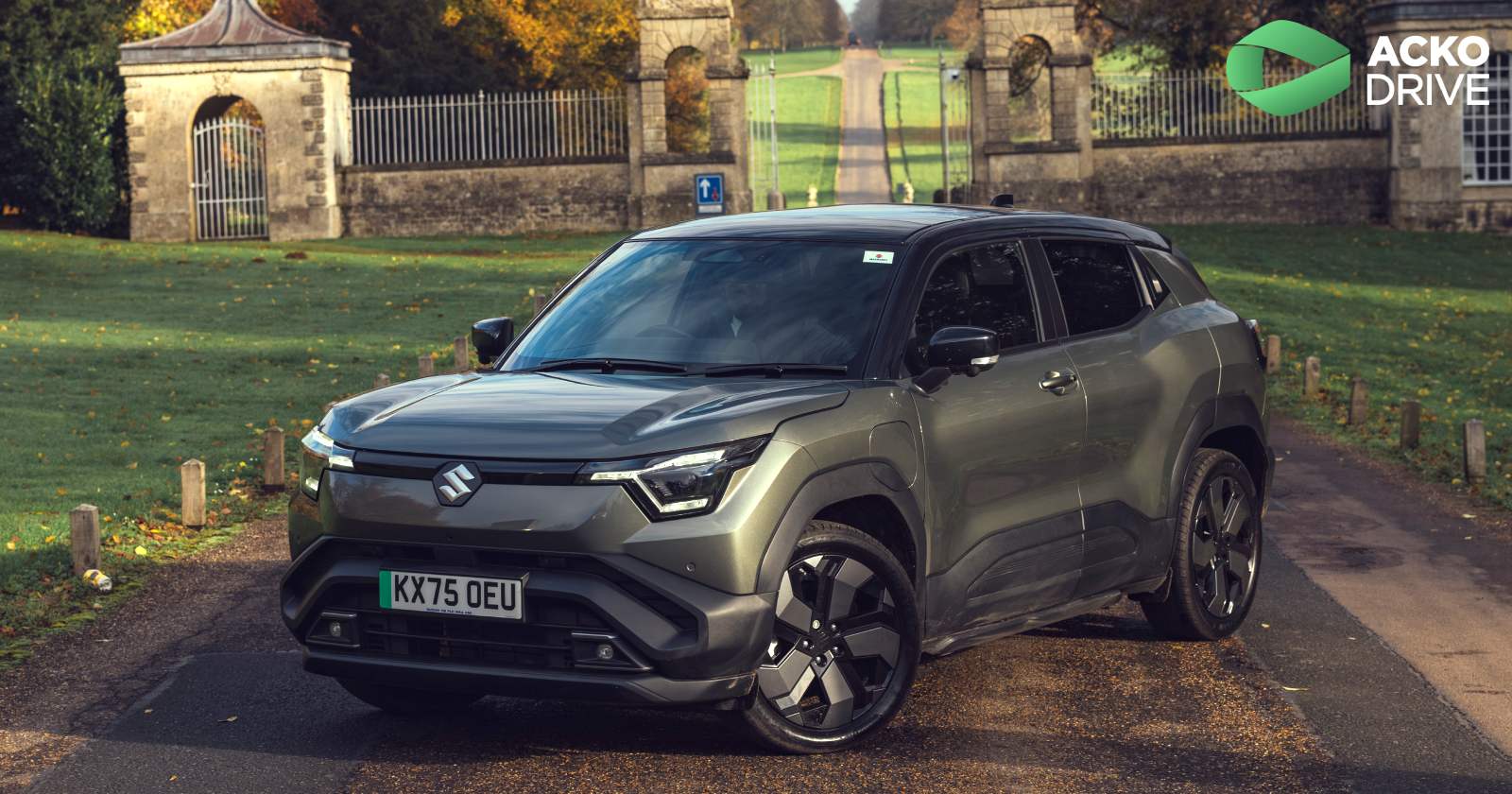
The eVitara is Maruti Suzuki's first EV and though it's only made in India, it hasn't been launched yet in our market. So, what's it like and how is it to drive? Is it worth the wait? The review tells all!


Share Post
The eVitara is Maruti Suzuki's first EV and though it's only made in India, it hasn't been launched yet in our market. So, what's it like and how is it to drive? Is it worth the wait? The review tells all!

The Maruti Suzuki e-Vitara arrives as a significant milestone for both Suzuki and the Indian automotive market. This is Suzuki's first electric vehicle globally, and it's exclusively manufactured in India for over 100 countries worldwide. The car was first revealed at the Auto Expo in January 2025, and now it's ready to take on the competitive compact electric SUV segment alongside rivals like the Hyundai Creta Electric, Mahindra BE 6, Tata Curvv EV, and MG Windsor.
The e-Vitara is built on Suzuki's new HEARTECT-e platform, an EV-specific architecture that will underpin multiple electric models across Suzuki's global lineup and Toyota's Urban Cruiser variant. The platform's significance goes beyond just this one car—it signals India's growing role as a manufacturing hub for global electric mobility. Batteries are sourced from BYD, and the UK-specification cars I drove are nearly identical to the India-spec variants coming to the market.
For the Indian market, the e-Vitara will arrive with two battery options: 49 kWh and 61 kWh. While export markets receive an all-wheel-drive variant (called AllGrip-e), India will get a single-motor front-wheel-drive setup. The 61 kWh variant is claimed to deliver over 500 km of range, though we'll await official ARAI figures.
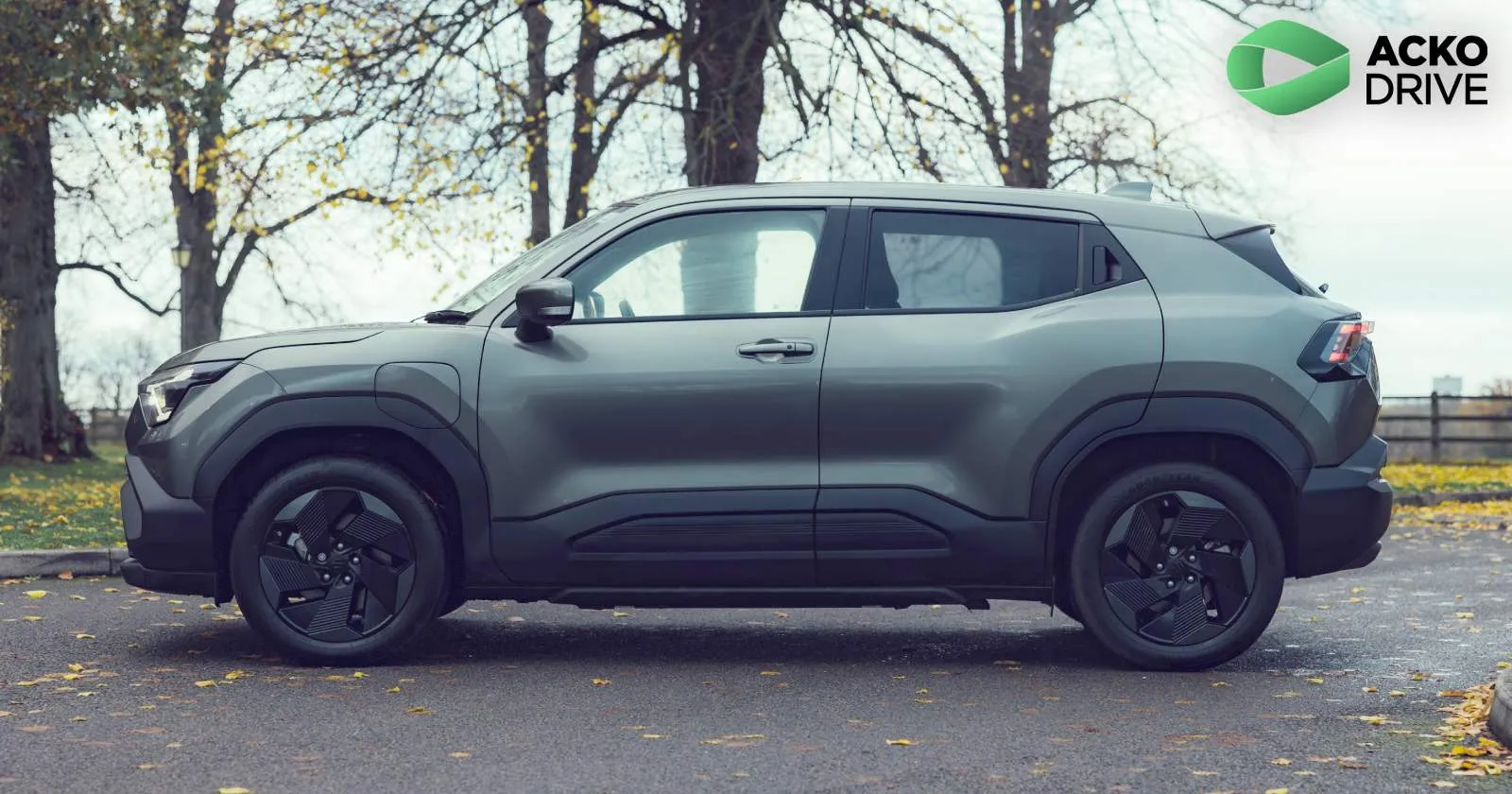
What immediately strikes you when driving the e-Vitara is how different it feels compared to typical Maruti products. The steering and handling feel refined and tuned for global markets, moving away from the constraints of the Indian-centric approach Maruti usually adopts. On motorways, the car sits composed and feels very assured.
However, there's a noticeable downside: road noise. Tyre noise coming through the wheel wells is pronounced, especially at highway speeds. This is surprising for a global model designed for multiple markets with varying speed requirements. Wind noise, thankfully, isn't an issue, and overall the cabin feels well-built and solid. The India-spec may benefit from additional damping to address this, which would be crucial given Indian road conditions.
The e-Vitara is engineered for efficiency and range rather than outright performance. This is evident from its acceleration characteristics. The 61 kWh variant produces 174 bhp and 193 Nm of torque, achieving 0-100 kmph in 8.7 seconds—respectable but not exhilarating. The 49 kWh delivers 144 bhp and takes 9.6 seconds for the same sprint. You won't get that pushed-back-in-seat sensation that some high-performance EVs offer, but the car doesn't feel dull either.
Maruti's traditional approach of prioritizing efficiency (learned from decades of building petrol cars) is evident here. Against the current competitive set in India—including the BE 6, Curvv EV, and Creta Electric—the e-Vitara will hold its own comfortably.
Three driving modes (Sport, Eco, and Normal) offer varying throttle responses, though the distinction between them isn't dramatic. Here's where a frustration emerges: regenerative braking levels cannot be adjusted on the go. Unlike competitors with paddle shifters, you can only adjust regen through the touchscreen menu when the car is stationary. This is impractical and feels like an oversight on a car positioned as a global premium offering.
While the handling is praised, the ride quality feels surprisingly firm and occasionally bouncy. For a car destined for Indian roads filled with potholes and uneven surfaces, this is concerning. The suspension setup appears tuned for European conditions. Maruti will likely soften the suspension for the India-spec, and it should—otherwise, daily commuting on Indian highways could become tiresome.
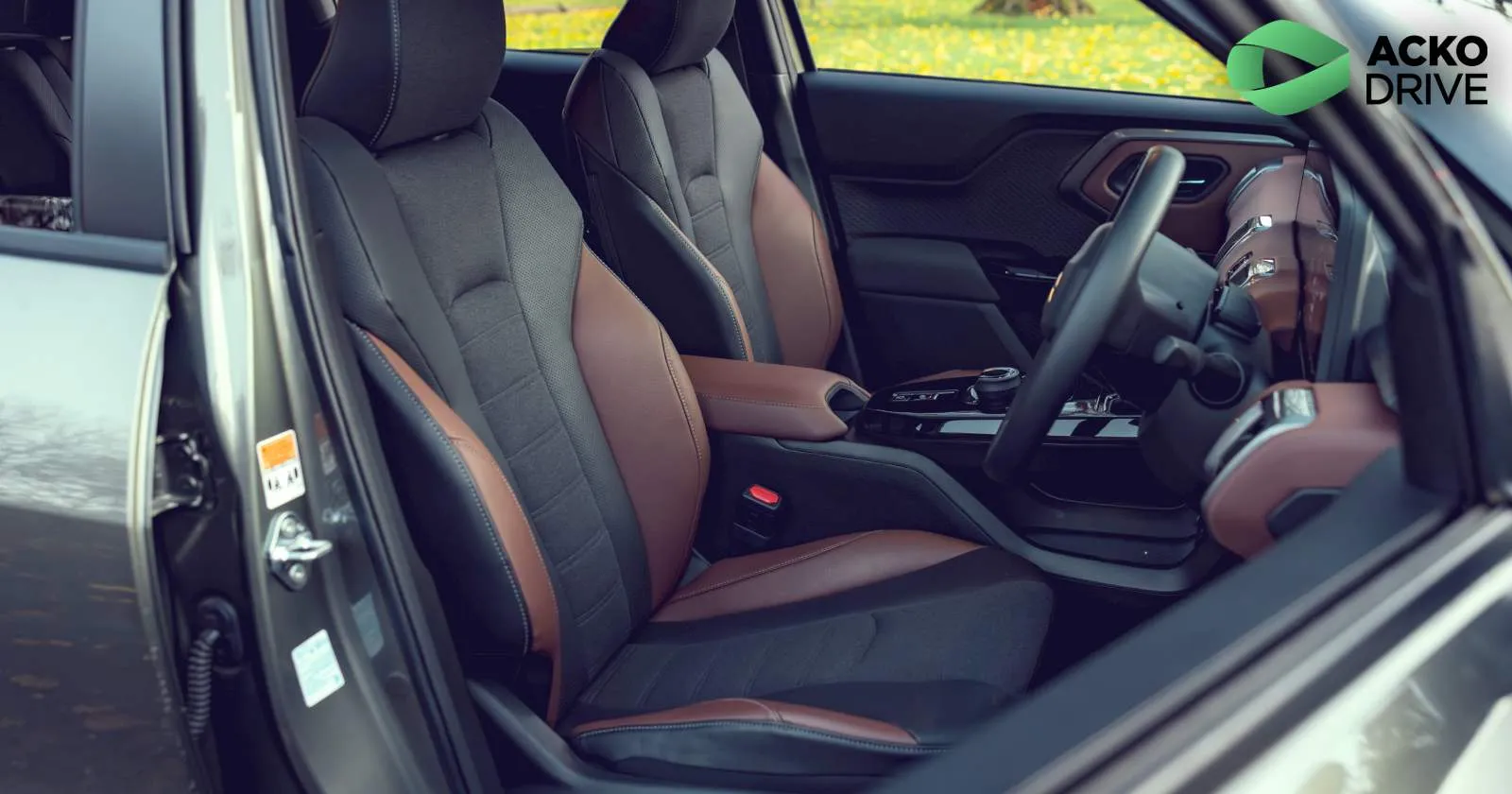
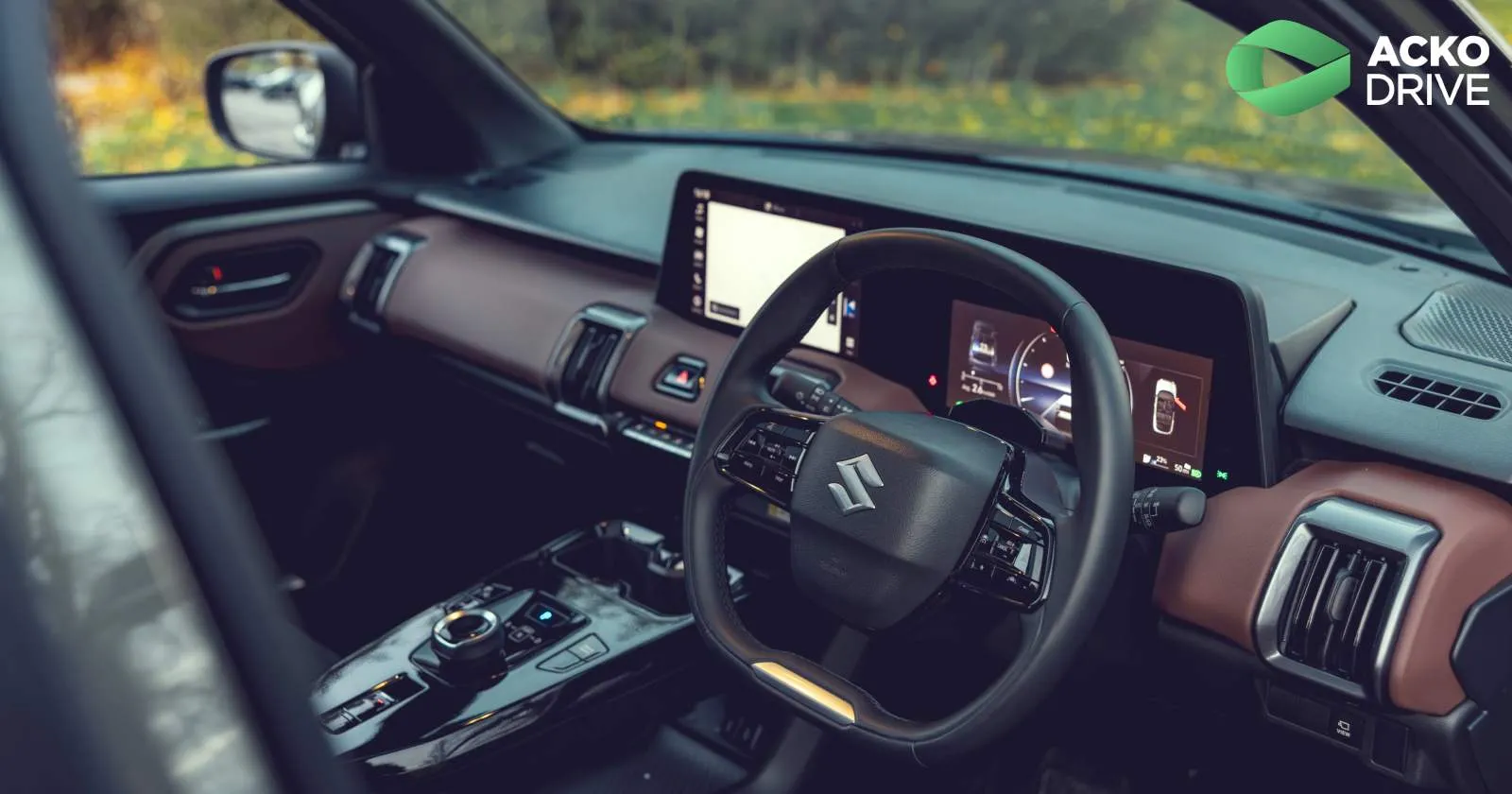
The cabin features two large touchscreens: a 10.25-inch instrument cluster and a 10.1-inch central touchscreen. Both display sharp graphics and intuitive layouts that differ from typical Maruti interfaces. The design brief of "modern polyhedral architecture" translates to a clean, minimalist cabin dominated by a tan-and-black two-tone scheme that makes the space feel larger.
The driver's seat on higher trims is electrically adjustable with ventilation, while the passenger side is manual. The front seats are genuinely comfortable with good contouring. Air vents are prominently placed and distinctive, adding to the cabin's modern appeal.
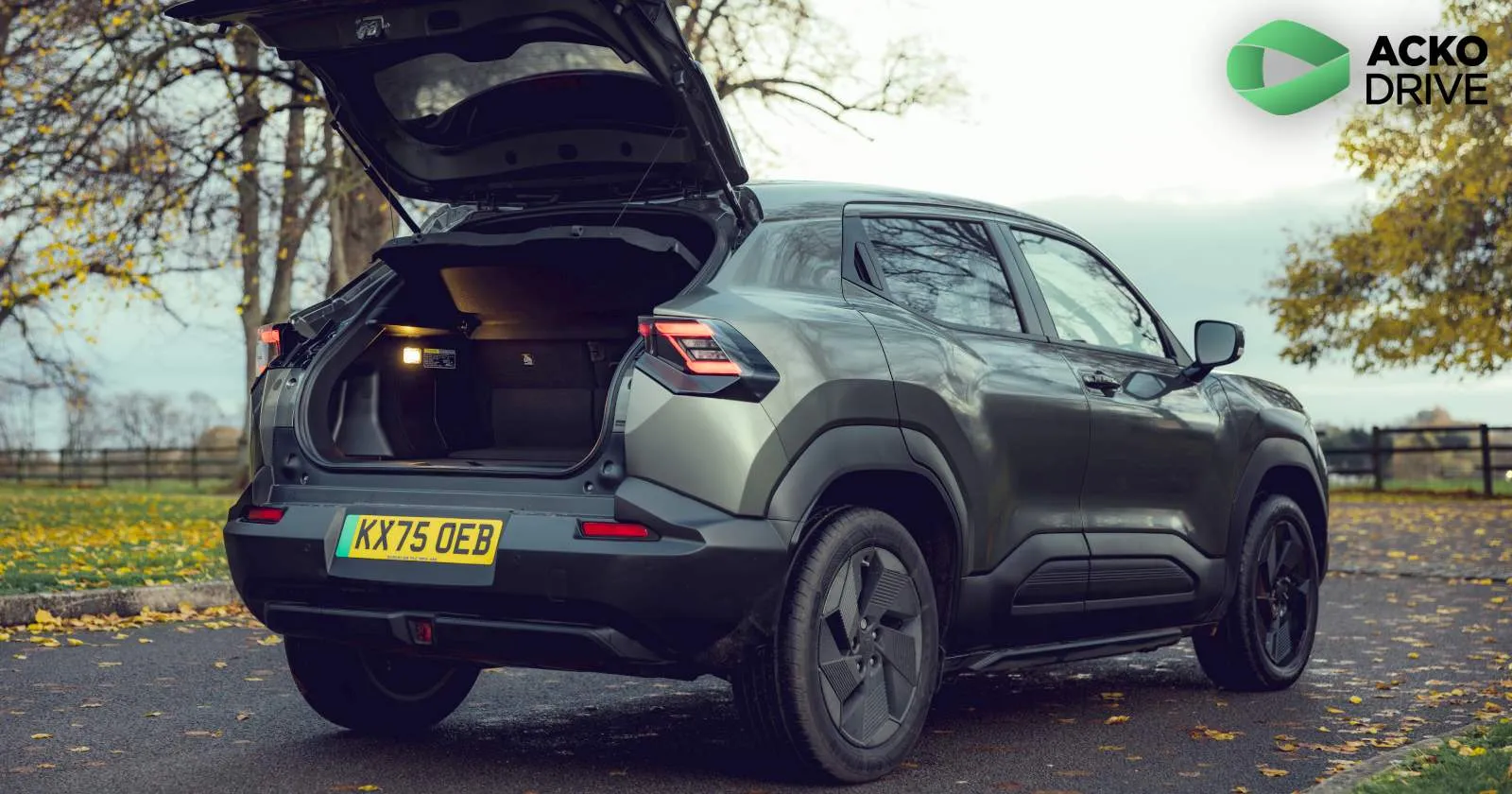
The rear seats, despite the car's compact exterior, offer surprising comfort. Good legroom, a flat floor (thanks to the skateboard EV platform), and clever use of space work in the e-Vitara's favour. However, headroom is slightly compromised. The 40:20:40 split rear seat is appreciated, and an adjustable seatback helps fine-tune comfort. Boot space stands at 244-310 litres with seats up, expanding to 562 litres when folded—smaller than the Grand Vitara, but adequate for urban needs.
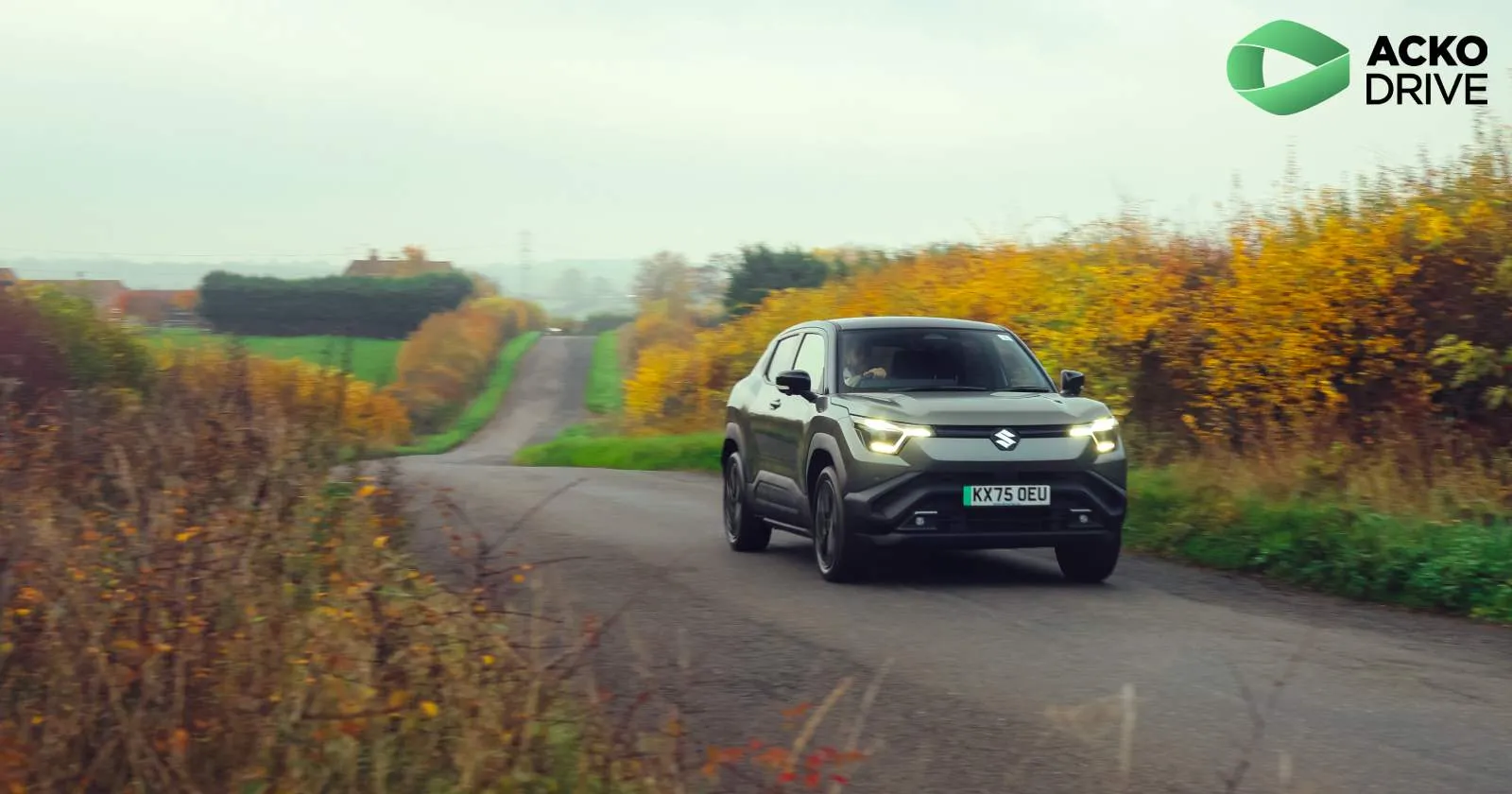
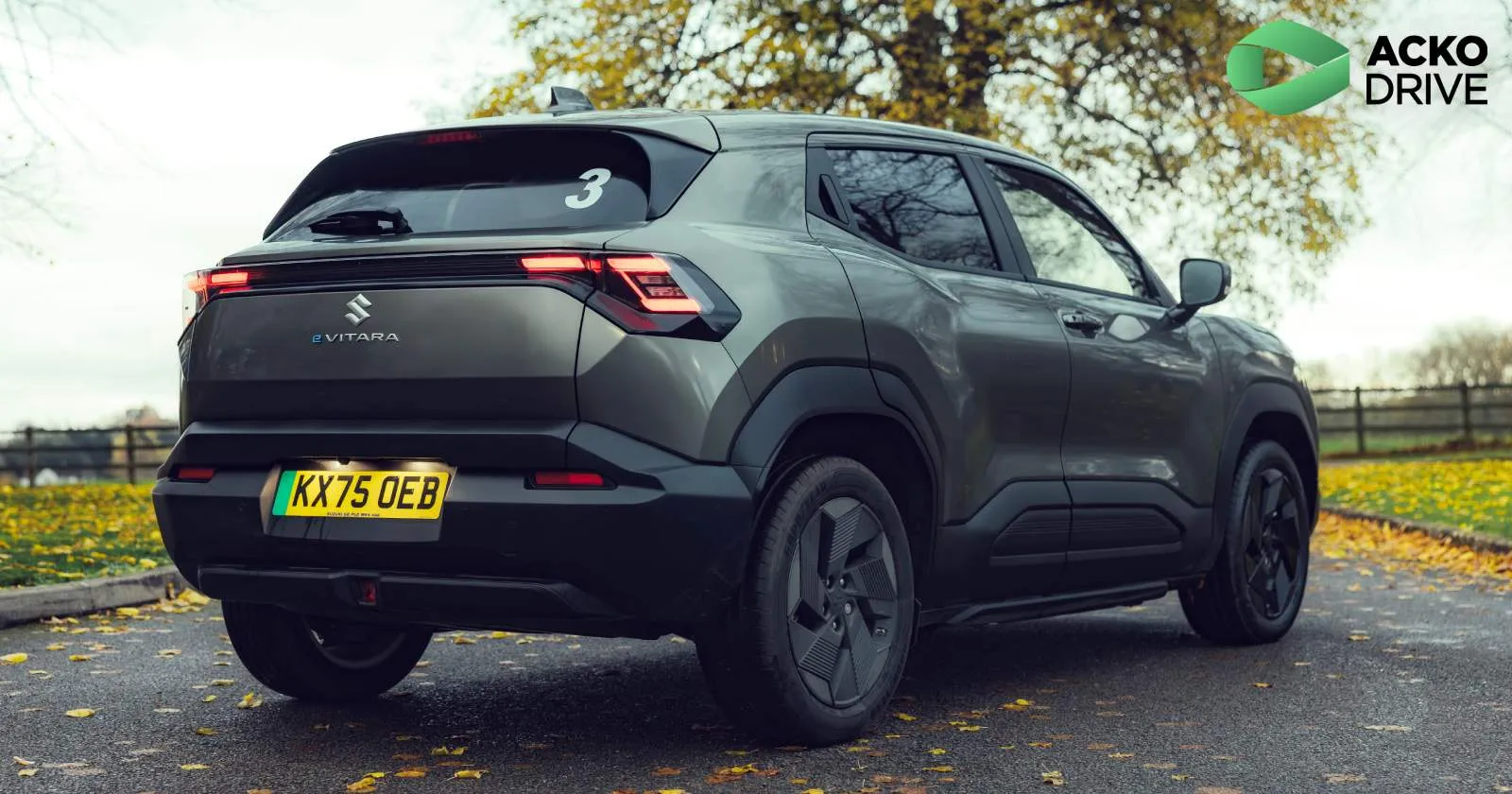
Suzuki calls this design philosophy a "metal beast," emphasizing solidity and go-anywhere capability. The big Suzuki logo dominates the face, complemented by a distinctive DRL signature. Polyhedral surfaces create visual interest without being controversial, and the design is clearly recognizable as a Suzuki while feeling fresh and modern. The two-tone roof and wheel design emphasize the car's ruggedness. At the rear, connected taillights and glassy trim elements maintain the modern theme.
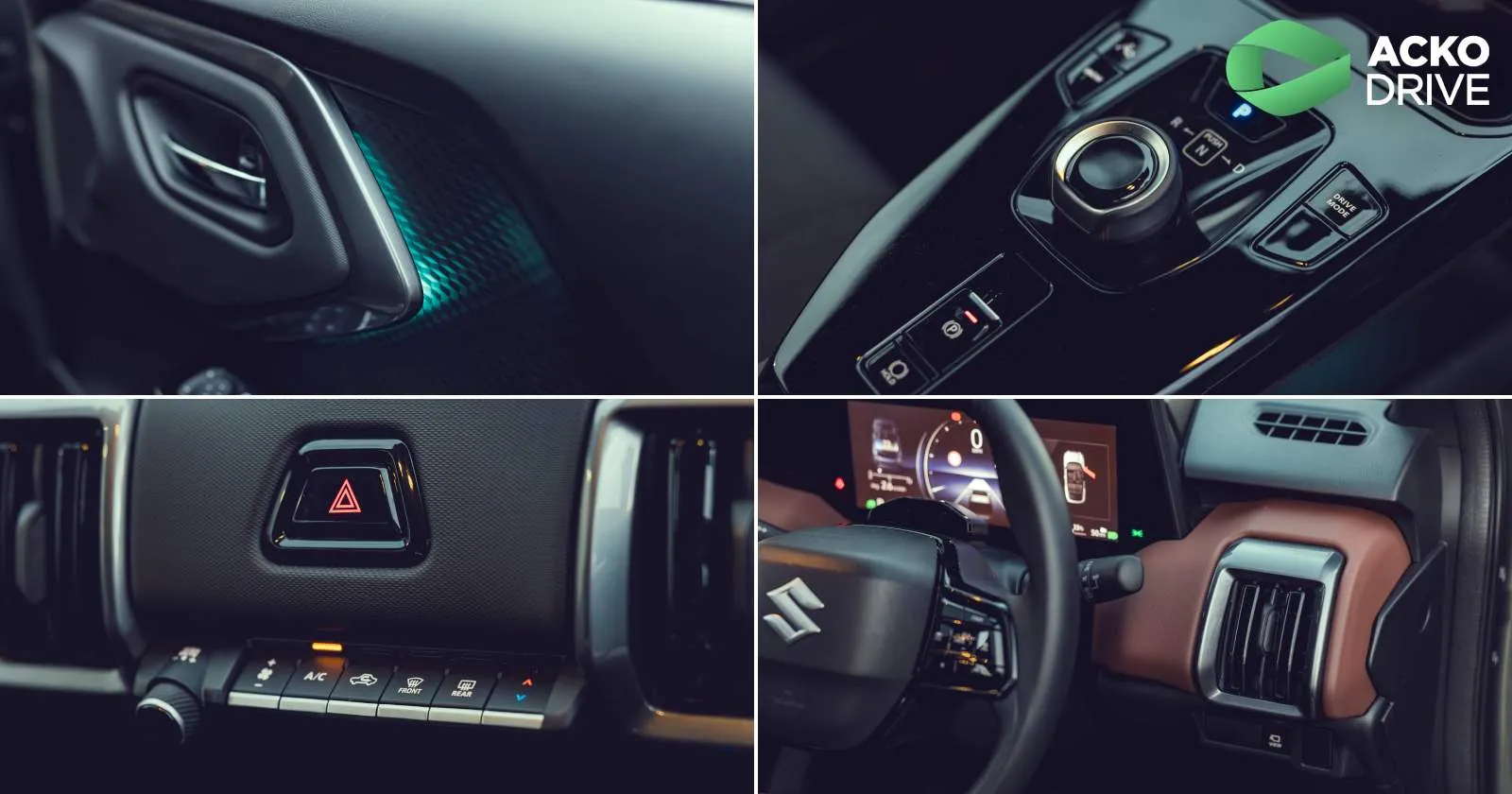
The e-Vitara comes equipped with 7 airbags and 3-point belts as standard. A 360-degree camera, tyre pressure monitoring system, and Level 2 ADAS are included across the range. The ADAS system is the second from Maruti (after the Victoris) and is engineered for real-world usage rather than paper specifications. From my experience, it performs similar functions to competitors and executes them effectively.
Suzuki Connect telematics suite and an Infinity by Harman sound system add tech appeal to higher trims. A wireless phone charger and rotary drive selector (replacing traditional shift sticks) are modern touches that feel intuitive.
The e-Vitara will be sold through Maruti's Nexa premium dealership channel, fitting alongside the company's growing SUV portfolio. Expected pricing falls in the ₹16.99-22.99 lakh range. Maruti is clearly targeting volume and plans to offer charging infrastructure solutions, subscription models, and buyback schemes to appeal to the new wave of EV buyers.
Research shows that 85% of compact SUV EV buyers in India are adding or replacing vehicles, their average monthly income exceeds ₹2.4 lakh (double that of petrol SUV buyers), and 64% hail from India's top 20 cities. These buyers also drive 75+ km daily—far more than their petrol counterparts. The e-Vitara is designed exactly for this demographic.
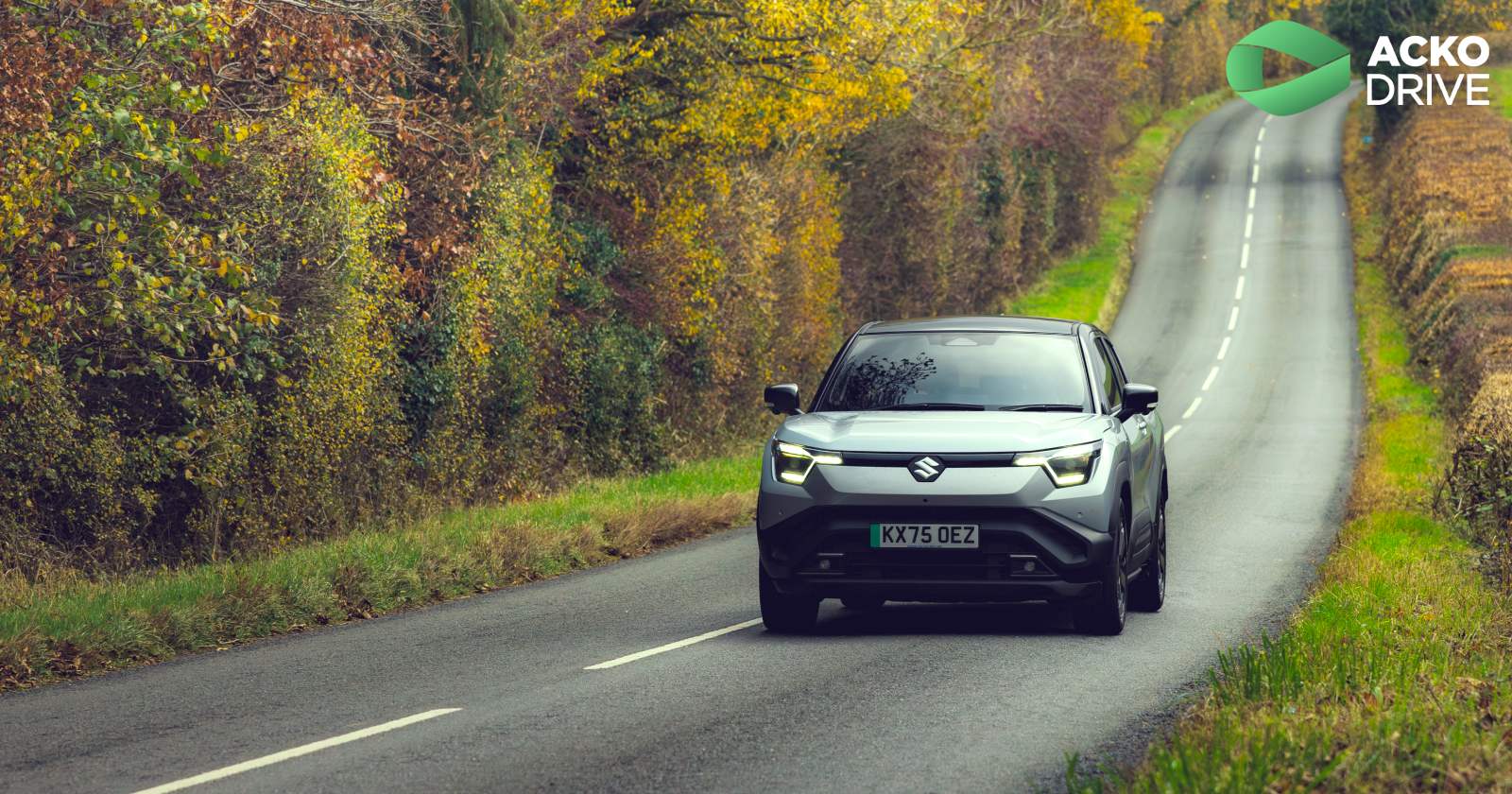
The Maruti Suzuki e-Vitara is a competent global EV that brings Suzuki's reliability reputation into the electric era. It won't set your heart racing, but it offers practical, comfortable transportation with a strong claimed range and the assurance of Maruti's vast service network. The ride quality concerns and lack of on-the-go regen adjustment are genuine issues that hopefully the India-spec will address.
Against rivals like the Creta Electric, BE 6, and Curvv EV, the e-Vitara competes on practicality, reliability, and ecosystem rather than raw performance or features. For buyers prioritizing trust and convenience over thrills, this global SUV built in India could prove to be exactly what the market needs. The compact electric SUV segment just got another serious contender.

TVS Apache RTX Road Test - TVS Goes For The Kill
Arun Mohan Nadar 16 Feb, 2026, 4:06 PM IST
Toyota Urban Cruiser EBella First Drive Review: The Sensible Man’s EV
Sameer Fayaz Contractor 11 Feb, 2026, 12:49 PM IST
2026 Volkswagen Tayron R-Line India Review: When Class Meets Performance
Sameer Fayaz Contractor 4 Feb, 2026, 11:24 AM IST
TVS Ntorq 150: Evolution Or A Step Back?
Arun Mohan Nadar 22 Jan, 2026, 4:35 PM IST
2026 Tata Punch Facelift Review: Ready To Deliver A Knockout Blow
Sameer Fayaz Contractor 21 Jan, 2026, 11:04 AM IST

Looking for a new car?
We promise the best car deals and earliest delivery!
