Pre-drive safety checks
The following are a few safety checks that you can perform even before you start driving your car. While these checks may seem insignificant at first glance, they are the first step in ensuring the vehicle is safe to drive.
Check the tyres
Tyres are the only point of contact between the vehicle and the road. So, ensure that the tyres are properly inflated. Inspect the tyre wear as worn-out tyres can affect stability, braking performance and fuel efficiency. Make it a habit to check the car’s tyres at least once a week.
Check the lights
Make it a habit to check your car’s lights, especially if you are driving long distances. Check if the headlights, indicators and tail lights are working properly. Lights are essential for visibility (especially at night) and communication on the road with other motorists and road users.
Check for the dashboard warning lights
Ignoring a dashboard warning symbol on your car can lead to expensive repairs down the line. Always check for warning symbols related to the engine, battery, tyre pressure (TPMS) or brakes. Detecting such issues early can prevent more significant problems
Ensure seatbelts are fastened
The first thing to do, even before you roll off, is to fasten the seatbelts. Ensure all the occupants are buckled up before driving off. No matter how many advanced safety features a vehicle has, seatbelts are the first line of protection.
Set proper seating position
Adjust the driver’s seat position so that the road ahead is clearly visible and you can control the vehicle comfortably. Also, adjust the mirrors (IRVM and ORVMs) so that you have a clear view of what’s going on behind and to reduce blind spots.
On-road safety practices
Here are a few points to consider when driving your car. These safety practices help to reduce the chances of accidents.
Defensive driving techniques
Always practice defensive driving techniques while driving. Anticipate the actions of other motorists and road users to ensure a safe driving experience. Always be cautious when approaching intersections, busy roads, and while merging onto highways.
Maintain a safe distance
Maintaining a safe distance from the vehicle ahead of you is a fundamental safe driving habit. It gives you sufficient reaction time during sudden braking or any other emergency manoeuvres.
Follow speed limits
Speed limits are there for a reason. They can vary depending on the road design, traffic flow, and special zones such as schools and hospitals. Always adhere to speed limits and never overspeed, as it can reduce reaction time and lead to accidents.
Avoid sudden lane changes
Follow lane discipline while driving. Do not change lanes suddenly, as it can lead to accidents and put other motorists in danger. Always check ORVMs before changing lanes and use indicators to communicate with other road users.
Check for blind spots
Remember that your car’s IRVM and ORVMs may not cover the entire area around the vehicle. There may be blind spots which are not visible from the driver’s seat. So, exercise caution and check for such spots, especially when overtaking, changing lanes or merging onto highways.
Avoid distraction
Using mobile phones, tablets or other electronic devices while driving is a major distraction. This is also one of the most common reasons for accidents. So, avoid using mobile phones or any device that can cause distraction.
Car maintenance tips
Apart from safe driving habits, a well-maintained car that runs efficiently can also play a crucial role in reducing the likelihood of an accident. Here are a few key points to consider regarding vehicle maintenance.
Follow the service schedule
Service your car as per the manufacturer’s recommended service intervals. Regular servicing can help prevent issues related to the engine, suspension, brakes, and other components.
Inspect the brakes
Never ignore any squeaking sounds from the brakes, as it may be a sign of an issue with the braking system. Poor braking, noises, or brake fluid leaks should be addressed immediately, as they can compromise braking performance.
Maintain the battery
A weak battery can lead to unexpected breakdowns and starting troubles. Always check the battery health. Check the battery terminals and clean them whenever needed. Do not ignore the battery warning sign on the dashboard.
Check fluid levels
Check for fluid levels at regular intervals. Inspect the engine oil level, coolant, brake fluid, and windshield washer fluid, and top them up if necessary. Fluids related to the engine and brake are vital to the smooth functioning of the vehicle.
Keep the windshield clean and wipers functional
A clean windshield ensures proper visibility in all driving conditions. Check the wiper blades regularly and replace them if you notice any issues, especially before the monsoon season arrives.
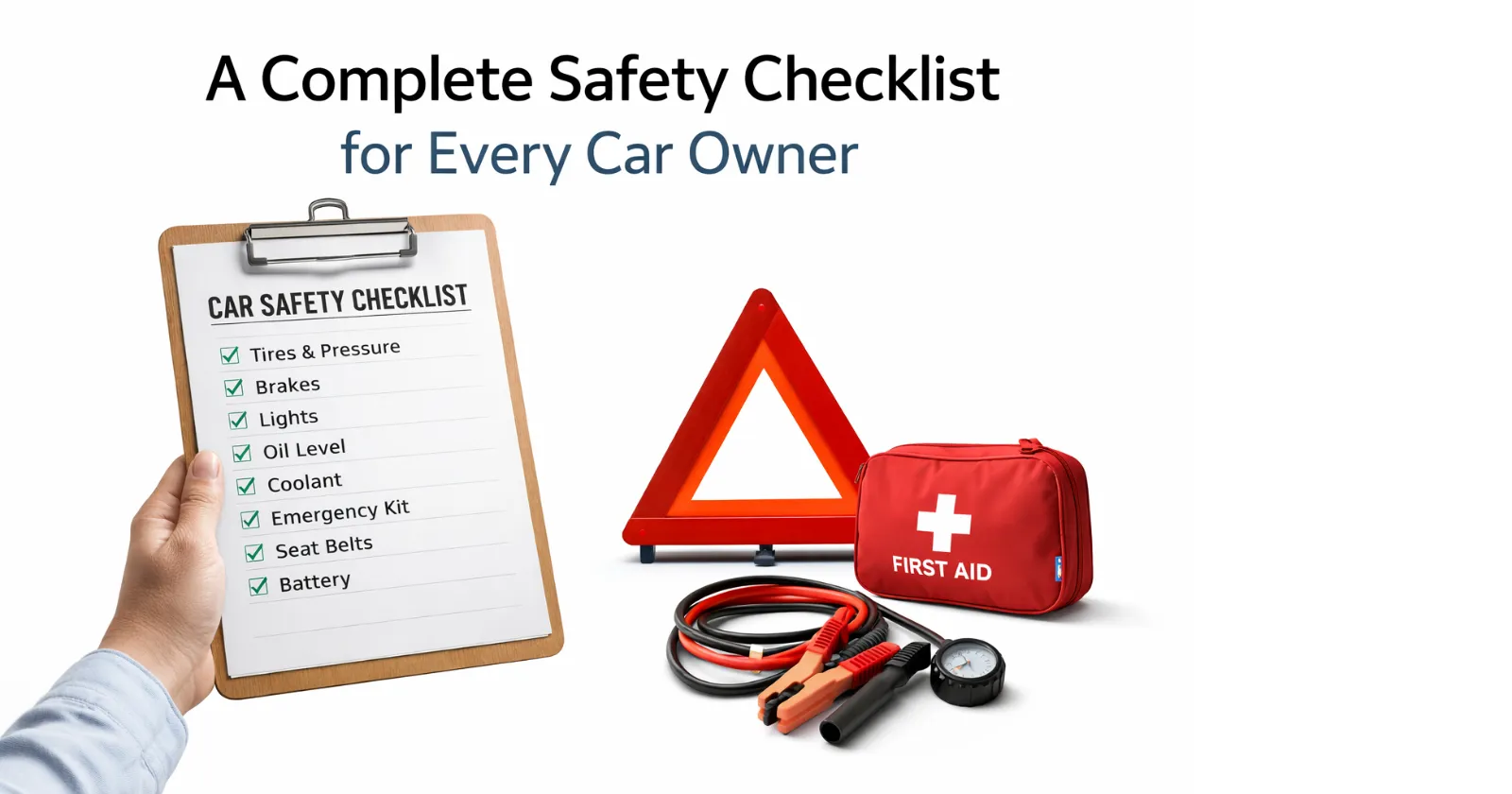
Keeping a few safety tools in your car can help tackle unexpected or emergency situations. Here are a few safety tools that you can keep in the vehicle.
- First-aid kit
- Fire extinguisher
- Puncture repair kit
- Tyre inflator
- Reflective emergency triangle
- Flashlight or torch
- Basic toolkit
- Dashcam (optional but useful to record any incidents)
Safety during long or highway drives
If you are on a long drive or driving on highways, it's a good idea to take a few additional precautions to ensure your safety. Here are a few points to keep in mind.
- Get enough rest to avoid fatigue and take breaks whenever necessary. Fatigue is one of the most common causes of highway accidents.
- Plan the route beforehand. This helps you to get an idea about the road conditions and traffic.
- Drive at slower speeds in adverse weather conditions, such as rain, fog, or a storm.
- If possible, avoid driving at night as the visibility drops significantly.
Safety beyond the road
Following the safety checks and precautions mentioned in this article can help keep you safe on the road and reduce the chances of road risks. However, there is another important aspect which often gets overlooked. That is being prepared for unexpected situations and uncertainties that are beyond your control.
Just like you prepare your car for unforeseen events, it’s also important to prepare yourself and your family for such future uncertainties. Buying term insurance helps in that regard. It ensures that your loved ones remain financially protected in case you are not there to support them. Hence, in addition to taking care of your car, it is always wise to consider a term plan to safeguard your family's long-term financial security.