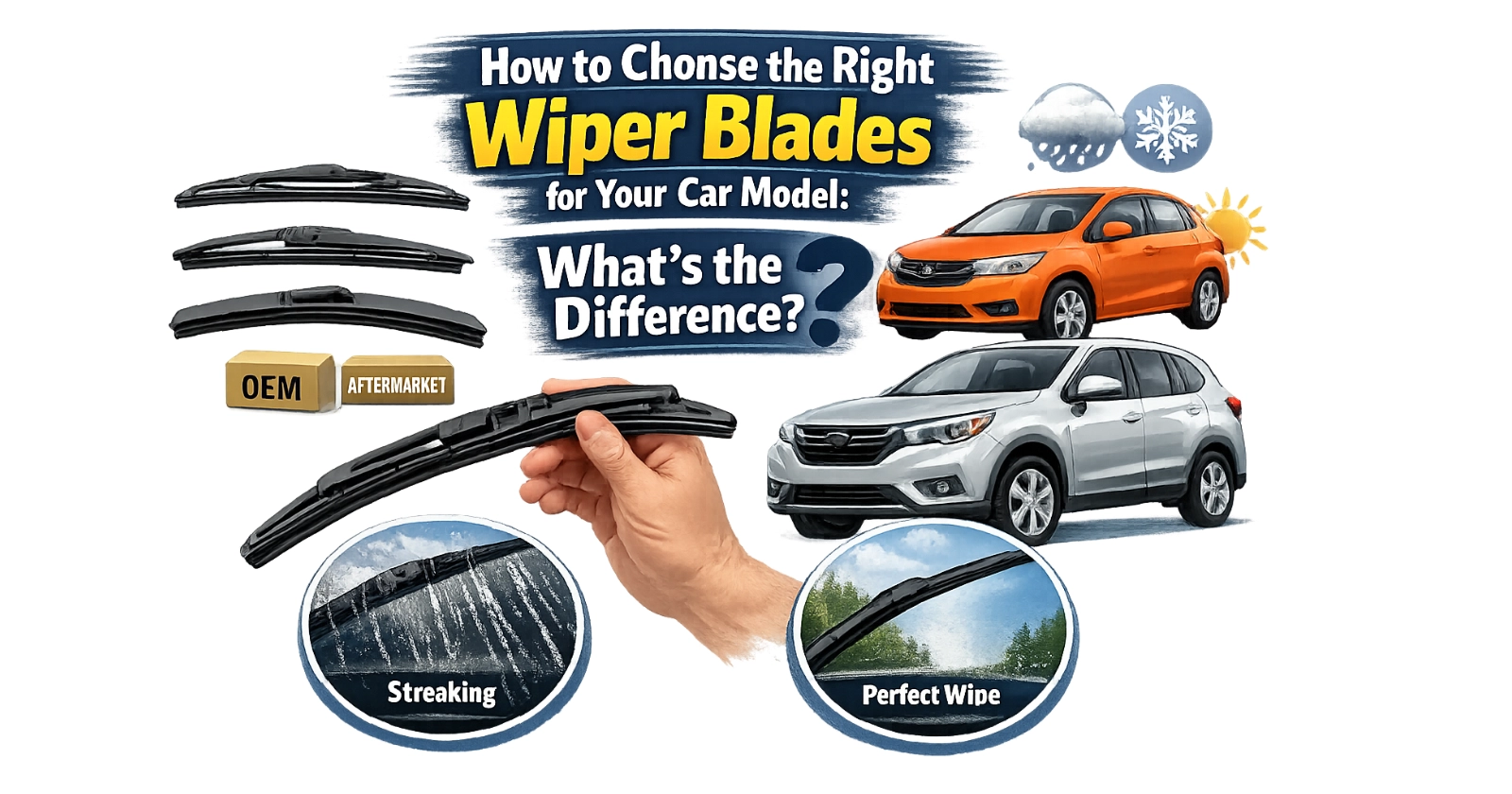
How to choose the best wiper blades for your car
Choosing the right wipers for your vehicle requires a methodical approach and careful comparisons.
Check your vehicle manual or use an online size finder
Start with the vehicle's manual or other manufacturer references that recommend specific wiper sizes. You can also use the various online tools that allow you to enter your vehicle's model or make to determine the correct sizes and types of blades.
Compare blade types based on your climate and usage
Assess wiper blade types—conventional, beam, hybrid—based on the average climate you drive in; for example, beam blades are preferred in heavy rain or snow, while hybrids provide performance and durability for all-weather conditions.
Beam wipers for heavy rain or winter
Beam wipers are an ideal choice for heavy rain, ice, and snow because their flexible design enables a more even distribution of pressure, resulting in a more effective wipe and clearer vision in difficult weather conditions.
Blades made of silicone rubber resist cracking from the elements and UV damage longer than those made from natural rubber. Therefore, while silicone blades cost a bit more, they will last longer than typical blades made from natural rubber. For someone who drives frequently or over long distances, performance will be improved, and the noise from the wiper blade will be reduced.
Purchase blades with simple-install connector systems
Universal or quick-connect adapters help during installation or replacement, saving time and hassle.
Premium blades for frequent drivers
If you drive frequently or on long road trips, consider investing in premium wiper blades for a slight increase in cost. They are worth it for better performance, longevity, and noise reduction, pushing some budgetary limits for those who log a lot of time behind the wheel.
Replace wiper blades in pairs
Replacing both blades installed on the front of the windshield simultaneously will ensure the wipers wipe as evenly and reliably as possible, without the need for blade adjustment once installed, for optimal visibility.
Key factors to consider when choosing wiper blades
Selecting the appropriate wiper blades is influenced by several critical factors that both functionally clean the windshield and ensure its durability.
Size and fitment specifications for your specific vehicle
The first part of your decision will be the correct size and fitment for your vehicle. Wiper blades are sold in varying lengths, often with the driver’s and passenger’s blades being a different size. Referencing your vehicle manual or helpfully utilising an online size finder service will help you find the exact size for your vehicle. Neither blade being too long or short will leave the windshield incomplete or worse, damage the wiper assembly.
Types of blades: conventional, beam, and hybrid types
There are basically three different types of wiper blades: conventional, beam, and hybrid. Conventional blades are made of the standard metal frame with its rubber strip. These are generally easy to install and less expensive. Beam wipers are frameless and made of a flexible rubber material that better fits the curvature of the windshield as they clear rain or snow; thus, they provide better results in heavy rainfall or snow. A hybrid type blade combines elements of both blade types; the vehicle structure for durability, and then matched with a rubber cover, to maximise wipe at highway speeds.
Rubber material quality
The wiping edge of the blade is composed of either natural rubber or silicone rubber. Blades made from natural rubber generally perform better than those made from silicone, but tend to wear out more quickly in harsh sunlight or extreme cold.
Silicone blades usually last longer, are less likely to crack, and are often quieter. Silicone also absorbs water better, which is beneficial for visibility in heavy rain. Depending on your budget and climate, using a higher-grade rubber will allow the blade to last longer and be more effective.
Climate and driving conditions
Driving conditions and climate are also important factors to consider when selecting wiper blades. In areas where the weather often brings rain or snow, drivers tend to prefer beam or hybrid wiper blades because of their ability to clear the windshield of water and because they do not get clogged by ice or road debris. In drier or moderate climates, conventional wiper blades are generally sufficient.
Wiper arm compatibility and connector types
Wiper arms are available in many different connector types, including hook, pin, and bayonet. Selecting a blade compatible with your vehicle's wiper arm connector is a crucial consideration for both ease of installation and optimal durability during use. It is essential to determine compatibility ahead of time to prevent issues such as the blade coming loose or not moving effectively.
Brand reliability and product durability
Well-known brands typically produce wiper blades that are of higher quality, last longer, and function more reliably, even in a variety of driving conditions. Trusted brands have screened their materials to include high-quality components, will support warranty coverage, and incorporate advanced design features for enhanced durability. When you use a reputable manufacturer, you limit the risk of a shorter life, streaking, and noise.
Budget, and value for your money
Wiper blades vary widely in different price ranges. While you can find budget wiper blades at an affordable price, chances are they won't last long and won't perform as well as inexpensively priced blades. Premium blades typically have a higher cost but often offer an extended lifespan, improved efficiency during wiping, and are designed for use in extreme weather conditions.
Common signs your car's wiper blades need replacing
Understanding when to replace your car wiper blades is crucial in keeping your windshield clear of obstructions.
Streaking on the windshield
If the wipers leave streaks or skip areas of the windshield, this could mean that the rubber edge is hard or damaged, making it ineffective and causing an increase in glare from the rain, which is unsafe while driving.
Chattering noise while in use
If the wiper blades chatter or squeak, it may mean that the rubber is worn out or that an improper amount of pressure is being exerted by the blade on the glass, causing the noise. This indicates that the blades are not fully contacting the windshield evenly.
Reduced visibility in rain or snow
Poor visibility during wet weather, such as water droplets or snow accumulation that remains on the glass after the wipers have been used, is certainly an indication of a worn-out or damaged wiper blade.
Cracked, split or warped rubber edge
Physically inspecting the rubber edge may reveal that it is cracked, split, or warped, which can cause uneven wiping and ultimately increase the chance of scratching the windshield.
Uneven or incomplete wiping pattern
If some areas of the glass remain uncleared or the wiping pattern appears uneven, this indicates that your existing wipers are no longer functioning properly and should be replaced to ensure consistent windshield clearing.
Tips to extend the life of wiper blades
Proper maintenance of the wiper system contributes to longer blade life and clearer vision through the windshield.
Clean the windshield on a regular basis
The presence of dirt and debris on the windshield decreases the effectiveness of the wipers and increases wear on the rubber wiper blades. Routine windshield cleaning will help minimise buildup.
Wipe the rubber edge with a damp cloth
Every once in a while, give the rubber edges on the wipers a damp cleaning to remove dirt, dust, and grime that can contribute to streaking and damage.
Do not operate the wipers on a dry windshield
Using the wiper blades on a dry windshield would simply wear away the rubber unnecessarily. Also, do not run the wipers over an icy windshield, as this can damage the blades and scratch the windshield.
Park in the shade to avoid UV damage
Sunlight exposure will ultimately break down the rubber. Parking in the shade or a garage will protect the blades.
Monthly inspection of wear and tear
A regular visual inspection enables you to detect rips, tears, or hardening of the rubber prematurely, allowing you to replace broken blades before losing visibility.
Bottom Line
Selecting the right wiper blades for your vehicle, environment, and driving style ensures safety and comfort in inclement weather. Key considerations include correct sizing, the type of blade, the quality of the rubber, and selecting dependable brands to achieve optimal performance. Understanding the signs of wear and maintaining the wiper blades extends their usable life. Investing a little more in quality wiper blades will enhance visibility, allowing you to drive more comfortably in rain, snow, or dust, and making every trip safer.
Frequently Asked Questions