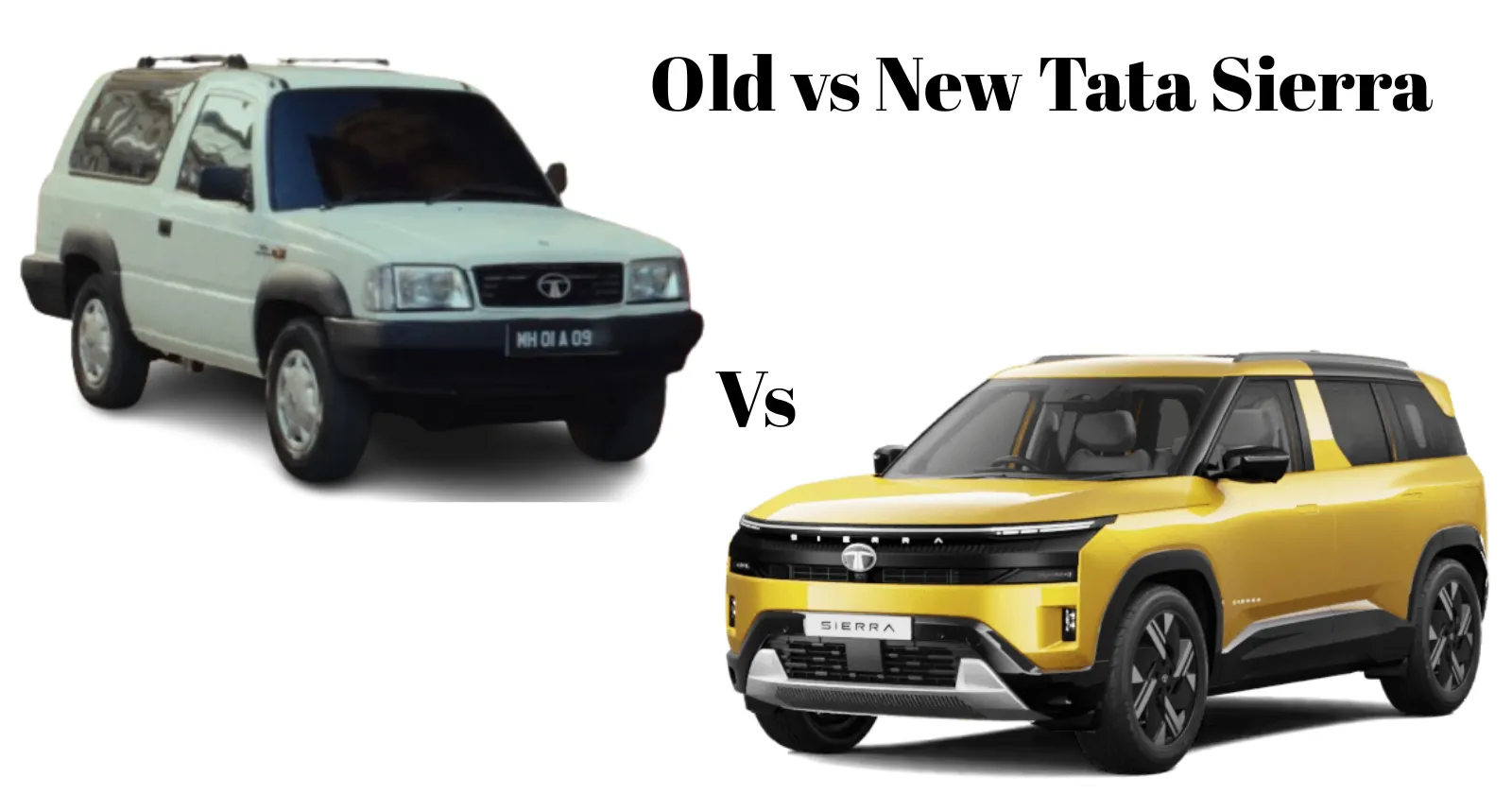
Design evolution: Heritage meets modern engineering
Exterior design
The original Sierra was instantly recognisable, mostly due to its signature curved-over rear windows. Although regulations today do not allow that glass structure to be replicated, Tata has cleverly recreated the visual effect by giving the new Sierra a contrasting black finish over the rear windows and quarter glass. This contrast panel subtly pays homage to the iconic wraparound look.
Other elements inspired by the old model include:
- Squarish wheel arches
- High-set bonnet
- Rectangular design cues are replicated through the black trim running across the modern Sierra’s fascia.
- Thick B-pillar with a kink in the window line
However, the new Sierra isn’t just a retro revival; it’s a proper contemporary SUV. It features:
- A sharper windscreen rake
- Shorter front and rear overhangs
- Large 19-inch wheels (with 17- and 18-inch options also available)
- LED headlamps
- Full-width LED light bars
- Flush door handles
- Powered tailgate
Together, these changes give the new Sierra a premium stance that the older generation never had.
Interior design
Inside, the difference is even more dramatic. The original Sierra, although ahead of its time in the ’90s, had a fairly utilitarian cabin. It offered features such as air conditioning, power windows and a tachometer, luxuries back then, but its layout feels dated by today’s standards.
The 2025 Sierra, in contrast, comes with one of the most advanced interiors Tata has ever built:
- A triple-screen layout:
- 10.25-inch driver display
- 12.3-inch central touchscreen
- 12.3-inch passenger screen
- Premium materials across the cabin
- A slim, asymmetrical dashboard band hiding a JBL sound bar
- Physical toggles for HVAC (thankfully retained)
This combination of screens, textures and functional design makes the new Sierra feel significantly more upmarket.
Powertrain comparison: Simplicity vs choice
Engine options
The original Sierra began life with a naturally aspirated diesel engine and later moved to a 2-litre turbo-diesel producing 91hp and 186Nm. It was paired with a 5-speed manual gearbox, and Tata even offered a 4x4 version, which made it popular among adventurers.
The new Sierra, however, offers a diverse and contemporary engine lineup:
Specification | Old Tata Sierra | New Tata Sierra |
Engine Types | NA Diesel, Turbo Diesel | 1.5L NA Petrol, 1.5L Turbo Petrol, 1.5L Diesel |
Power Output | Up to 91hp | Up to 160hp (Turbo Petrol) |
Torque | Up to 186Nm | Up to 280Nm (Diesel AT) |
Gearboxes | 5-speed Manual | 6MT, 7DCA, 6AT |
Drivetrain | RWD / 4x4 | Front-Wheel Drive (FWD) |
EV Version | No | Confirmed for future |
Notably, the new Sierra is available only in front-wheel drive, with no 4x4 version currently offered. However, additional powertrain choices, including a future electric variant, offer buyers far more flexibility.
Features and technology: A quantum leap
The old Sierra was futuristic for its time, but the new model takes things several levels ahead.
New Sierra highlights
The new Sierra is packed with modern features, depending on the variant:
- 26.03 cm infotainment touchscreen
- 8 speakers with tweeters
- Wireless Android Auto & Apple CarPlay
- Advanced driver assistance (ADAS L2+), depending on variant
- Ventilated seats
- Digital cockpit
- Multiple drive modes
- Hill descent control
- Panoramic sunroof (Pure+)
- 250+ voice assist commands in 6 languages
These upgrades reflect how mid-size SUVs have grown into feature-rich lifestyle vehicles.
The old Sierra was built on a rugged ladder-frame platform derived from the Tata Telcoline pickup. This gave it durability but also made it heavy and less refined.
The new Sierra sits on a modern monocoque architecture with:
- Better handling
- Higher safety
- Improved cabin space
- Better weight distribution
Its dimensions (4340 x 1814 x 1715 mm) place it squarely in the midsize SUV segment.
Old vs New Sierra: A Complete Comparison Table
Category | Old Tata Sierra (1991) | New Tata Sierra (2025) |
Design | Curved rear glass, 3-door SUV, rugged look | Blacked-out rear panel, 5-door SUV, LED lights, flush handles |
Interior | Basic but premium for its time | Triple-screen dashboard, JBL sound bar, premium trims |
Features | AC, power windows, tachometer | ADAS L2+, panoramic sunroof, digital cockpit, wireless connectivity |
Engines | NA diesel → 2.0L turbo diesel | NA petrol, turbo petrol, diesel, future EV |
Gearbox | 5-speed manual | Manual, DCA, automatic |
Drivetrain | 4x4 available | Front-wheel drive only |
Wheels | Smaller steel/alloy | 17/18/19-inch alloys |
Market Position | Lifestyle SUV pioneer | Modern midsize SUV rival to Creta, Seltos, Grand Vitara |
How the New Sierra Retains the Old Sierra’s Essence
Even with all the new upgrades, Tata made sure to preserve what made the Sierra special:
- Distinct identity – The glasshouse design theme continues visually.
- Bold stance – Squared wheel arches and tall bonnet echo the original.
- Lifestyle appeal – The Sierra name still stands for individuality and adventure.
Yet, it corrects the weaknesses of the past: a lack of comfort, limited engine choices, and the inconvenience of a three-door design, by becoming a mainstream, family-friendly SUV.
Is the New Sierra True to the Original?
In spirit, absolutely yes. In execution, it’s a completely different vehicle. The design nostalgia is skilfully balanced with modern compliance, while the technology leap is massive. Where the old Sierra was rugged and raw, the new one is refined, connected and far better equipped for urban India.
The revival of this nameplate isn’t just about memories. It’s Tata Motors making a confident statement in one of India’s most competitive SUV segments.
Frequently asked questions