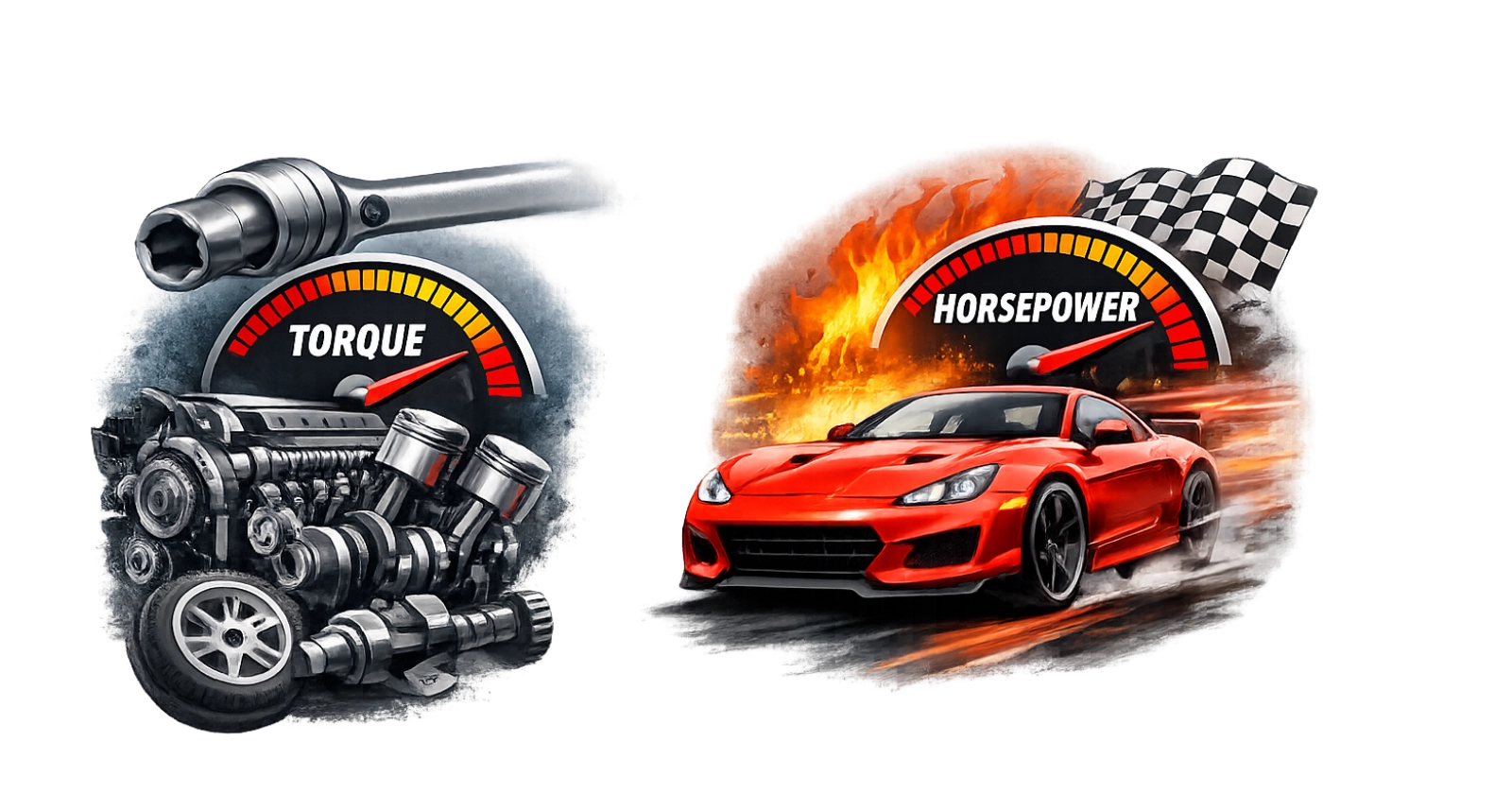
What is torque?
Torque is the twisting force an engine applies to the crankshaft to set the wheels in motion. Measuring torque is easy: torque equals force times the radius (Torque = Force × Radius). The most common units for measuring torque are lb-ft, the most popular measurement system in the United States, and Nm, an international measurement system.
How torque is measured
Precise torque measurement is crucial for evaluating engine output, particularly under heavier loads. Torque is typically measured using a dynamometer, a sophisticated measuring device that accurately determines the engine's force at various RPMs by precisely measuring the force applied by the engine. These figures are usually presented as a maximum (e.g., "400 Nm @ 2,000 RPM"), which indicates an engine's most favourable ability to twist the drive shaft at those RPMs.
Role of torque in vehicle movement
A vehicle's initial ability to accelerate from a standstill position, pull heavy loads, or tow a trailer all depends on the initial production of high torque. Anyway you look at these situations, torque comes into play:
- Initial acceleration: The greater the torque, the better the off-the-line performance. High torque enables a vehicle to accelerate quickly, especially when loaded.
- Towing: The greater the torque, the easier the vehicle will move while towing a heavy trailer or going up a steep hill with minimal strain.
- Low-speed operations: For off-road vehicles and trucks, high torque at low RPM is crucial for navigating difficult terrain or moving with a load.
What is horsepower?
Horsepower is considered a unit of measurement that indicates the speed of work over time, associated with an engine’s ability to maintain speed and performance. It is derived from torque but brings in the element of time, further emphasising engine speed (RPM) into the conversation.
How horsepower is measured
Horsepower is a calculated figure, determined from torque and RPM using the formula: Horsepower = Torque × RPM ÷ 5252. This connects torque and speed of the engine together, meaning that either variable can affect the total horsepower output at any given time. This data is often collected via a dynamometer, which measures the horsepower output of the engine at various RPM intervals and can show the rise and fall of horsepower as the engine continues to rev.
Relationship between horsepower and engine speed (RPM)
Horsepower and operational revolutions per minute (RPM) are closely related, in that, typically speaking, higher RPM = higher horsepower (to the extent of the engine's torque curve). As an engine builds to a higher RPM, its torque may decline, but because it is operating at a greater RPM, the horsepower continues to rise until torque and horsepower are equal at 5,252 RPM.
After this point, torque will diminish faster than RPM will allow horsepower to increase. This intersection of torque and horsepower is reflected in the mathematical relationship in the above formula.
The role of horsepower is to achieve maximum speed and maintain sustained performance over extended periods. More horsepower enables faster acceleration, increased top speed, and the ability to maintain speed for longer periods. Cars that have been engineered toward racing or highway driving usually are rated to have ample horsepower to:
- Sustained horsepower creates sustained acceleration even as the inevitable resistance from wind speed and road surface changes occurs.
- Good horsepower allows the car to more rapidly exceed the vehicle's speed when passing on highways.
- Engineered or designed to continuously operate at high revolutions per minute (RPM) while also allowing the vehicle to smoothly shift gears without causing the vehicle to lose performance capability.
Main differences between torque and horsepower
Understanding the distinctions between torque and horsepower helps clarify their individual contributions to vehicle dynamics.
While torque and horsepower contribute to vehicle performance, they represent different functions.
Torque: low-end power and pulling force
Torque is what low speed and load carrying ability depend on. Torque is the “grunt” that is needed when starting, towing something, or going off-road. Because of this, trucks, commercial vehicles, and off-road vehicles often advertise their high torque output. When an engine provides a high output of torque, it enables a rapid response, allowing the rig to smoothly move heavy loads or accelerate from a stop, especially when additional weight is added to the vehicle.
Horsepower: high-speed performance and overall engine capability
Horsepower takes over once speed increases, allowing rapid acceleration and top speed. Sports cars, motorcycles, and performance vehicles emphasise horsepower instead of torque in order to enhance their high-speed capability. Horsepower is crucial for aggressive manoeuvres like passing, racing, and situations that require pushing the vehicle to its maximum potential speed.
Measurement and calculation
When it comes to measuring and calculating these two things, the procedure is very different.
Torque: Direct measurement of rotational force
Measuring and calculating torque is a more direct and mechanical process. A dynamometer will measure the actual force being applied by the crankshaft at low and high speeds (RPM). The outcome or metric of torque is the actual twisting power of the crankshaft. This is related directly to the engine's ability to move the vehicle forward or handle loads.
Horsepower: Calculated from torque × RPM ÷ 5252
Horsepower is a calculated metric based on measured torque and engine speed. The equation Horsepower = Torque × RPM ÷ 5252 describes this connection, as the speed of the motor also gives us a "rate of work" or energy output.
Driving situations
Different driving scenarios illustrate the relevance of torque and horsepower at different times.
When torque matters most
Torque is relevant for towing, moving heavy items, or when acceleration is needed from a stop. The higher the torque rating, the more pickup trucks, SUVs, or commercial vans will benefit. Off-road driving, climbing hills, or similar scenarios are where torque is important.
When horsepower matters most
Horsepower is required when speed is involved, such as overnight cruising or passing on the highway. Sports cars or motorcycles designed for speed are equipped with high-horsepower engines to provide quick acceleration at higher speeds, which requires more than just torque to maintain speed.
How torque and horsepower work together
Most modern engines are designed to strike a balance between torque and horsepower, allowing for the flexible use of either or both.
Explanation of why both are important
For a vehicle to serve its purpose effectively, it requires sufficient torque and horsepower. Torque provides the necessary strength and power to get the vehicle moving and to overcome heavy loads, while horsepower enables the vehicle to maintain speed and meet the demands of performance driving.
Powerband and drivability
Powerband and drivability are defined as the spread of torque and horsepower across the RPM range. The broader and flatter the powerband, and the more low-end torque is paired with high-end horsepower, the smoother and more responsive the vehicle will operate, making it more enjoyable to drive in mixed conditions.
Examples of engines with high torque vs. high horsepower
- Diesel truck engines are designed to provide great torque, which enables them to deliver power for towing and hauling. In contrast, performance gasoline engines in sports cars are engineered for high horsepower, allowing them to achieve quick acceleration and a high top speed.
- Electric motors can also provide all the torque instantly from a zero-RPM application.
- Thus, acceleration is strong initially, although the high horsepower can only occur if it can maintain that output for an extended time period.
Signs your car might have a torque or horsepower issue
Detecting issues related to a loss of torque or horsepower is important for the proper performance and reliability of the vehicle.
Poor acceleration
Reduced torque will be obvious with a lagging start or weak initial acceleration. It often indicates a mechanical defect of worn drive components, poor vehicle tuning, or reduced fuel delivery.
If the vehicle is unable to perform its proper tow or haul duties, this indicates a reduction in available torque, commonly due to a misfire, transmission problems, or an improperly distributed load.
Weakness at high RPM
If you notice engine hesitation or weak performance at high RPM, this probably indicates a lack of horsepower. Issues with fuel injection, spark timing, or mechanical component wear could all lead to reduced power when the engine is operating at sustained high RPM.
Strange noises or hesitations under load
Weird noises, or (for better terminology) 'stumbling', while under load may point to an issue with either torque or horsepower engine output, depending on the context of operation and state. The diagnosis typically involves inspecting drivetrain components, engine sensors (if present), and the exhaust for blockage.
How to improve torque or horsepower?
Increasing torque and horsepower increases overall engine performance and vehicle responsiveness.
Engine tuning and upgrades
Changing engine parameters and changing stock components can yield huge improvements.
ECU tuning
Reprogramming the engine's control unit can maximise torque and horsepower curves by changing fuel and ignition timing for increased output.
Cold-air intake and exhaust upgrades
Installing performance air intakes and exhaust headers helps improve airflow, making combustion processes more efficient and increasing both torque and horsepower.
Mechanical and maintenance considerations
Keeping your vehicle well-maintained and using quality parts can also help maintain or improve performance.
Properly maintaining the engine
Regular maintenance, including timely oil changes and prompt repairs, will help ensure that the engine produces the designed levels of torque and horsepower.
Using quality fuel
Using higher-quality fuel allows for combustion to occur more effectively, and the engine to produce levels of output as the manufacturer designed.
Properly lubricating the engine
Using premium lubricants will reduce friction and wear on the engine, allowing for torque and horsepower to be maintained for as long as possible within the engine's operating timeframe.
Vehicle type
The type of powertrain will dictate how torque and horsepower are represented behind the powertrain.
Petrol vs diesel
Petrol engines are designed to produce more horsepower at higher RPMs, whereas diesel engines are optimised for better torque at lower RPMs, which enables them to excel in towing.
Hybrid or electric power characteristic
Hybrids and EVs include instant torque and a unique power curve. While all electric vehicles are capable of efficient initial acceleration, electric vehicles, particularly hybrids, rely on effective battery and motor management to maintain high horsepower outputs.
Bottom Line
This illustrates how torque and horsepower are closely linked, with a primary focus on the opposing aspects of engine performance. Torque is the force that allows you to move, tow, and haul, and horsepower is what gets you to a speed and maintains acceleration.
The relationship between torque and horsepower is crucial for achieving good vehicle dynamics, ensuring you have the desired responsiveness and long-term performance. When considering a vehicle, keep your needs and driving style in mind to determine the balance of torque and horsepower that suits your lifestyle.
Frequently Asked Questions