Understanding India’s evolving road safety landscape
The Indian automobile industry has made significant strides in producing safer cars. Stringent crash-testing norms, improved manufacturing standards, and increased awareness among buyers about safety have contributed to this shift in the market. This has translated to manufacturers paying heed to strong build quality and safety equipment. Ultimately, it has had a positive impact, particularly for buyers seeking a safe vehicle.
As a result of this development, you now see many cars in the hatchback, sedan, and SUV segments earning 4 or 5-star safety ratings in crash tests. This is a clear indicator of the shift in buyer preferences, which is now more leaned towards safety. And this is a good thing, considering the extremely price-conscious landscape of the Indian car market.
Best safety features to look for when buying a new car in 2026
Modern cars come with certain standard safety features. However, being aware of how these safety features help avoid accidents or protect occupants plays a crucial role when choosing a car. The following sections outline essential safety features to consider when purchasing a new car.
Airbags
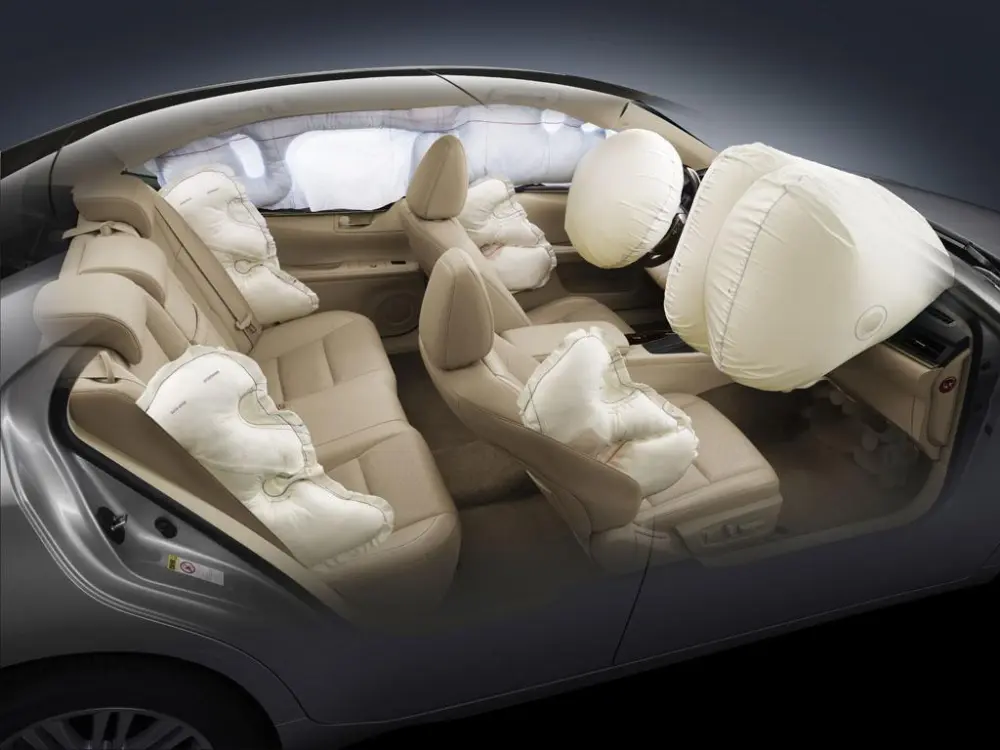
Airbags are no longer a luxury; they are an essential safety feature. Hence, dual airbags are mandatory for all cars in India. However, buying a car that offers six or more airbags can enhance occupant protection. The inclusion of side and curtain airbags can protect the occupants during a side-on collision.
Therefore, always look for a car or a variant that offers six airbags, rather than opting for the mandated dual airbags. Another point to note is that airbags only work effectively when the passengers are wearing their seatbelts. Therefore, it is always essential to buckle up the seatbelts before starting the drive.
ABS and ESC
Typically, most accidents occur due to the loss of control during emergency braking or when driving on slippery roads. During such situations, ABS (Anti-Lock Braking System) and ESC (Electronic Stability Control) come to your rescue. Nowadays, all cars come with this essential safety feature. Here’s how these features jump into action.
- ABS: It prevents the wheels from locking up during heavy braking and allows the driver to steer the vehicle during braking. This prevents skidding and loss of control.
- ESC: It automatically applies brakes on individual wheels and modulates the engine power to overcome loss of traction or skidding of wheels. In turn, it allows the vehicle to maintain stability irrespective of the driving conditions.
ADAS (Advanced Driver Assistance Systems) - How does it prevent accidents?
ADAS is one such safety technology that has significantly transformed road safety worldwide. Once seen only on luxury cars, this technology has trickled down to mid-range cars, especially in compact SUVs, premium hatchbacks and sedans. As the name suggests, this safety suite helps the driver identify potential hazards on the road, and some systems can even take evasive actions if the driver does not react in time. Some of the common safety features of ADAS include the following:
- Forward collision warning
- Autonomous emergency braking
- Lane departure warning
- Adaptive cruise control
- Blind-spot detection
However, the point is that ADAS cannot completely replace good driving habits and attentive driving; it can, however, make your life behind the wheel easier. Although not necessary, it is a good feature to have, knowing that the vehicle always has your back, even before something unprecedented happens.
Strong body structure
No matter how many advanced safety features a car has, if the body structure or build quality is not good enough, it cannot be deemed a safe car. However, manufacturers are thankfully prioritising this aspect by using high-strength steel bodies, well-designed crumple zones, and reinforced frames. All these improvements result in better impact absorption, which translates to better protection for the occupants.
This is one of the reasons why modern cars perform well in crash tests conducted by Bharat NCAP and Global NCAP. Hence, choosing a car with a 4 or 5-star safety rating means you are buying a vehicle with strong build quality, in addition to the entire suite of safety features it comes with.
TPMS (Tyre Pressure Monitoring System)
Sudden loss of tyre pressure or a tyre blowout can cause you to lose control of the vehicle without warning. And if it happens when you are cruising on a highway, the danger increases exponentially. Hence, having TPMS in your car is critical as it alerts the driver when the tyres lose air pressure. TPMS gives you that extra time to react before the problem gets out of control.
Rear parking sensors and camera
Accidents can also happen at slow speeds, especially when parking or reversing the vehicle. This is particularly prominent in urban environments, where space can become a potential hazard. Rear parking sensors and a camera help in that regard. Parking sensors are a standard safety feature in all cars, and a camera may be available in higher variants. However, always opt for a variant that has both features.
Why safety features should influence the buying decision
Here are a few key points that highlight why safety features should be the top priority when purchasing a new car.
- A safe car will protect you and your loved ones.
- It reduces the risk of life-threatening injuries in case of an accident.
- You will have more confidence when driving in adverse weather conditions or on slippery road surfaces.
- You will get better resale value for your car as buyers prefer safe cars.
Safety beyond the car
A safe car can reduce the likelihood of accidents and potentially prevent major injuries to its occupants. However, in the event of an accident, you may still require medical assistance or treatment. That’s why you should always consider strengthening your own as well as your family’s protection through health insurance. It serves as a financial safety net during medical emergencies, regardless of whether the emergency is accident-related or related to general health.
Takeaway
Safety should not be compromised when buying a new car, and with advanced safety technology becoming more accessible, it is a no-brainer to choose a car with a well-rounded safety package. A car can always be replaced, but the same is not true for your life or well-being. So, if you are in the market for a new car, safety should take the front seat.