
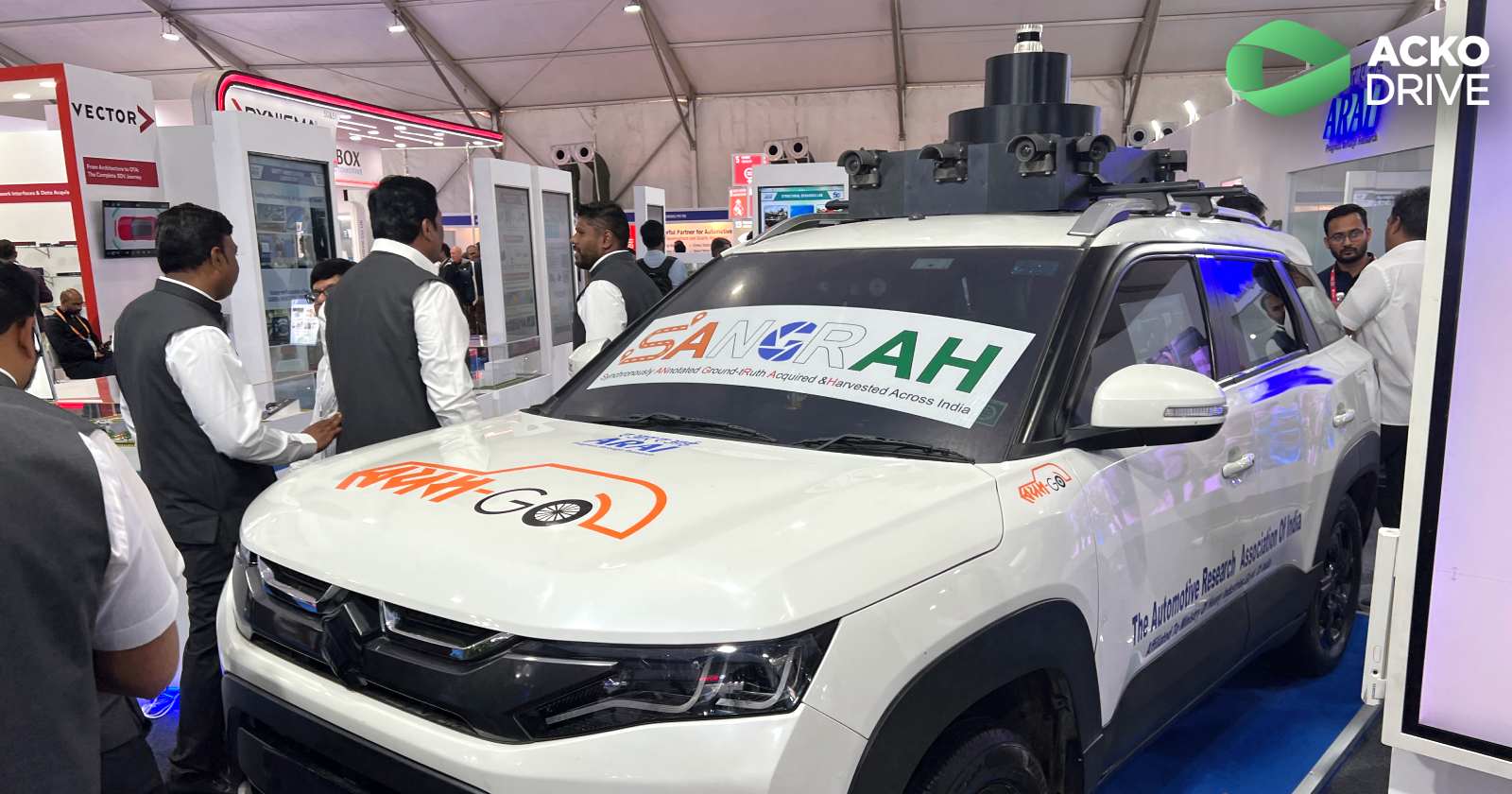
The car is equipped with eight cameras, a 128-channel LiDAR array, and mid-range radar.


Share Post
The car is equipped with eight cameras, a 128-channel LiDAR array, and mid-range radar.
The Automotive Research Association of India, now in its 60th year, is tasked with setting India-specific standards, testing and certifying vehicle mileage, evaluating new designs and technology, and advising the government on the needs of the industry. While administered by the Ministry of Heavy Industries, it is run as a co-operative with several players in the automobile manufacturing space and its ancillary suppliers serving in key management roles. Its services include homologation, emissions testing, powertrain research, simulation, safety engineering, and more. It also represents the Indian industry at several international organisations.
ARAI also organises the biennial Symposium on International Automotive Technology (SIAT), where researchers and companies from India and around the world can hear from top industry leaders and present their own work to manufacturers, academics, policymakers, and the media. ARAI itself also showed off many of its own projects and capabilities.
ACKO Drive spotted an interesting display at ARAI’s own booth – one of the actual test beds used to gather real-world road data for ADAS testing and development. The car is a Maruti Suzuki Brezza, specially modified with eight cameras as well as a 128-channel LiDAR array to achieve a 360-degree field of view, as well as mid-range radar for collision avoidance testing. Called Swayam-Go, the programme helps carmakers localise their ADAS offerings to adhere to standards and real-world conditions in India, with the eventual possibility of developing autonomous vehicles.
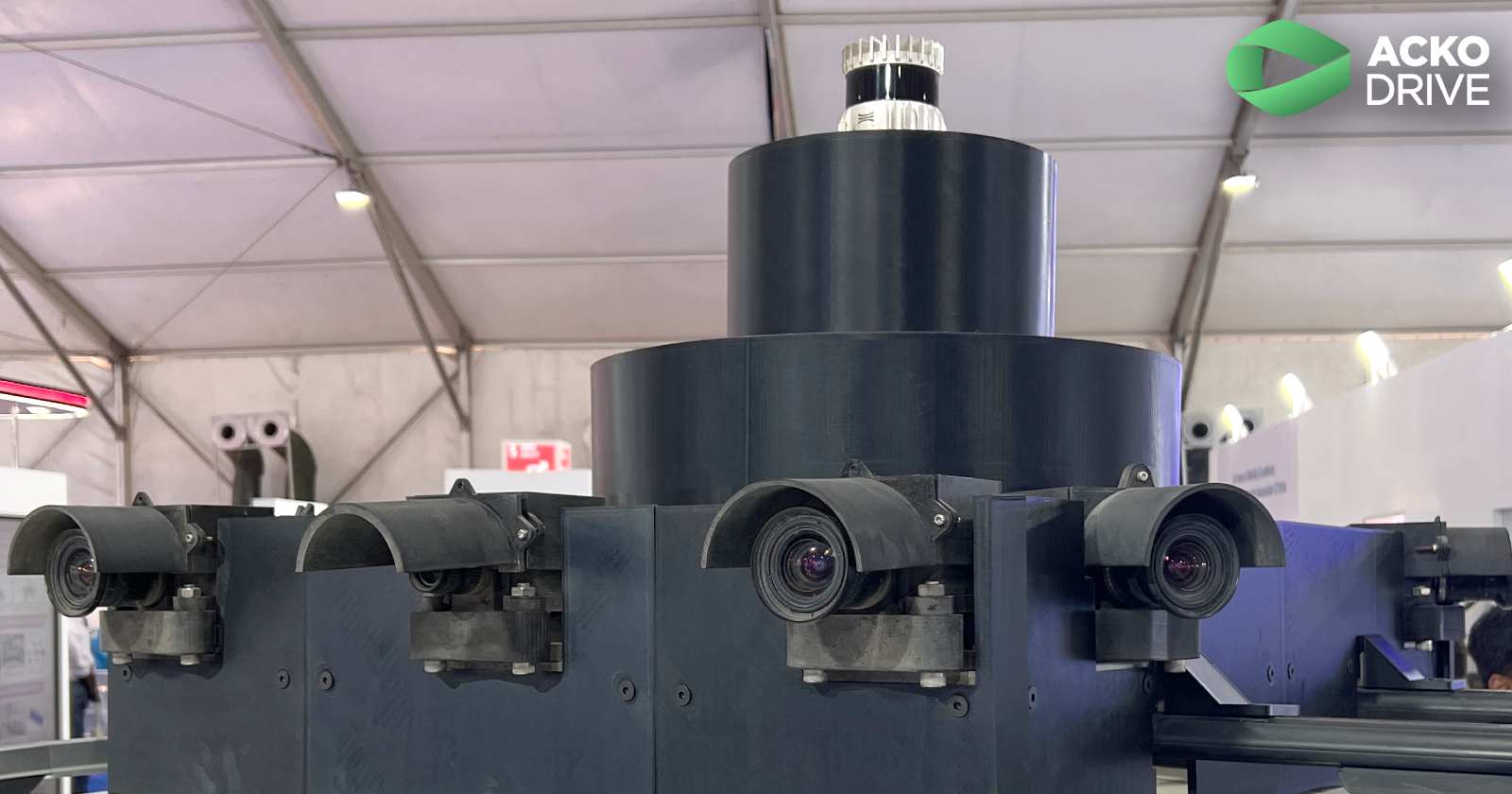
The raw data acquisition vehicle has been driven throughout India. Both this one, and a similarly equipped Mahindra Scorpio, have covered around 20,000–25,000 km, according to ARAI staff present at the SIAM exhibition area. Nearly all state capitals and major metros have been studied. Having covered the golden quadrilateral, the team driving these cars will continue capturing data across smaller towns and villages.
The cars are driven at different times of day and in different seasons, across various types of roads and terrain, to capture data in all kinds of conditions. ARAI representatives told ACKO Drive that there are sixteen primary classes of objects detected including animals, animals drawing carts, bicycles, and tempos, which are common in India but might not be what international companies have tested for in their home countries.
Interestingly, ARAI points out that autorickshaws are a challenge since they vary in size, shape, and colour across different states and regions. This is a particular focus area for the team. Other things that differ a lot across India are traffic signs and road marking patterns. According to the team, the colours used on a sign are actually more important than the language. The team recently developed a new algorithm to identify lane markings, even when they are blurred or small.
The Swayam-Go vehicles allow ARAI to collect data about how road conditions, traffic, and even linguistic patterns change from region to region. This local insight is key to developing solutions that work for India.
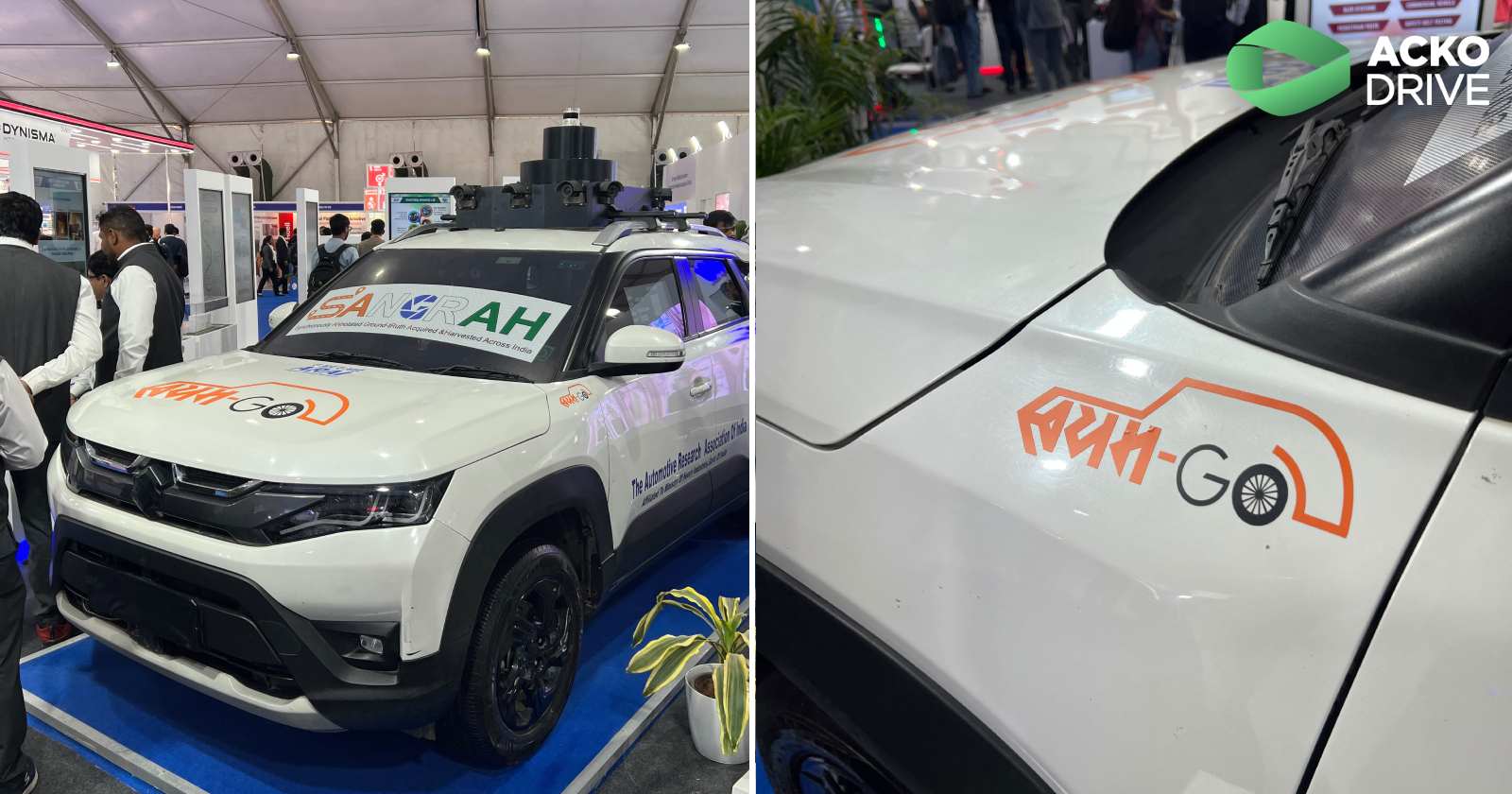
Once data is captured from all the cameras and sensors, it is dumped onto ARAI’s in-house servers, and then converted into frames. Each frame is annotated with information about the detected objects and their motion with 2D bounding boxes. People’s faces and licence plates are also masked for privacy.
Specific incidents are mapped to ADAS functionalities, such as collision avoidance. These can then be used to create simulations and train machine learning tools for further testing and validation.
What this means is that car manufacturers can licence this raw data to build their own ADAS models, or they can use the specific, annotated scenarios to validate their systems for these specific Indian conditions and contexts. ARAI can also provide validation services.
ARAI representatives told ACKO Drive that they are in talks with multiple Tier I and II companies, but declined to name any. By using ARAI’s scenarios, these companies do not need to actually watch and process hours’ worth of footage from multiple cameras plus radar and LiDAR information. They can pick and choose, for example, 1,000 lane change scenarios, in order to train their own collision avoidance algorithms and fine-tune their electronic control units.
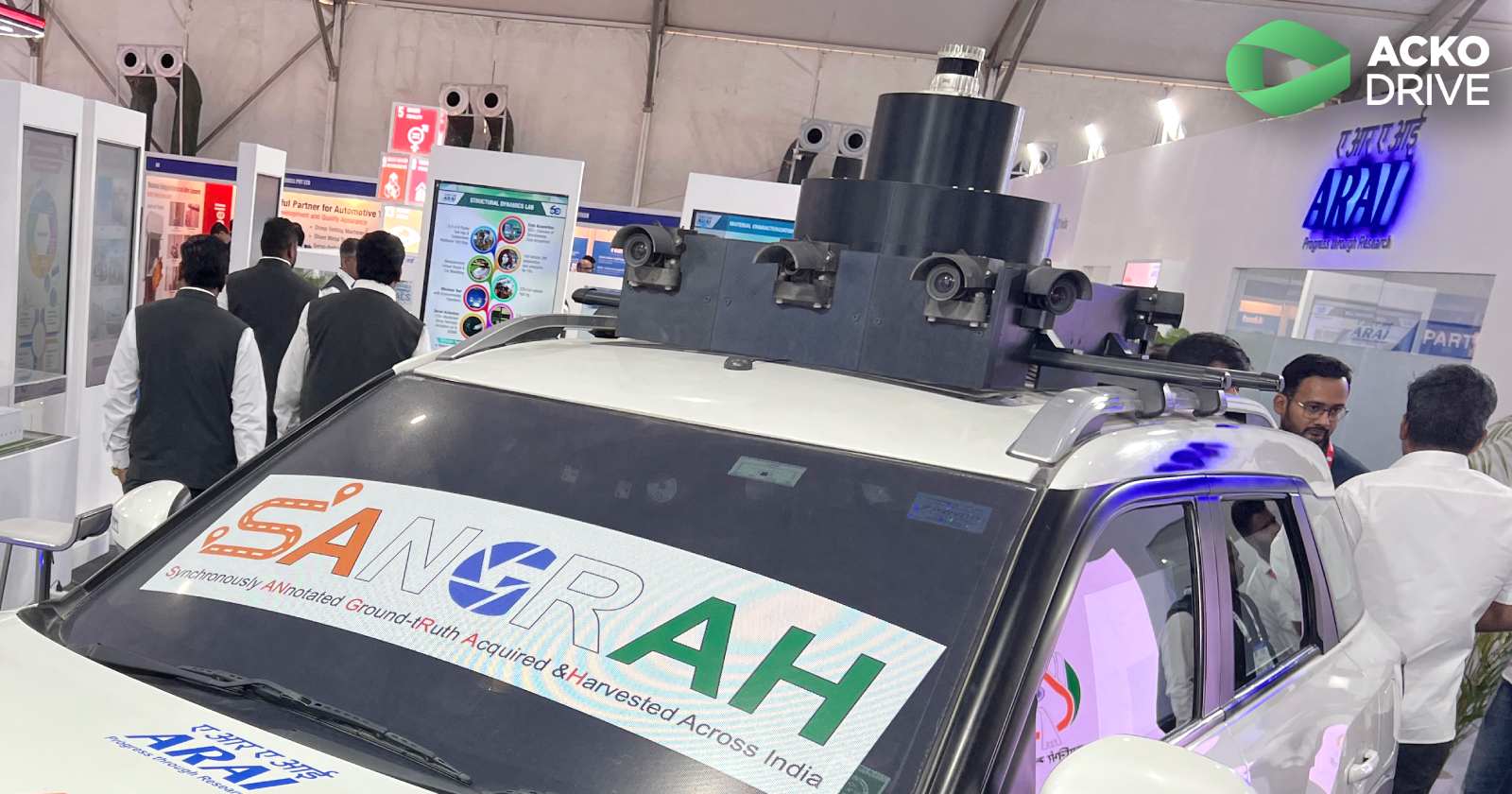
The Swayam-GO team at ARAI is working on capturing similar ADAS data for heavy vehicles, with the same camera and sensor setup mounted on a truck. Interestingly, the agency doesn’t see a need to do the same with bikes, as its data models are functional enough. In fact, the data gathered so far can be used to validate future inputs. The team is beginning to use just dashcam footage, and says it is 80 percent as accurate when validated against the Swayam-GO vehicle’s comprehensive sensor information. Cracking the last 20 percent will mean being able to simplify how future data is recorded and assessed.
For now, the team uses commercially available Matlab software for simulations and generating scenarios from its data, but is working on developing in-house tools to train machine learning models. As its efforts continue, manufacturers will be able to make vehicles in India more aware of their surroundings, with important context about local conditions and behaviour, thereby improving safety.

Nembharat App Announced with Zero Commission Model for Drivers
Acko Drive Team 23 Feb, 2026, 12:10 PM IST
Automakers Pursue Eyes-Off Driving Systems Amid Debate on Viability
Acko Drive Team 23 Feb, 2026, 12:06 PM IST
Mumbai to Get Unified Public Transport Services Across Rail, Metro, Bus, Taxi Networks
Acko Drive Team 23 Feb, 2026, 10:42 AM IST
New MG Plug-In Hybrid SUV Spotted In India For First Time
Acko Drive Team 23 Feb, 2026, 10:35 AM IST
Omega Seiki Files Patent for E-Rickshaw with Air Conditioner
Acko Drive Team 23 Feb, 2026, 8:02 AM IST

Looking for a new car?
We promise the best car deals and earliest delivery!
