
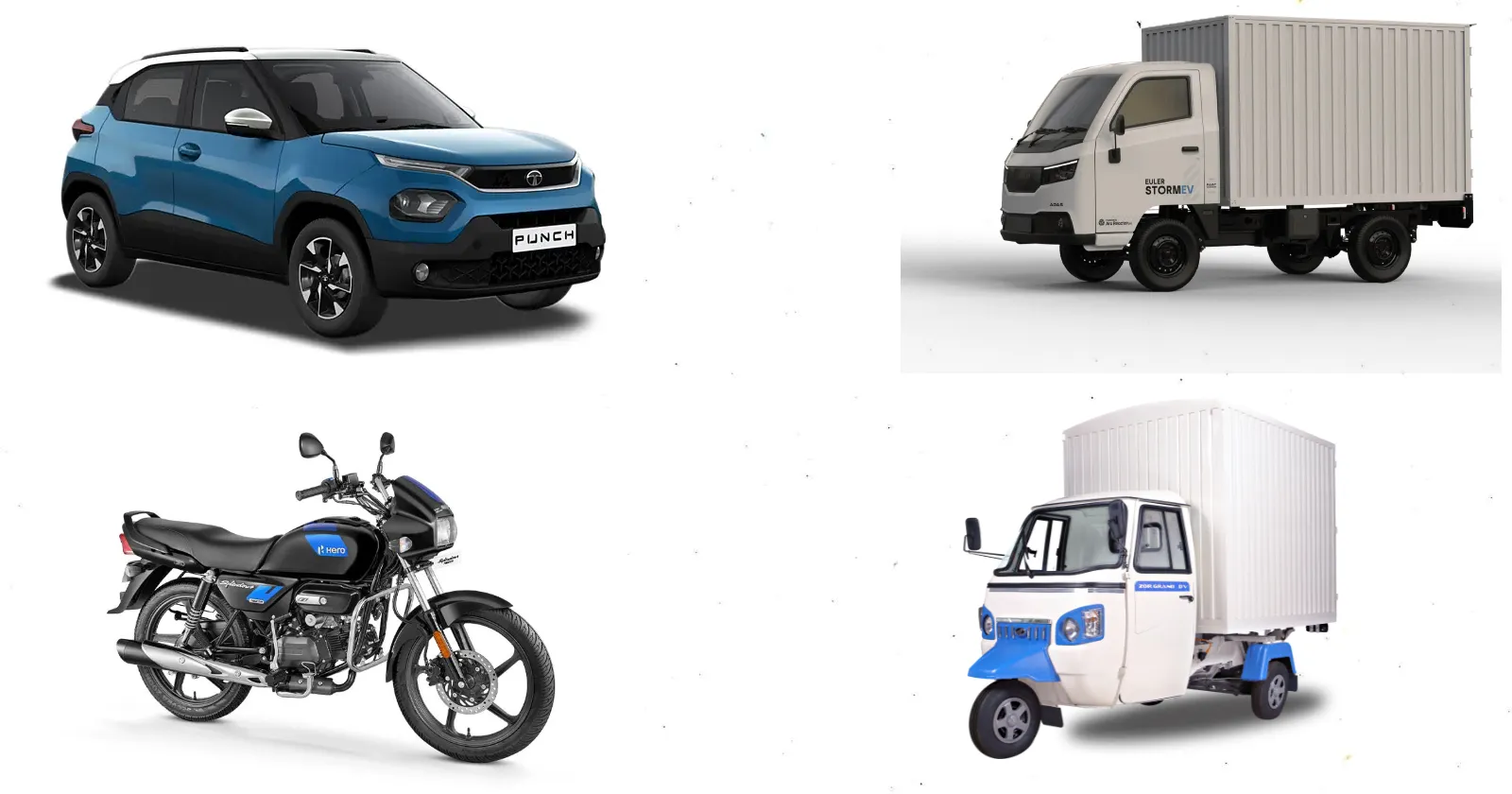
Implementation of GST 2.0, abolition of cess and a strong festive demand have resulted in a significant overall YoY growth across all segments.


Share Post
Implementation of GST 2.0, abolition of cess and a strong festive demand have resulted in a significant overall YoY growth across all segments.

India’s automobile industry delivered a robust performance in November 2025, marking healthy year-on-year (YoY) growth across all major segments. According to the latest data released by the Society of Indian Automobile Manufacturers (SIAM), the month witnessed the highest-ever November sales for passenger vehicles, two-wheelers, and three-wheelers, aided by festive demand and continued support from the government’s GST 2.0 reforms.
However, the industry’s performance over the April–November period tells a more tempered story, with slower cumulative growth and segment-specific challenges shaping the broader outlook.
November 2025 proved to be a standout month for the industry. Passenger vehicles, two-wheelers, and three-wheelers all recorded double-digit YoY growth, reflecting strong retail sentiment and improved market liquidity.
Passenger vehicle (PV) sales climbed to 4,12,405 units, up 18.7% from the 3,47,522 units recorded a year earlier. Two-wheeler (2W) wholesales surged to 19,44,475 units, a substantial 21.2% increase, while three-wheeler (3W) sales rose to 71,999 units, marking 21.3% growth compared to November 2024. Industry optimism remains high for the coming months, supported by sustained policy reforms and improving market sentiment.
While November’s numbers were encouraging, the cumulative performance from April to November 2025 did not mirror the same momentum. Growth during the eight-month period remained modest across several categories, implying that despite a strong festival-driven recovery, the broader industry landscape continues to stabilise rather than accelerate.
Key segments such as passenger vehicles and two-wheelers experienced slower cumulative expansion compared to their strong monthly surge in November. This divergence indicates that structural factors — including inventory cycles, supply chain adjustments, and uneven rural demand — continue to weigh on overall growth.
The industry’s performance also suggests that while November brought a positive spike, it may not necessarily translate into sustained high growth. The lower cumulative expansion over the April–November period signals cooling demand levels following the GST-driven surge seen in the early months of the fiscal year.
Manufacturers remain cautious about stocking strategies, and logistical challenges — highlighted by SIAM in previous monthly updates — have also influenced the pace of growth. Enthusiasm remains high, but the indicators suggest that the market is normalising after short-term festive boosts.
Despite the strong YoY growth, the passenger vehicle segment saw a notable month-on-month (MoM) decline, dropping from 4,60,739 units in October 2025 to 4,12,405 units in November 2025.This decline reflects a post-festive cooling phase, which is typical after the October peak driven by retail demand during major festivals. OEM dispatches to dealers slowed as channel inventories normalised. Additionally, logistical pressures — highlighted in SIAM’s October update — may have influenced dispatch volumes in November.Despite the dip, the segment’s YoY performance remains strong, reaffirming robust underlying demand.
One of the standout metrics from the latest SIAM report is the sharp increase in three-wheeler export volumes, which doubled compared to the previous year. While domestic demand for three-wheelers grew by 21.3%, the export surge points to rising acceptance of Indian three-wheelers in markets across Africa, South Asia, and the Middle East.
Within domestic sales, passenger carriers grew by 24.6%, and goods carriers registered 10.9% growth. E-rickshaws, however, saw a decline of 25.6%, indicating shifting trends in the electric three-wheeler landscape.
The two-wheeler category — India’s largest automotive segment — continued its upward trajectory in November. Total sales grew 21.2% YoY, driven by both domestic demand and export strength. Scooters led the category with 29.4% growth, while motorcycles rose 17.5%. Mopeds saw a marginal decline of 2.1%. For manufacturers, the two-wheeler segment’s sustained domestic and export growth offers critical support amid fluctuating demand trends in other vehicle categories.
The combination of strong November numbers and muted April–November performance creates a mixed but cautiously optimistic outlook for the sector. While festive demand and supportive policies have driven short-term gains, the industry’s slower cumulative growth suggests the need for steadying factors such as improved rural sentiment, stable fuel prices, and continued supply-chain resilience. Manufacturers will likely adopt calibrated strategies heading into 2026, balancing inventory management with evolving buyer preferences.
Also READ: Toyota Kirloskar Motor Hands Over Mirai to NISE For Green Hydrogen Mission Study

Renault Scripts Big Play With RGMP Platform, India Expected to Be the Duster’s Biggest Market
Sumantra Bibhuti Barooah 6 Mar, 2026, 4:02 AM IST
The ePlane Company Partners With HENSOLDT Avionics For Advanced Electronics Management For Upcoming e200X eVTOL Aircraft
Acko Drive Team 5 Mar, 2026, 2:53 PM IST
Indian OEMs Delay Shipments to Middle East, Africa as Geopolitical Tensions Intensify
Acko Drive Team 5 Mar, 2026, 2:29 PM IST
Ultraviolette F77 & X-47 Electric Motorcycles Introduced With BaaS, Prices Now Start At ₹1.49 Lakh
Acko Drive Team 5 Mar, 2026, 11:39 AM IST
MG e-Hub Becomes India’s Largest EV Charging App With 22,500 Charging Points
Acko Drive Team 5 Mar, 2026, 11:00 AM IST

Looking for a new car?
We promise the best car deals and earliest delivery!
