

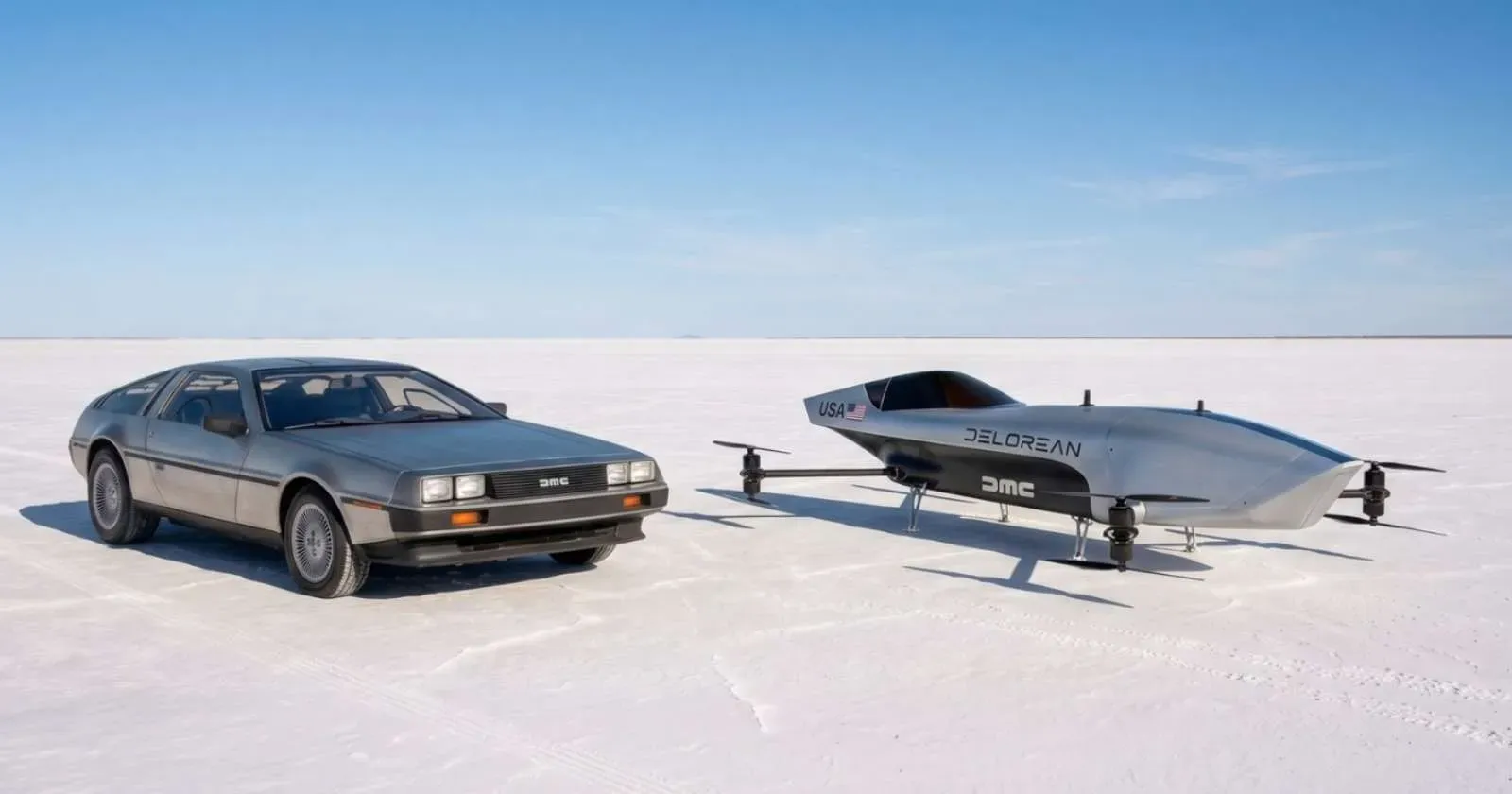
DeLorean Motor Company will enter the Airspeeder International Series as constructor of the United States team, marking its first move into competitive electric aviation and the first entry by an American manufacturer in the sport. The announcement was made at TechCrunch Disrupt 2026. The DeLorean Airspeeder Team will make its racing debut when the 2026–27 season opens in November 2026, competing against national teams from around the world in what organisers describe as the first international season of the championship.
The Airspeeder International Series involves electric vertical take-off and landing (eVTOL) aircraft racing through electronically defined courses rather than conventional circuits. For its debut season, the DeLorean team will race the Airspeeder Mk3C, with the manufacturer directing the aircraft's design identity. Details of the aircraft specification, pilot line-up and full sporting programme are yet to be released and will be confirmed closer to the season opener.
DeLorean's involvement is set to deepen beyond branding. For the 2027–28 season, the team's aircraft will be developed in collaboration with student engineering groups from American universities, including the University of California, Berkeley, and Georgia Tech — an arrangement that brings academic research talent directly into race-aircraft development, a model more commonly associated with motorsport ladder series than with commercial aviation programmes.
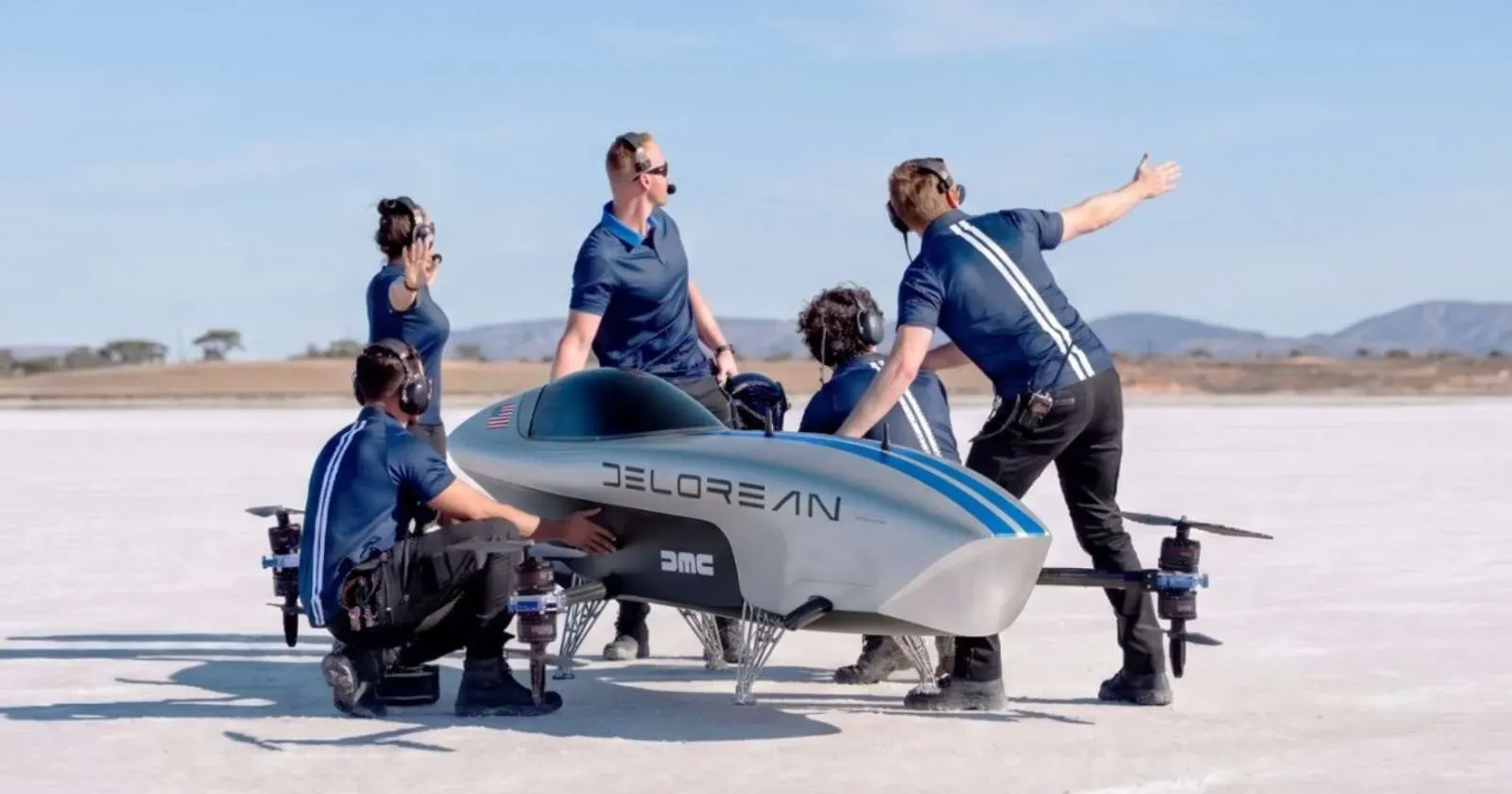
"DeLorean has always stood for the courage to imagine transportation differently," said Cameron Wynne, Chief Brand Officer at DeLorean Motor Company. "People have pictured a DeLorean in the sky for forty years. We decided it was time to stop picturing it."
Airspeeder founder and chief executive Matt Pearson framed the signing as a statement of intent for the series itself: "Every great racing series is defined by the constructors who choose to compete in it. To have an American icon line up on our grid in our first international season tells you where this sport is going."
The rationale, as Wynne put it, rests on motorsport's traditional role in accelerating development: competition compresses engineering cycles, exposes systems to public scrutiny and forces performance to be proven under pressure rather than in controlled trials. For a technology still some distance from commercial deployment, that is the appeal — a live, televised proving ground at the point where electric flight begins shifting from prototype to product.
The entry says as much about Airspeeder's ambitions as DeLorean's. Flying car racing remains a nascent category globally, and persuading a recognisable legacy brand to anchor a national team lends the series credibility it could not generate through engineering claims alone. For DeLorean — a manufacturer whose production history remains far shorter than its cultural footprint — the venture offers relevance in an emerging mobility segment without the capital intensity of returning to volume car manufacturing.
Neither company has disclosed financial terms of the partnership. Further details on the aircraft, crew and broader scope of the DeLorean-Airspeeder relationship are expected in the coming months.