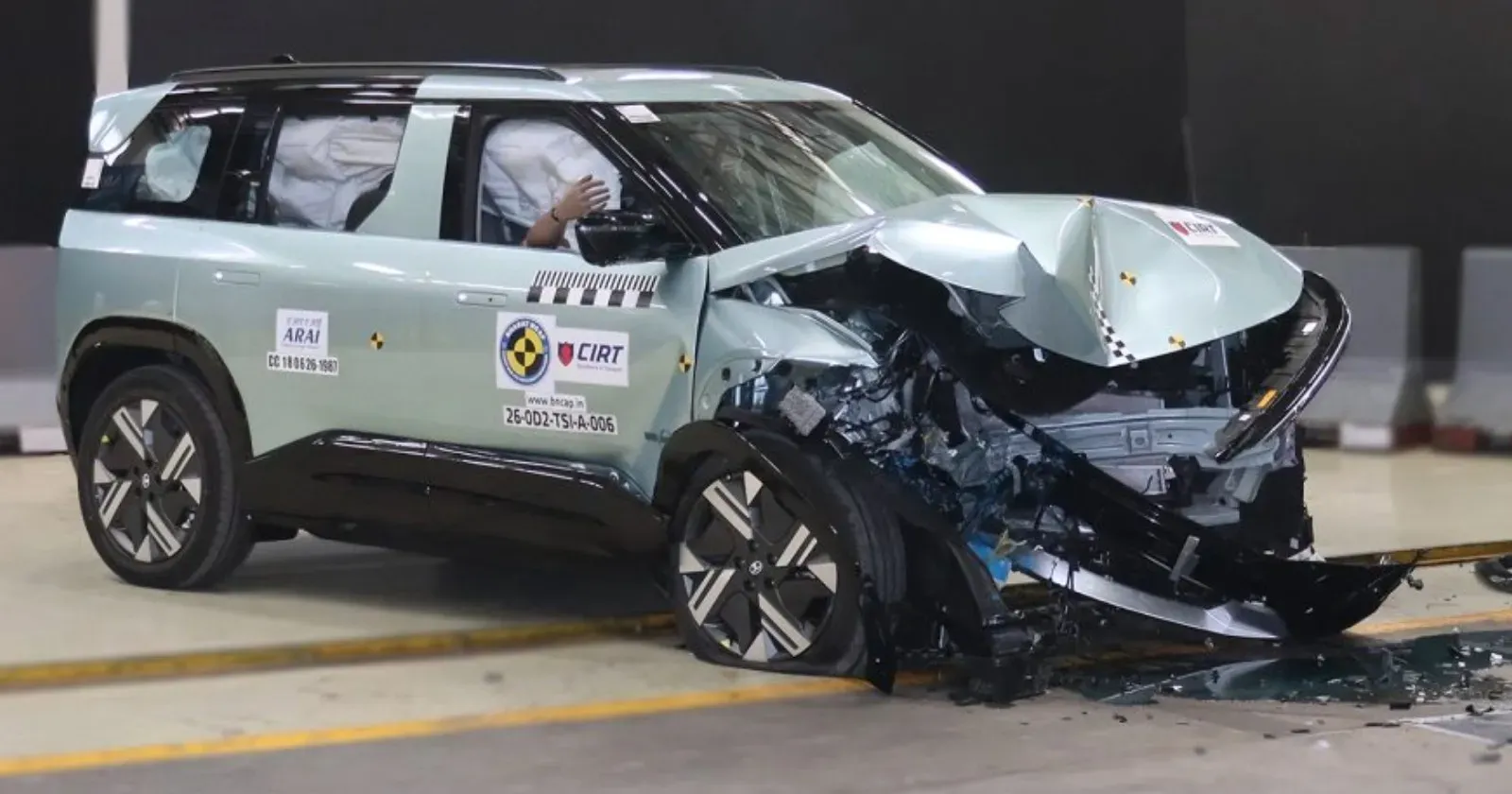


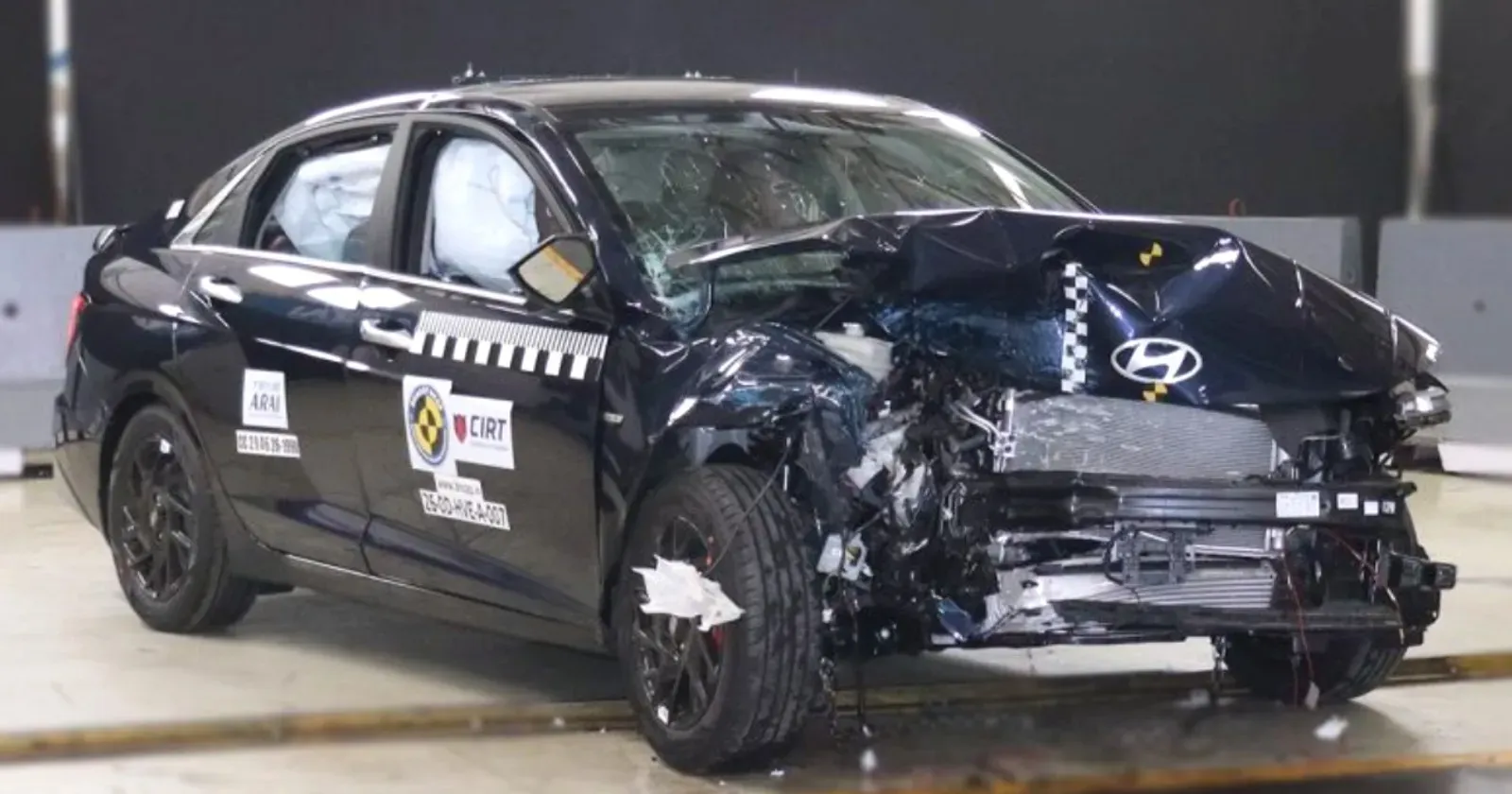
The Hyundai Verna has been awarded a five-star safety rating under the Bharat New Car Assessment Programme (Bharat NCAP), with the India-built compact sedan scoring 28.22 out of 32 points for adult occupant protection and 44.00 out of 49 for child occupant protection, according to the official fact sheet published following its assessment.
The test was conducted on the 1.5 Turbo GDi DCT HX 8 and 1.5 MPi iVT HX 8 variants, with a crash test weight of 1,521 kg. The rating extends across a wide band of the model's lineup, from the base HX2 trim through to the range-topping HX10, covering both manual and automatic transmission options on the naturally aspirated 1.5-litre MPi and turbo-petrol GDi engines.
In the frontal offset deformable barrier test, the Verna scored 12.45 out of 16, while the side movable deformable barrier test yielded a stronger 15.77 out of 16, with the side pole impact test also returning a clean result. The scores reflect generally good to adequate protection across most body regions, though assessment diagrams point to marginal performance in the pelvis and lower-leg zones during the frontal test.
Standard safety equipment across the tested variants includes dual front airbags, side curtain airbags, side chest airbags, electronic stability control, pedestrian protection compliant with AIS-100, and seat belt reminders for all occupants, meeting the requirements of AIS-145. Hyundai has also fitted ISOFIX child-seat anchors on the outboard rear seats, which proved central to the car's child-safety score.
For child occupant protection, the Verna was evaluated using the JOIE i-SPIN 360e restraint system for both an 18-month-old and a three-year-old dummy, fitted via ISOFIX in a rearward-facing position. It recorded a perfect dynamic score of 24 out of 24 and a maximum 12 out of 12 for CRS installation, with the vehicle assessment component contributing 8 of a possible 13 points.
The rating adds to a steadily growing list of Bharat NCAP five-star vehicles, as domestic manufacturers increasingly submit volume models for voluntary assessment under the homegrown programme, launched in 2023 as an alternative to Global NCAP testing. For the sedan segment, which has seen declining volumes against the SUV boom, crash-test credentials have become a meaningful differentiator for buyers weighing safety against evolving tastes.