
The most promising near-term market opportunity for Indian automotive manufacturers in the US lies within the $25,000–$35,000 (₹22.5 lakh to ₹31.5 lakh) price bracket and specifically in the compact SUV segment.


Share Post
The most promising near-term market opportunity for Indian automotive manufacturers in the US lies within the $25,000–$35,000 (₹22.5 lakh to ₹31.5 lakh) price bracket and specifically in the compact SUV segment.
PM Narendra Modi and US President Donald Trump have jointly announced a new trade agreement, under which the US will cut import tariffs on Indian goods from 50 per cent to 18 per cent. In return, India has committed to discontinuing its procurement of Russian oil and implementing reduced trade barriers.
An industry analyst ACKO Drive spoke to, suggests that the most promising near-term market opportunity on account of the latest US duty relief for Indian automotive manufacturers in the US lies within the $25,000–$35,000 (₹22.5 lakh to ₹31.5 lakh) price bracket, specifically in the compact sport utility vehicle (SUV) and lifestyle four-wheel-drive segments.
Also read: Indian Auto Component Makers Eye Gains After US Tariff Cut
These vehicle categories represent high-demand markets where consumers prioritise capability and value proposition, but which also have relatively low brand loyalty compared to other segments. This could create a favourable entry point for Indian auto manufacturers seeking to establish a foothold in the US automotive market.
"From a market point of view, the best near-term opportunity for Indian automakers in the US is in the $25,000–$35,000 (₹22.5 lakh-₹31.5 lakh) compact SUV and lifestyle 4x4 segments. These are high-demand categories where buyers care about capability and value, and brand loyalty is relatively lower," Saujanya Sharma, Automotive Research Analyst at Counterpoint Research told ACKO Drive.
Also read: India–US Trade Deal Cuts Reciprocal Tariffs to 18%: Auto Industry Reacts
The latest tariff structure revision enhances the competitive positioning of Indian auto OEMs against established Asian rivals in the US market.
"The 18 per cent reciprocal tariff significantly improves pricing, making it easier for Indian OEMs to compete with Japanese and Korean brands on landed cost. In particular, vehicles that combine real off-road capability, solid build quality, and modern interiors, without the high prices of Jeep or Land Rover, offer the most practical and realistic path to early market entry and acceptance," Sharma further explained.
When it comes to other nations, US tariffs are the steepest on Brazil at 50 per cent, with Laos and Myanmar second at 40 per cent each. China comes third with 37 per cent tariffs.
Advanced economies, however, face lower US tariffs with Japan, the European Union (EU), Switzerland and South Korea at 15 per cent each. The UK has the lowest duties at 10 per cent.
The latest tariff revision brings strategic opportunities for India's leading vehicle manufacturers, but, advantages extend beyond immediate sales volumes to include broader market positioning.
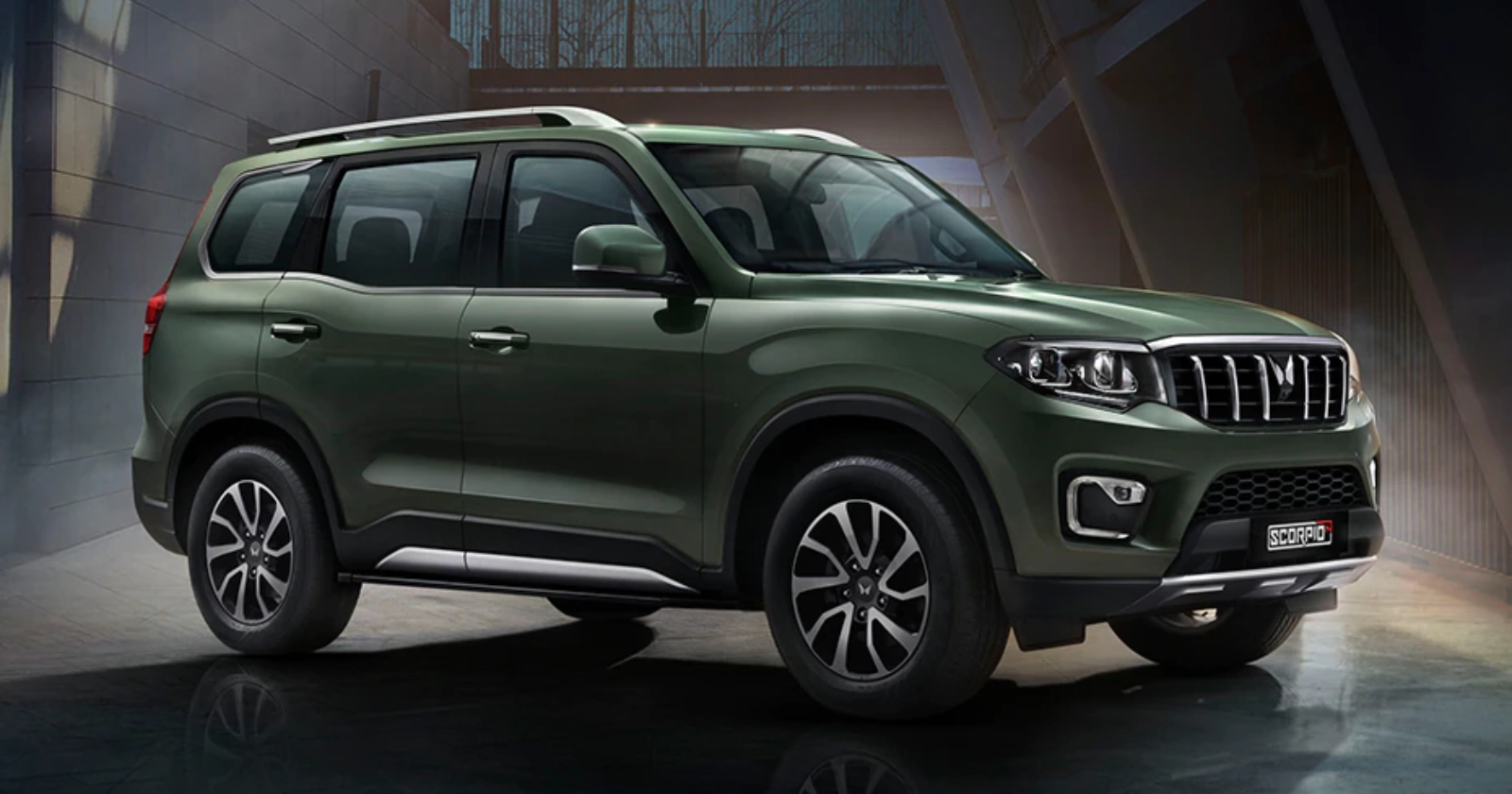
"For vehicle manufacturers , the advantage is less about immediate sales and more about market entry. For Mahindra & Mahindra which focuses on mainly on SUVs and off-road vehicles, the most popular and profitable segments in the US, the 18 per cent tariff makes models like the Scorpio-N and Thar much more price-competitive. This could reduce costs by around $7,000–$10,000 per vehicle compared to earlier tariffs, helping Mahindra compete more effectively with Japanese and American brands," Sharma explained.
"Tata Motors' advantage is more strategic, it can use Jaguar Land Rover’s existing US dealer and logistics network to simplify market entry, while its upcoming EV models help position Tata as a technology-focused brand. By importing key components at lower tariffs and doing final assembly in the US, Tata can avoid heavy truck import taxes and improve access to federal EV incentives, making a gradual and cost-efficient US entry more practical for both companies," he concluded.

Rajiv Bajaj Calls Maharashtra EV Policy A “Failure”
Acko Drive Team 25 Feb, 2026, 6:01 PM IST
New-Gen Renault Duster India Launch Confirmed On March 17
Acko Drive Team 25 Feb, 2026, 1:22 PM IST
Toyota Land Cruiser & Lexus LX Recalled In India Over Gearbox Software Glitch
Acko Drive Team 25 Feb, 2026, 12:46 PM IST
Jetour T2-Derived SUV Officially Teased by JSW Motors in India
Acko Drive Team 25 Feb, 2026, 12:05 PM IST
Pune May Ban Vehicles Older Than 15 Years
Acko Drive Team 25 Feb, 2026, 11:55 AM IST

Looking for a new car?
We promise the best car deals and earliest delivery!
