

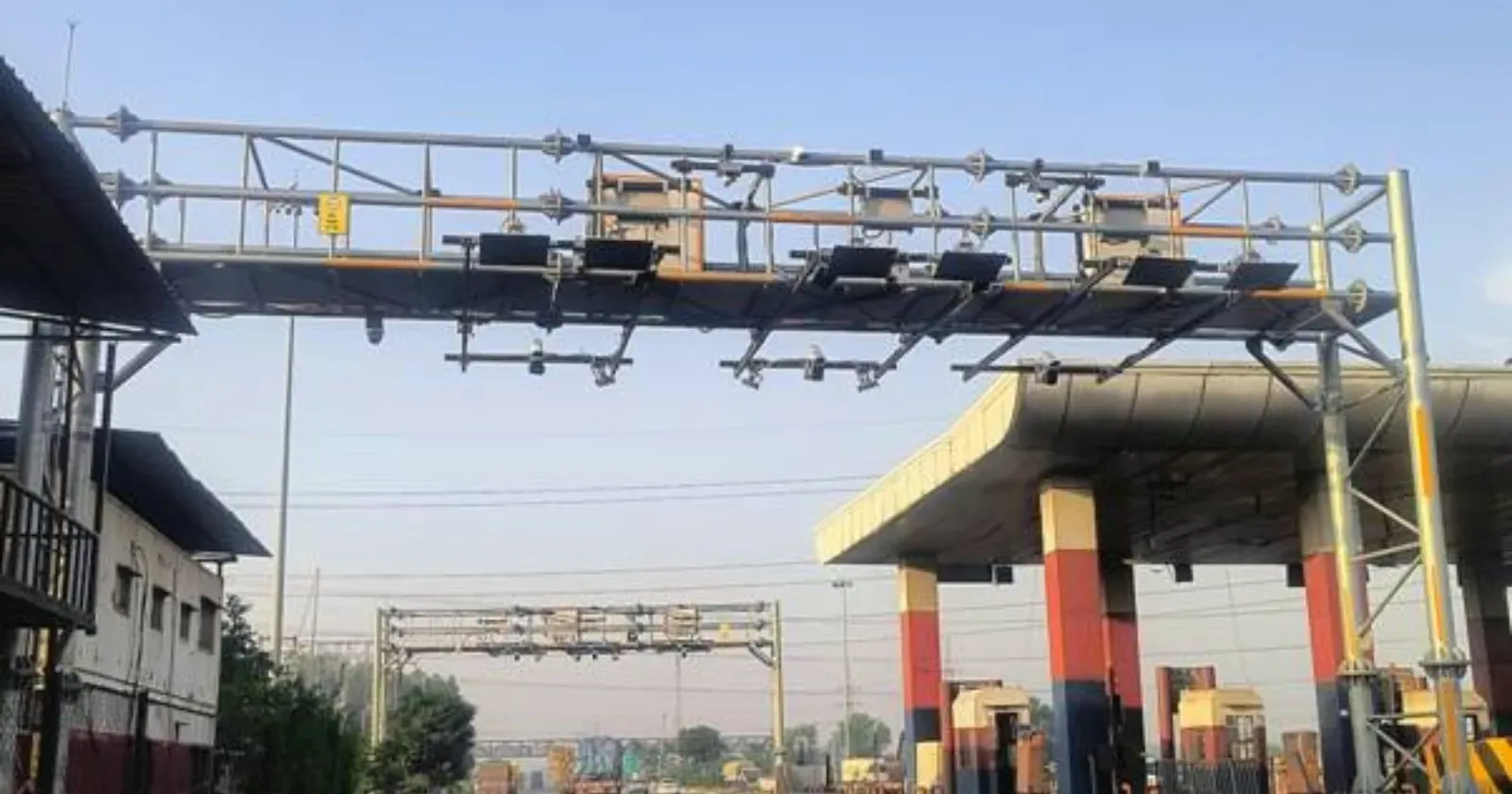
The National Highways Authority of India (NHAI) has so far installed nine barrier-free Multi-Lane Free Flow (MLFF) systems at key toll plazas across the country. The government agency, which functions under the Ministry of Road Transport and Highways, has now released figures showing that the first seven, which were operational as of October 31 this year, have all recorded significant increases in toll collection. The figures range from 15.66 percent to 26.85 percent, compared to the pre-MLSS baseline. The other two MLFF plazas were inaugurated less than a month ago and so have not yet been included in calculations.
According to the NHAI, there has also been a rise in toll transaction volume at each of these toll plazas in the period since MLFF technology was introduced, indicating that more cars are passing through more frequently, leading to increased revenue. The MLFF system is also said to reduce congestion at toll plazas and overall travel time, which further results in fuel savings and lower emissions. It also reduces the NHAI’s toll plaza operating costs.
The MLFF system uses cameras to capture vehicle license plates and long-distance radios to log each one’s FASTag as it passes through the toll collection point. This information can be correlated to identify vehicles and their registered owners. Drivers can pass under the overhead equipment without slowing down, queueing up, or separating into lanes. A car that fails verification does not stop and block traffic behind it; disputes are resolved later via electronic challan.
The first MLFF plaza at Choryasi in Gujarat was inaugurated on May 1, 2026. As of October 31, 2026, they collectively recorded a 19.84 percent increase in net revenue collected by NHAI, compared to each one’s pre-MLFF baseline.
MLFF Plaza Name and Location | Operational Since | Increase in Net Revenue |
Choryasi, Gujarat | 01.05.2026 | 23.06% |
Mundka, Delhi | 11.05.2026 | 23.55% |
Daulatpura, Rajasthan | 19.06.2026 | 15.66% |
Gharaunda, Haryana | 25.06.2026 | 17.39% |
Manoharpura, Rajasthan | 01.07.2026 | 24.51% |
Shahjahanpur, Uttar Pradesh | 01.08.2026 | 16.57% |
Paranur, Tamil Nadu | 01.10.2026 | 26.95% |
Average increase across 7 plazas | 21.10% | |
Overall increase (combined weighted basis) | 19.84% |
The two most recently inaugurated MLFF locations are Nemili and Chenasamudram in Tamil Nadu, which were inaugurated on November 12 and 21 respectively.
The seven plazas included in the calculation generated cumulative net revenue of ₹538.95 crore, compared to a ₹449.72 crore pre-MLFF benchmark figure; an increase of ₹89.23 crore, according to the NHAI. The agency also says it has collected approximately 60 percent of the value of e-challans issued at these plazas, saying the technology improves compliance and recovery enforcement.
However, the agency has noted multiple instances of vehicle owners deliberately attempting to evade automatic toll collection by obfuscating or tampering with their cars’ license plates to defeat automatic camera recognition. To counter this, it has established police checkposts at some MLFF installations and is actively working with each relevant state government.
As reported earlier, the NHAI is also working on AI-based vehicle tracking solutions, and is integrating the MLFF system with India’s Vahan vehicle database. Penalties for toll evasion are being evaluated, including the potential suspension of vehicle-related services. The MLFF system could also eventually evolve to support a per-km usage-based collection framework rather than flat road usage fees. The government has also previously proposed a satellite-based barrier-free vehicle tracking and toll system, though that is not yet ready for implementation.