
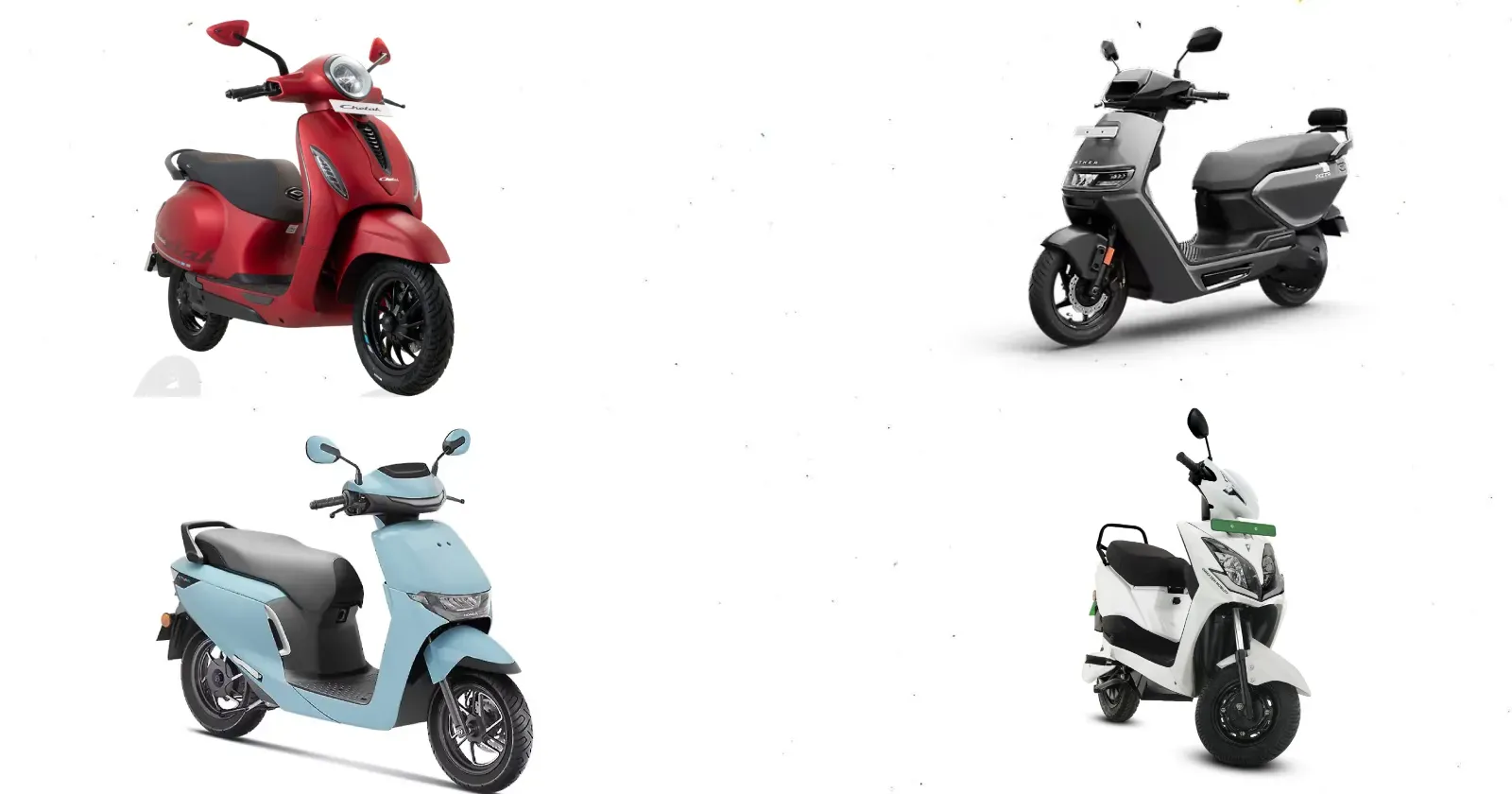
The latest report by CDEP flags the risk of India losing key export markets to Chinese EV manufacturers.


Share Post
The latest report by CDEP flags the risk of India losing key export markets to Chinese EV manufacturers.
The Centre for Digital Economy Policy Research (CDEP) has released a new report which analyses the impact of the Auto Production Linked Incentives (PLI) scheme on the country’s electric two-wheeler industry. The study assesses sales performance, export competitiveness, innovation outcomes, localisation, and domestic value addition to understand how the policy has influenced market dynamics.
The findings suggest that while the scheme has accelerated production scale among approved manufacturers, it has also reshaped competitive conditions, raising concerns about innovation diversity and export readiness.
One of the most visible outcomes of the Auto PLI scheme is the rapid scaling of production among approved OEMs. Electric two-wheeler OEMs outside the PLI framework have faced a steep market downturn, with sales plunging from 407 percent in FY2022 to –33% in FY2024 and slipping further to –11% in FY2025 after the scheme’s implementation. Beneficiaries of the scheme are estimated to enjoy a 13–16 percent cost advantage, enabling aggressive pricing and faster capacity expansion.
This advantage has allowed them to capture a larger share of domestic demand. In contrast, non-PLI manufacturers have experienced a sharp reversal in growth. Their expansion slowed from triple-digit growth in FY2022 to contraction by FY2024 and FY2025, indicating a significant reallocation of market share toward PLI-approved players. The analysis suggests that the cost differential created by incentives has been a primary driver of this shift.
Despite the scheme’s stated objective of strengthening global competitiveness, export performance in the electric two-wheeler segment remains uneven. Approximately 77 percent of India’s electric two-wheeler exports continue to come from non-PLI models, while PLI-supported products account for 23.5 percent of overseas shipments.
The report notes that several PLI beneficiaries have prioritised domestic market share over export-ready platforms. This trend may weaken India’s presence in traditional export destinations such as Nepal and emerging markets across Africa and Latin America. Increased competition from Chinese manufacturers could further erode India’s export share if domestic policies do not encourage global competitiveness.
The analysis highlights a divergence between production scale and innovation activity. Much of the innovation in complex or emerging segments—such as electric motorcycles and low-speed delivery scooters—appears to be driven by non-PLI firms and start-ups. This is significant because motorcycles account for roughly 65 percent of India’s overall two-wheeler market, yet EV penetration in this segment remains a negligible 0.01 percent only.
OEMs supported by the Auto PLI scheme have largely focused on high-volume scooter segments, where margins and demand are more predictable. While this strategy strengthens short-term production metrics, it may slow technological progress in segments critical for long-term electrification.
Also READ: Maharashtra Tops India PV Sales in Q3 FY2026 With 12.4% Share, Western Zone Leads All Regions: SIAM
The report also identifies governance and implementation challenges. It mentions that out of the nine approved electric two-wheeler OEMs under the Auto PLI scheme, only four are currently manufacturing and retailing vehicles. The manufacturers now command more than 80 percent of the market share.
Several lesser known companies registered under the PLI benefits have yet to introduce any PLI-approved models. The continued inclusion of these non-performing firms effectively ties up fiscal capacity within the scheme’s ₹25,938 crore outlay, which has already experienced relatively low utilisation.
To address emerging gaps, the analysis proposes targeted policy adjustments. These include opening a dedicated window for innovation-led OEMs that meet localisation requirements, introducing segment-specific incentives for technically challenging categories, and implementing periodic performance reviews to reallocate funds from non-performing beneficiaries.
Additional recommendations include adopting a first-come-first-served approval mechanism to prevent capacity hoarding and ensure more efficient allocation of incentives. Such measures aim to balance manufacturing scale with technological depth and export competitiveness.
The Auto PLI scheme has succeeded in boosting manufacturing scale and accelerating capacity expansion in the electric two-wheeler sector. However, the analysis underscores that scale alone may not guarantee long-term competitiveness. Without parallel support for innovation, export readiness, and diverse market participation, the sector risks consolidation that could weaken technological resilience.
Commenting on the findings, Dr. Jaijit Bhattacharya, President of C-DEP, said, "India’s electric two-wheeler industry is at a crucial stage where promoting technological diversity, innovation, and competition is just as important as manufacturing scale. Our analysis indicates that the current design of the Auto PLI scheme, while beneficial for scaling production, inadvertently disadvantages innovation-driven companies that are investing heavily in R&D and new technologies.”

Chinese Firm Reveals Detachable Range-Extending Generator for EVs
Acko Drive Team 27 Feb, 2026, 12:12 PM IST
Non-PLI Electric Two-Wheeler OEMs See Growth Plunge from 407% to –33%: Report
Acko Drive Team 27 Feb, 2026, 11:48 AM IST
51 Teams Compete as mBAJA SAEINDIA 2026 Opens in Narsapur
Acko Drive Team 27 Feb, 2026, 10:05 AM IST
Maharashtra Tops India PV Sales in Q3 FY2026 With 12.4% Share, Western Zone Leads All Regions: SIAM
Acko Drive Team 27 Feb, 2026, 9:39 AM IST
Raptee.HV Begins Large-Scale Deliveries of T30 Electric Motorcycle in India
Acko Drive Team 27 Feb, 2026, 8:14 AM IST

Looking for a new car?
We promise the best car deals and earliest delivery!
