
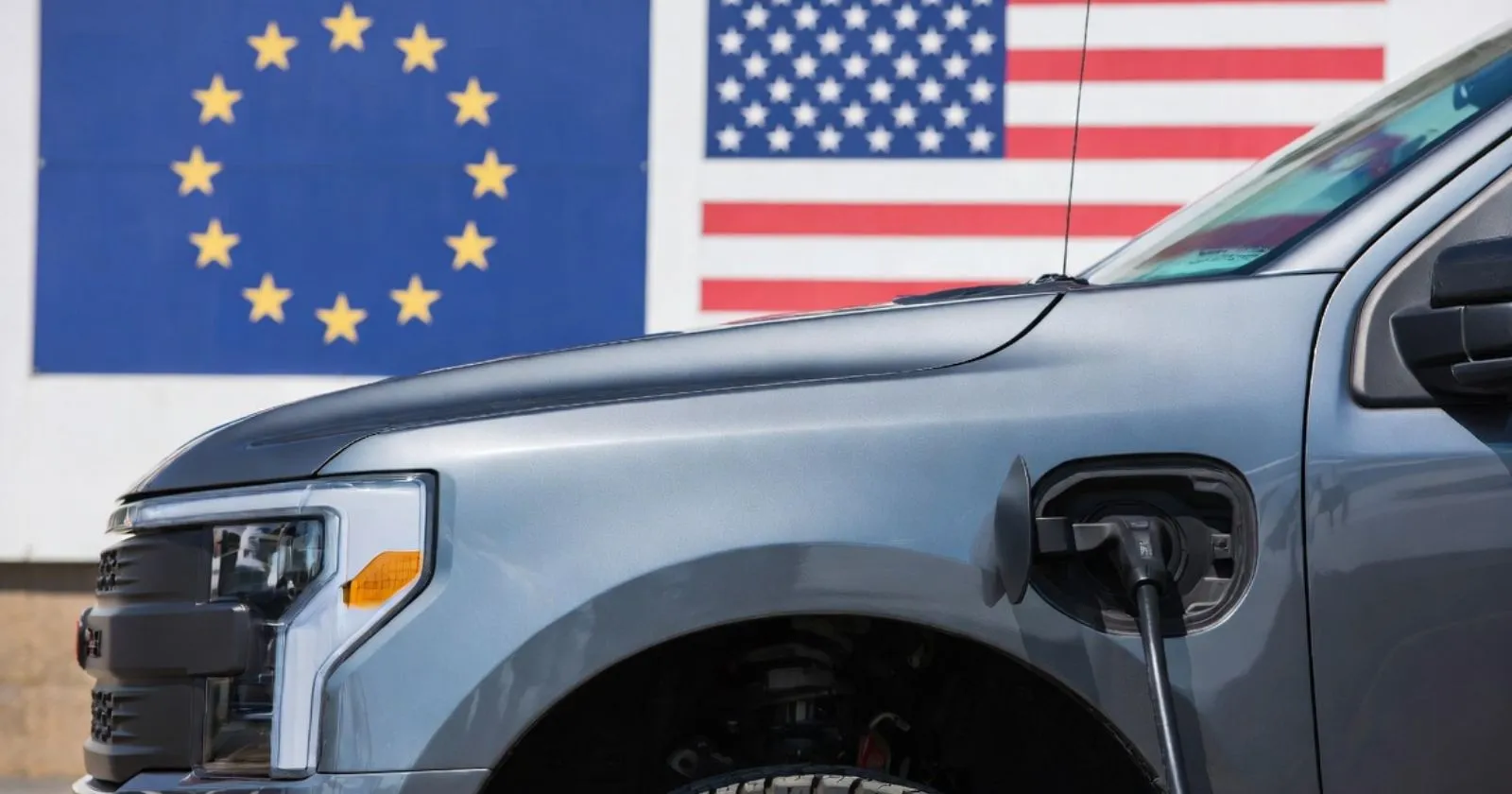
The EU will soon scrap its 2035 ICE ban, and Ford is shifting focus to hybrids after a $19.5 billion EV setback, reflecting economic pressures, slow EV adoption, and rising competition from Chinese automakers.


Share Post
The EU will soon scrap its 2035 ICE ban, and Ford is shifting focus to hybrids after a $19.5 billion EV setback, reflecting economic pressures, slow EV adoption, and rising competition from Chinese automakers.
The Western World's aggressive push towards electric vehicles (EVs) appears to be losing momentum. Recent developments in Europe and the United States show a retreat from earlier ambitious targets, driven by economic pressures, job concerns, and slower-than-expected consumer adoption.
In Europe, the European Union is set to revise its stringent CO₂ fleet targets, effectively moving away from a complete ban on new internal combustion engine (ICE) vehicle sales from 2035.
Manfred Weber, president of the European People's Party, stated that a 90% CO₂ reduction will replace the previous 100% target for carmakers' fleets starting 2035, with no full phase-out even by 2040.
This allows continued production and sale of petrol, diesel, and hybrid vehicles meeting efficiency standards. The shift, influenced by lobbying from German automakers and concerns over industrial jobs, aims to balance climate goals with competitiveness against Chinese EV dominance.
Across the Atlantic, Ford Motor Company announced a major pullback, recording $19.5 billion in charges linked to scaling down EV investments. The company halted production of its pure-electric F-150 Lightning pickup and cancelled several planned models, including next-generation large trucks and commercial vans.
Instead, Ford is pivoting towards hybrids, plug-in hybrids, and extended-range EVs, expecting 50% of its global sales to come from these by 2030. This follows weak EV demand, with fourth-quarter sales declining after a temporary surge from expiring tax credits.
The decision aligns with policy changes under the Trump administration, which rolled back emissions rules and EV incentives.
These U-turns stem from common challenges: high costs, inadequate charging infrastructure, and competition from low-priced Chinese EVs. Western automakers face profitability issues in EVs, prompting a hybrid bridge strategy.
This recalibration validates a pragmatic approach. It is focusing on hybrids and multi-pathway technologies while building the EV ecosystem gradually.
As Western markets grapple with over-ambitious timelines, India's targeted incentives for localisation and affordable segments position it to sustain momentum, potentially emerging stronger in the global race.
Also read: Govt. Rules Out Phasing Out E20 Non-Compliant Vehicle Despite Rising Owner Complaints

Daimler Truck Innovation Center India Appoints Radhakrishnan Kodakkal As New CEO
Acko Drive Team 10 Mar, 2026, 10:47 AM IST
Venue HX8 Diesel AT Launched at ₹13.70 Lakh
Acko Drive Team 10 Mar, 2026, 10:41 AM IST
Renault Bridger Subcompact SUV Concept Breaks Cover, India Launch In 2027
Acko Drive Team 10 Mar, 2026, 9:35 AM IST
Royal Enfield Meteor 350 Crosses 6 Lakh Sales Milestone
Acko Drive Team 10 Mar, 2026, 9:33 AM IST
Audi SQ8 Bookings Commence Ahead of March 17 Launch
Acko Drive Team 10 Mar, 2026, 9:12 AM IST

Looking for a new car?
We promise the best car deals and earliest delivery!
