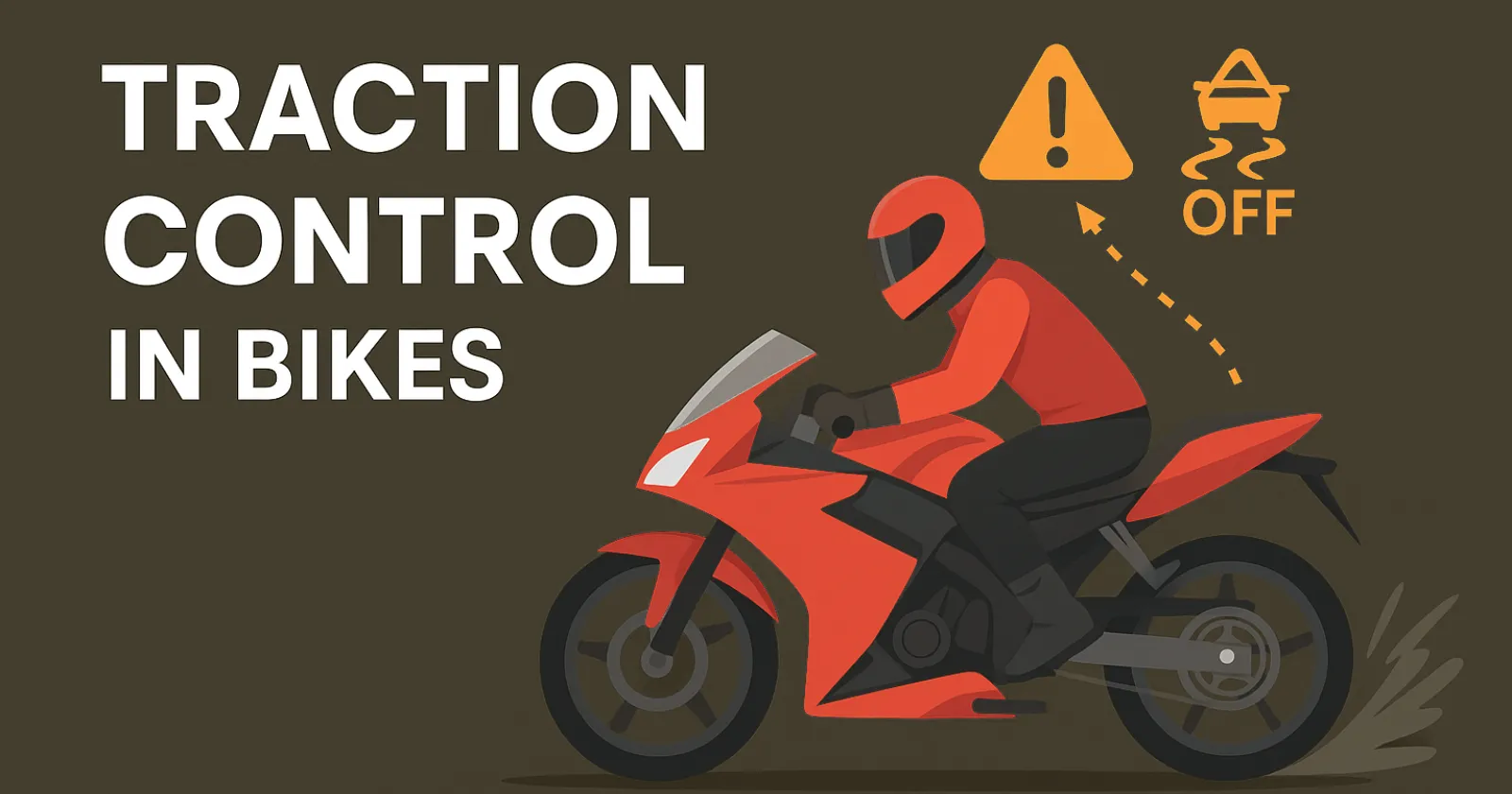
What Is Traction Control?
Traction control is an electronic rider-assist system that helps prevent wheelspin during acceleration. Specifically, it monitors the speed of the front and rear wheels via sensors, detecting if the rear wheel spins noticeably faster than the front. If that occurs, the system reduces engine torque by cutting ignition, closing throttle bodies, or tweaking fuel delivery to regain grip.
In simple terms, traction control helps you keep your bike glued to the road surface when pushing hard, essential when roads are slippery or acceleration is brisk.
How Traction Control Works
Sensors and Sensors
TC-equipped bikes come with wheel-speed sensors on each wheel. A front-to-rear wheel speed mismatch triggers TC.
ECU Intervention
The Electronic Control Unit (ECU) reduces engine torque via:
- Closing fuel injection or ignition (cut-off).
- Adjusting the throttle lever or ride-by-wire systems.
All this happens in milliseconds, usually imperceptibly to the rider.
Rider Modes
Modern bikes allow you to toggle TC levels (from off to multiple stages) depending on road conditions and rider preference.
TC Stages and Rider Modes
Modern motorcycles often come with advanced traction control (TC) systems that are customisable through multiple stages or rider modes. These settings adjust how aggressively the system intervenes when wheel slip is detected, allowing the rider to tailor the response to road conditions, weather, or riding style.
- Stage 1 (Full-On Mode): This is the most intrusive and safest setting, providing maximum traction control intervention. It is especially useful in heavy rain, gravel, mud, or wet road surfaces. The system constantly monitors rear wheel slippage and responds instantly to prevent skidding or fishtailing, which is especially important for new riders or during the monsoon season.
- Stage 2 (Intermediate Mode): In this mode, the TC system is still active but allows for a little more rear-wheel movement. It’s ideal for mixed riding conditions, such as urban traffic with occasional patches of sand or wet road sections. This level is suited for riders who have developed a decent feel for throttle control but still prefer electronic safety support.
- Sport Mode: This mode is usually found on performance motorcycles and is designed for more aggressive riding. The TC system steps in only under high-risk situations, usually when there’s significant rear-wheel spin at high RPM. It allows for slight wheel slip during acceleration, which can be desirable in spirited riding or corner exits but still keeps high-speed loss of control in check. It’s suited for experienced riders on well-maintained roads or tracks.
- Track or Off Mode: In this mode, TC is disabled completely, offering full control to the rider. While this provides maximum freedom, it’s also risky and should be reserved strictly for seasoned riders in controlled environments such as race tracks or off-road events. On unpredictable Indian roads, disabling traction control entirely is generally not recommended unless you're extremely confident and skilled.
For riders, especially beginners or commuters navigating poor or changing road surfaces, it’s wise to begin with Stage 1 or a rain/urban riding mode. As familiarity and confidence increase, riders can progressively shift to lower intervention modes to enjoy more control and a sportier experience. The key is to match the TC setting not just to skill level but also to the road and weather conditions you’re riding through.
Benefits of Traction Control
Below are some of the advantages of traction control in bikes.
Safety First
India’s roads are not always smooth. Water-filled potholes, gravel patches, tram lines and loose stones can suddenly disrupt wheel grip. A traction control system can step in during such slips, preventing a sudden loss of control and giving riders precious seconds to react.
Rider Confidence
TC gives even entry-level riders the confidence to accelerate more cleanly without fear of excessive rear-wheel spin. This is particularly comforting for those riding heavier motorcycles or on unfamiliar terrain.
Whether launching from traffic lights or powering through undulating highways, the ECU’s modulation of power ensures smooth acceleration. This not only improves real-world performance but can also help in conserving fuel during start-stop conditions.
Insurance Benefits
Some insurers now offer discounts on TC-equipped bikes, considering them safer than their non-equipped counterparts. While still emerging in India, this trend is promising for future ownership costs.
Traction Control vs. Wheel Slip Control vs. ABS
Here’s the difference between these three.
| Feature | What It Does | When It Works |
| Traction Control (TC) | Prevents rear-wheel spin by reducing power or applying the brake | During acceleration |
| Wheel Slip Control | Allows a slight wheel spin before gently controlling it | During acceleration (milder) |
| ABS (Anti-lock Braking System) | Prevents wheels from locking up during sudden or hard braking | During braking |
When Traction Control May Not Help
Make sure you don’t over-rely on TC because of the following:
- Loose Gravel or Deep Sand: TC may limit power too heavily and leave you stuck.
- Wet Clay or Oil Slicks: Traction control can only do so much; here, attentive riding is essential.
- Off-Road Riding: Riders needing throttle control and slide may find full TC restrictive; some Indian adventure bikes offer off-road TC modes.
Always know your bike’s system: is it a gentle slip limiter or an aggressive cut-out? Stages matter more than you think.
Final words
Traction control is a vital safety feature, not a gimmick, especially for modern bikes with more power and electronic systems. In India’s unpredictable conditions, rain, heat, and heavy traffic, TC helps maintain stability, prevent wheelspin, and boost rider confidence. It can even improve fuel efficiency by ensuring smoother throttle response. When buying a bike, consider how often you ride in wet or loose conditions and your comfort with quick acceleration. While it may raise the upfront cost, TC often pays off through fewer accidents, safer rides, and potentially lower insurance premiums.
Frequently Asked Questions