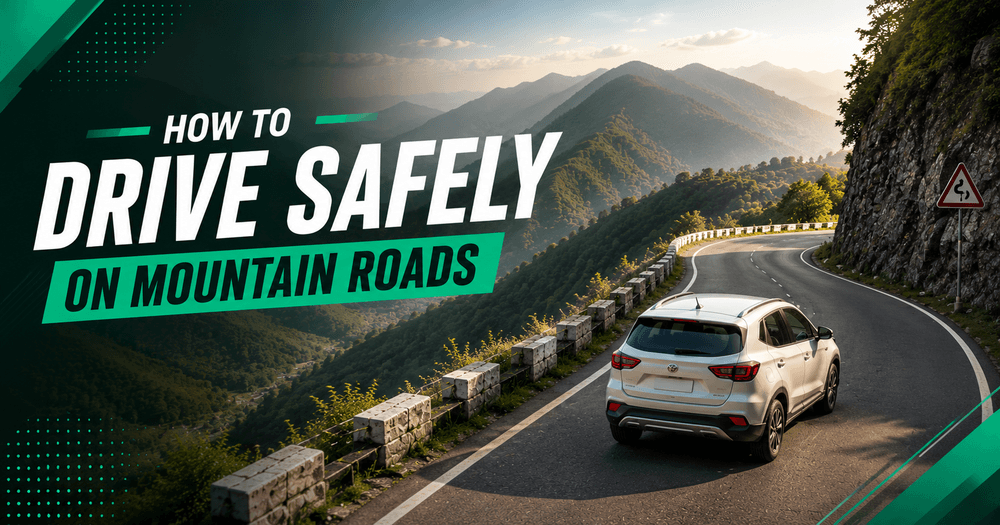
Why are Mountain Roads Harder to Drive?
The reasons why mountain routes are not easy to use are the narrow roads, the slope, and the blind corners, through which it is impossible to see vehicles coming. In several sections, there is no protection from falling into the valley. The road surface can suddenly become gravel, dirt, or wet, and the weather can quickly change.
Two things catch first-time hill drivers.
- The first is brake heat: press the brake pedal all the way down on a long descent, and the brakes get hot and stop working well.
- The second is the blind bend, where a vehicle can appear from the other side with no warning.
The real challenge here is to be cautious and not reckless. Just because you've mastered flat urban areas doesn't mean you can directly move with the same confidence on uphill and downhill routes. You should take it slow and steady. Especially if you are not very confident in handling the clutch at steep inclines, try to get the city downhill roads figured out before trying your skills on a ghat road.
What Should You Check in Your Car Before Driving on Mountain Roads?
A hill drive puts extra strain on the car, so run these checks before you leave and fix anything that feels off. Give yourself a few minutes in the morning to go down the list. It is far easier to sort a soft brake pedal at home than on a slope.
- Brakes: If you are heading for a very steep hill, your brakes will work hardest on such a journey. Therefore, you should make sure they are in good condition before departure and check them if the brake pedal feels spongy.
- Tyres: It's a good idea to test the depth of your tyre treads and measure air pressures in all four tyres, as even tyres may skid over wet as well as loose ground.
- Coolant and oil: Since the engine becomes hotter due to ascending a long slope, you should replenish coolant and also ensure that the level of engine oil does not drop below that.
- Lights and Wipers: Tunnels and shaded areas usually don't have enough natural light for driving safely; you'll definitely need to turn on your lights in such situations. In addition, if it suddenly starts to rain or fog, you need clear wipers which would keep your windscreen clean so you can still see where you are going.
- Fuel: The best idea is to get your fuel tank totally filled if you are planning a climb, since fuel stations in the hills could be quite a long way apart from each other.
Keep a small kit in the car too: warm clothes, drinking water, and a basic first-aid box. Take a break every couple of hours so you do not get too tired on the slow, winding drive.
How to Use Low Gears and Engine Braking on a Downhill Road?
Going downhill, hold a low gear and let the engine slow the car instead of pressing the brake pedal the whole way. This is called engine braking. When you stay in a low gear, the engine holds the car back on its own, and your brakes stay cool and ready for a real emergency stop.
Ride the brake pedal down a long slope, and the brakes heat up and fade. Once they fade, the pedal goes soft, and the car does not slow down the way it should. Engine braking avoids that. For example, on a long downhill stretch, staying in second gear lets you roll down at walking pace with your foot off the brake.
Use roughly the same low gear you would need to climb the same slope. On a manual car that is often in second or third gear. On an automatic, shift to L or the manual mode and pick a low gear. Never coast in neutral and never switch the engine off on a descent, because you lose engine braking and control of the car.
How to Take Hairpin Bends and Blind Corners
Take every hairpin bend and blind corner the same way, every single time. The routine is short and keeps you safe in bends where you cannot see what is coming.
1. Slow down before the bend, not in the middle of it. Brake while the road is still straight.
2. Drop to a lower gear so the car has pulling power to come out of the turn.
3. Honk once as you approach, so anyone coming the other way knows you are there.
4. Stay in your own lane and take the bend tight to your side. Assume a vehicle is coming from the other direction, even when the road looks empty.
Look towards where the road goes, round the bend, rather than staring at the drop or the view. Your hands follow your eyes, so this keeps your line smooth. Do not overtake on a bend or on a narrow stretch, since you cannot see far enough ahead to do it safely.
How to Start on a Hill Without Rolling Backwards?
An uphill start without rolling backwards comes down to the hand brake. Hold the car on it, find the clutch bite point, then release the hand brake as the car starts to move forward. This stops the car from sliding back into whoever is behind you while you get moving.
If your car has hill-hold assist, it does this for you: it holds the brake for a second or two after you lift off the pedal, giving you time to press the accelerator. It helps to practise these slope starts on a quiet city incline first, so the hand brake and clutch timing feels natural before you face a hill traffic jam.
When you park on a slope, leave the car in first gear with the hand brake up if you are facing uphill, or in reverse if you are facing downhill. That gives the gears a job to do if the hand brake ever slips.
Right of Way, Overtaking Rules, and Night Driving on Mountain Roads
Right-of-way for a narrow hill road is easy: the driver on the uphill gets right of way, meaning that the downhill driver must yield and allow passage of the vehicle on the uphill part of the road. It is easier for the uphill vehicle to slow down and restart because it has less room on the incline. Here are some other tips to keep everyone safe on a shared, winding road.
- Give way to bigger vehicles. Let trucks and buses through rather than forcing a tight pass.
- Overtake only on a clear straight. Never pass at a bend, a crest, or anywhere the view is short.
- Use headlights in shaded sections and in tunnels, even in daytime, so others can see you.
- In fog or rain, slow down and switch on fog lights or low beam. High beam bounces back off the fog and blinds you.
- Try not to drive at night in the hills. Visibility is poor, and help is harder to reach if something goes wrong.
- Watch for people and animals near villages and at dawn and dusk, when both wander onto the road.
Key Takeaways
- Let the engine brake, not the pedal. Hold a low gear downhill so the brakes stay cool and ready.
- Stay in your lane and honk whenever necessary. Treat every blind bend as if a vehicle is coming the other way.
- Prep the car first. Sort the brakes, tyres, coolant, and a full tank before you climb.
- Control matters more than power. Low speed and steady clutch control keep you safer than a big car or a strong engine.
Frequently Asked Questions