

In a significant shift, Maruti Suzuki has announced that all its vehicles will come equipped with six airbags as standard by the end of calendar year 2025. The confirmation came from company chairman R.C. Bhargava during the company’s recent earnings call, where he stated, “We will be having six airbags in virtually all our cars this year.” This move aligns with the government’s longstanding push for enhanced vehicle safety standards, particularly the implementation of six airbags in all passenger vehicles.

While Maruti Suzuki has already begun rolling out the update across its portfolio, several popular models still do not offer six airbags across all variants. These include the Baleno, Fronx, Ignis, Ertiga, XL6, and S-Presso. Among these, the Baleno and Fronx offer six airbags only on their top-spec variants, while lower trims continue with fewer safety features. The remaining models are expected to receive the update soon, albeit with a likely increase in pricing.
Maruti Suzuki has been progressively introducing six airbags on various models this year. The most recent recipients include the Eeco, Wagon R, Alto K10, Brezza, and Celerio. The latter witnessed the highest price hike among them—up to ₹32,500—following the safety upgrade. A similar price revision is expected for the Ignis, S-Presso, Ertiga, and XL6 once the update is rolled out to these models.

Interestingly, this decision marks a notable reversal from the company's earlier position on the six-airbag mandate. When the Indian government proposed making six airbags mandatory in all cars in 2022, Maruti Suzuki publicly raised concerns about the cost implications for entry-level cars.
The chairman also emphasised the income distribution problem in India, noting that only about 12 per cent of Indian households earn more than ₹12 lakh annually—a segment that can realistically afford cars priced above ₹10 lakh. “Car buying in India is largely restricted to this 12 percent. How can you expect growth when 88 percent of the country is at a level where they cannot afford these cars?” Bhargava said.

Despite these reservations, the company appears to have recalibrated its strategy, likely in response to growing consumer demand for safer vehicles and increased regulatory pressure.
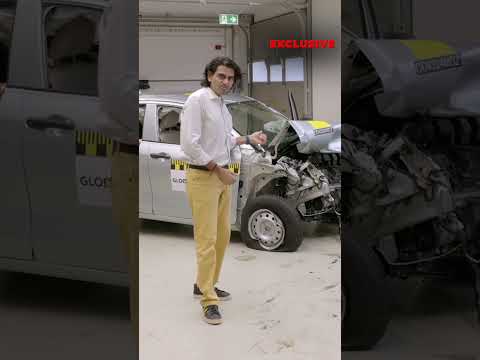
While Maruti Suzuki’s decision to equip all vehicles with six airbags marks progress, the company's safety record remains under scrutiny. The recent five-star Global NCAP safety rating for the new-generation Dzire has been a bright spot for the brand. However, other models continue to perform poorly in crash tests.