
Union Budget 2026: From high GST rates on charging infrastructure to incomplete scrappage incentives, here’s everything that was overlooked for the automotive industry.


Share Post
Union Budget 2026: From high GST rates on charging infrastructure to incomplete scrappage incentives, here’s everything that was overlooked for the automotive industry.
The Union Budget 2026, as expected, had very little to offer specifically for the Indian automotive industry. Even though increased outlay for schemes such as PLI (Production Linked Incentives) and PM E-Drive are seen as welcome initiatives, they are not likely to have any immediate impact on the auto industry. Here are some areas where the Union Budget 2026 could have addressed the expectations of the Indian automotive industry.
For a long time, the Government of India has pushed for more adoption of electric vehicles (EVs) into the ecosystem. A critical requirement for this is the expansion of EV charging infrastructure across the country. The industry expected over 29,000 charging stations installed in the country by late 2025. However, a high GST of 18 percent remained, a glaring contradiction that continues to increase operational costs and hinder infrastructure expansion. Despite industry expectations of a lower GST rate on charging stations in India, the government made no announcement on the matter.
A large section of the industry looks at hybrid vehicles as a perfect transition from pure internal combustion engine (ICE) vehicles for the Indian market. Hence, with newer technologies coming up, many anticipated some form of incentives for strong and plug-in hybrid vehicles which have very less emission levels as compared to ICE vehicles such as reduced GST or customs duty benefits.
The Government of India, launched the Vehicle Scrappage Policy in 2021, with an aim to phase out old, polluting vehicles by requiring mandatory fitness tests for commercial vehicles over 15 years and private vehicles over 20 years. Under this policy, a user will receive a scrap value of 4-6 percent of the ex-showroom price of a new vehicle purchase. Further, automakers may offer 1.5 to 3.5 percent discounts on new vehicle purchases upon producing a Certificate of Deposit.
Also, people who scrap their old vehicles will get a full waiver on the registration fees for a new vehicle purchase. However, the Budget missed out on direct financial incentives to encourage the scrapping of old, polluting vehicles. Currently less than 3 percent of eligible vehicles have Commercial vehicle leaders specifically noted the lack of a push to help fleet owners replace aging trucks, whose average age has now exceeded 10 years.
Alos READ: Budget 2026: Green Hydrogen Mission Allocation Unchanged at ₹600 Crore
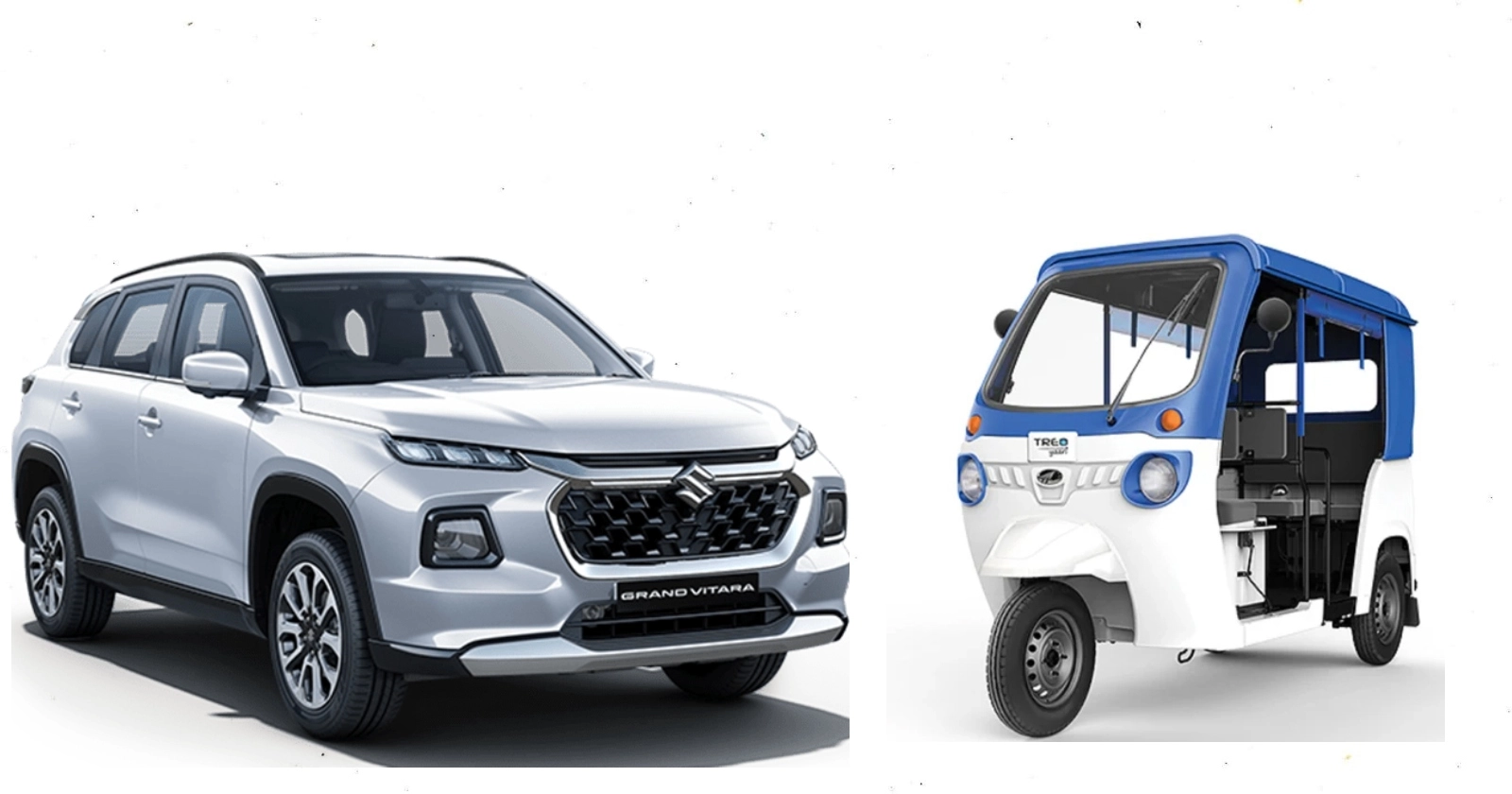
The three-wheeler segment has emerged as one of the fastest-growing categories within electric mobility. According to industry sources, the incentives earmarked for the manufacturing of electric three-wheelers under the PM E-Drive scheme were fully utilised by November 2025. Electric three-wheelers currently command a robust market share of around 40 percent, which may have influenced the government’s decision not to extend the outlay for this segment under the scheme. That said, the decision is likely to disappoint some OEMs, particularly as several new players have entered the segment in recent years.

Government Unveils New Rajmarg Pravesh Portal for Faster Highway NOCs
Acko Drive Team 26 Feb, 2026, 7:50 AM IST
The ePlane Company Opens India’s Largest eVTOL Prototyping Hub at IIT Madras
Acko Drive Team 26 Feb, 2026, 7:17 AM IST
Apollo Tyres Opens Exclusive Outdoor Tyre Testing Centre in Finland to Boost Winter Tyre Development
Acko Drive Team 26 Feb, 2026, 6:27 AM IST
Ferrari's 499P Livery Unveiled: Can Title Defence Survive Rival Upgrades?
Acko Drive Team 26 Feb, 2026, 5:18 AM IST
Rajiv Bajaj Calls Maharashtra EV Policy A “Failure”
Acko Drive Team 25 Feb, 2026, 6:01 PM IST

Looking for a new car?
We promise the best car deals and earliest delivery!
