
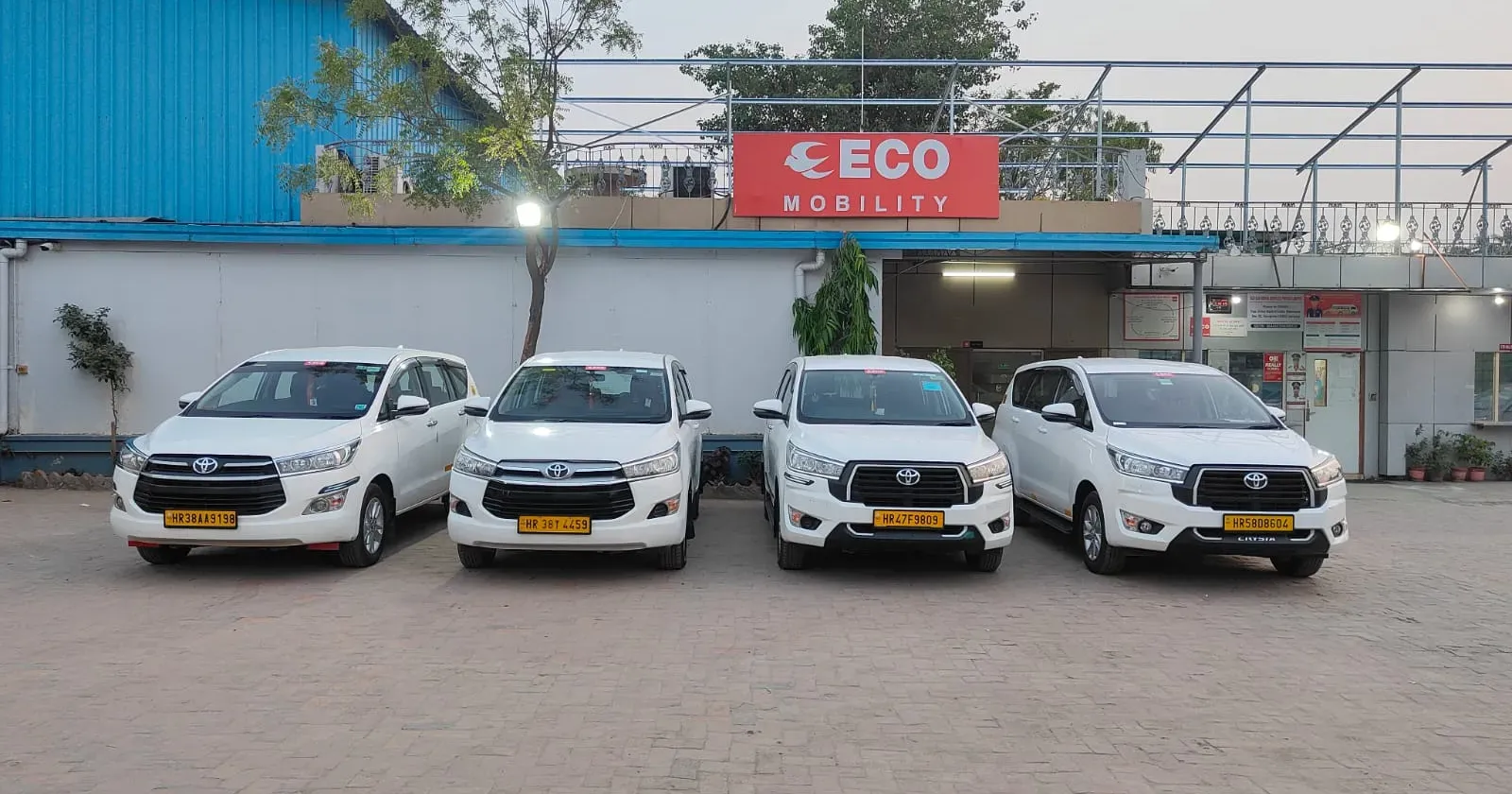
Eco Mobility already operates across 130+ cities, the B2C rollout will leverage existing infrastructure rather than starting from scratch.


Share Post
Eco Mobility already operates across 130+ cities, the B2C rollout will leverage existing infrastructure rather than starting from scratch.
India’s ride-hailing market is growing briskly. With projections estimating expansion from USD 950 million to USD 3.7 billion by FY2032, at a CAGR of nearly 19 percent, the sector has firmly positioned itself as a pillar of urban mobility. However, as the industry evolves, the bigger question is no longer about growth. It’s about sustainability, execution, and trust.
Eco Mobility, one of the most well established names in the B2B ride-hailing service, manages approximately 19,000 vehicles across 130 Indian cities and serves over 1,700 corporate clients. In addition, Eco Mobility serves over 55 Fortune 500 and 70 BSE 500 companies. More importantly, over 55 percent of its revenue comes from clients associated with the company for over five years.
In a recent interaction with Acko Drive, Deepali DeV, Chief Operating Officer, Eco Mobility and Hospitality Limited, offered insights into the company’s journey as a corporate mobility leader and its cautious, structured entry into the consumer ride-hailing space.
There’s little debate that mobility demand in India is rising. Urbanisation, digital adoption, and an expanding corporate workforce are reshaping how Indians move. Deepali acknowledges this momentum: “The growth projections of ride hailing are certainly very, very encouraging.” However, she adds a note of realism saying, “Growth, demand and sustainability of business models are two very different things.”

That distinction matters. India has seen promising players enter the market with energy and capital, only to struggle with profitability and operational stability later. The lesson? Demand alone doesn’t guarantee survival.
One of the most compelling shifts in the sector is how mobility is perceived. “Mobility is actually no longer a convenience. It is an economic infrastructure,” Deepali says. That’s not an overstatement. Ride-hailing platforms today support productivity, urban efficiency, and business continuity.
However, there’s a big difference between consumer and institutional mobility. Consumer ride-hailing largely revolves around convenience and pricing transparency. Institutional mobility, on the other hand, requires governance frameworks, compliance systems, safety protocols, audits, and consistency at scale. This is the space Eco is well aware of.
India’s ride-hailing sector has seen consolidation. Brands like Meru and BluSmart that once appeared promising have exited or scaled back. According to Deepali, the issue isn’t demand weakness. “The exit of some players reflects business model challenges and does not really demand weakness,” she said. She points to unit economics. Early expansion often comes with heavy cash burn. But eventually, profitability must emerge.
“At the end of the entire game… that needs to be profitable,” she added. More importantly, she highlights the ecosystem factor. Sustainable mobility depends on drivers and vendors finding the model viable. A 4:00 AM airport pickup, she notes, is only possible when operational systems are stable and all stakeholders are engaged and fairly compensated.
More importantly, Deepali also confirmed that Eco Mobility will enter the B2C ride-hailing service, sometime in the next quarter. However, there’s a catch. Eco will not enter the instant, 15-minute booking race. “If you ask me that, OK, in the next 15 minutes you need a car, because our business model doesn’t support it,” Deepali explains.
Instead, the company will focus on pre-scheduled bookings. She highlighted, “If you say that today in the evening at 6:00 PM I require a car at Ahmedabad… then we will be honouring it.”
In essence, a B2C customer will be treated like another structured client. The model is built around predictability rather than impulse demand. Since Eco already operates across 130+ cities, the B2C rollout will leverage existing infrastructure rather than starting from scratch. Currently, B2C contributes just 2.5 percent to overall business. Growth will be gradual. “We would like to keep it progressive and not do a very aggressive carpet bombing,” she says.
Ride-hailing platforms frequently face criticism around hygiene, driver conduct, and safety, particularly for long-distance travel. Deepali draws a clear line between short urban hops and extended outstation journeys. For longer rides, she argues, safety and trust become non-negotiable.
Eco promises to integrate grievance redressal mechanisms directly into its operational framework to ensure consistent service quality and accountability. The company operates a 24/7 centralized monitoring contact centre and uses real-time GPS tracking to oversee trips. This is supported by a structured three-layer escalation protocol designed to address issues promptly. Driver onboarding is also handled with considerable scrutiny, including in-person interviews, police verification, and mandatory safety and conduct training.
Alongside these operational safeguards, the company places strong emphasis on its internal culture and driver engagement philosophy. As Deepali DeV notes, the organisation aims to “transform drivers into chauffeurs,” reflecting a focus not only on operational competence but also on professionalism and service etiquette.
Drivers are prioritised in the company’s compensation structure, with payments processed promptly—often before employee salaries are released. Eco also encourages emotional engagement with drivers through initiatives such as celebrating personal milestones and involving families in workplace activities. The broader objective of these measures is to address potential issues proactively and maintain service standards by preventing escalations before they arise.
Also READ: Mahindra Revives Batman BE 6 After Fans’ Frenzy—Bookings Reopen Now!
India is undeniably price-sensitive, especially in the consumer segment. Surge pricing and discrepancies across apps often draw public criticism. Deepali doesn’t dismiss price as a factor. “Pricing certainly influences decision making… particularly in consumer driven platform,” she admitted.
However, she added an important nuance: “Value is really not defined by being the cheapest… it is really defined by delivering a dependable experience.” Interestingly, she makes a bold claim about longer bookings. For full-day hires (for example, 8 hours/80 km), Eco believes it is cheaper than aggregator platforms.
“For short ones… they are definitely more effective than a player like me. But for a longer period… we are cheaper.” In other words, the company isn’t positioning itself as a surge-driven micro-mobility player, but as a structured, value-driven alternative for planned travel.
The company intends to differentiate its offerings primarily through the range of vehicles available rather than through varying service standards. Its fleet includes a wide spectrum of options, beginning with entry-level sedans such as the Dzire and extending to vehicles like the Ertiga, Honda City, Toyota Hycross, Camry, Kia Carnival, and luxury models from brands such as Mercedes and BMW.
Despite the differences in vehicle categories, the company maintains that service quality will remain consistent across all offerings. As Deepali notes, “The chauffeur quality remains the same. We will not say that this is a premium chauffeur because we want all premium chauffeurs.” Pricing variations will therefore be determined by the vehicle category selected, rather than by differences in driver professionalism or service standards.
She also observed that in the consumer segment, models such as the Maruti Dzire and Toyota Hycross are likely to see strong demand, as they offer a balance between practicality, comfort, and cost considerations.

Automakers Review Shipments to Gulf as Geopolitical Risks Rise
Team Ackodrive 7 Mar, 2026, 11:32 AM IST
Hyundai Offers Super Delight March Discounts Across Lineup
Acko Drive Team 7 Mar, 2026, 9:18 AM IST
New Honda Insight EV Debuts in Japan with 501 km Range
Acko Drive Team 7 Mar, 2026, 8:02 AM IST
Mahindra Teases XUV 7XO Women’s Edition
Acko Drive Team 7 Mar, 2026, 6:43 AM IST
Renault's RGMP Platform Set For 5-Star NCAP Safety?
Ameya Naik 7 Mar, 2026, 5:36 AM IST

Looking for a new car?
We promise the best car deals and earliest delivery!
