
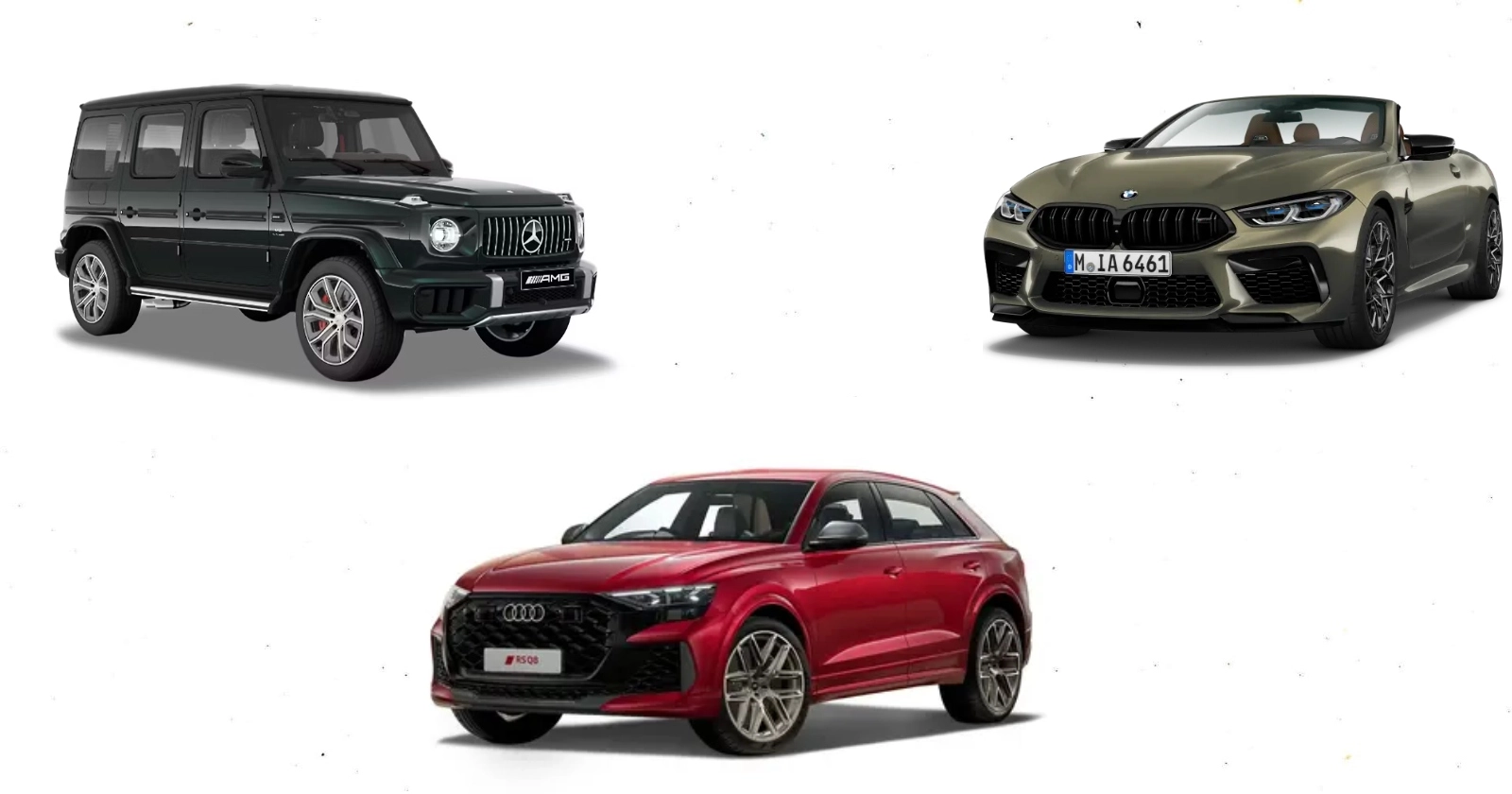
As per the FTA, India will cut import duties of fully-imported European cars gradually from 110 percent to 10 percent.


Share Post
As per the FTA, India will cut import duties of fully-imported European cars gradually from 110 percent to 10 percent.
The highly anticipated free trade agreement between India and the European Union has finally been locked and formally made official. Initiated in 2022, the India–EU FTA is among the most significant international trade agreements in recent years and is expected to positively impact business ties between India and EU member nations.
Under the new trade agreement, tariffs on imported European cars will be progressively reduced from 110 percent to 10 percent for an annual quota of 250,000 vehicles. This move is expected to significantly lower prices for European cars brought into India as completely built units (CBUs).
The deal further mentions the complete elimination of duties on auto components within five to ten years, a step that should further reduce costs for locally assembled vehicles over the longer term. The agreement has yet to clarify whether electric vehicles, hybrids and internal combustion models will be subject to uniform taxation or differentiated rates based on powertrain type. It also does not currently outline any price-based categories.
At present, fully-imported CBUs priced below $40,000 attract an import duty of 70 percent, while vehicles priced above $70,000 are taxed at 110 percent. In contrast, completely knocked down (CKD) kits imported for local assembly attract a significantly lower Basic Customs Duty of about 16.5 percent.
The tariff reduction is expected to significantly lower the cost of vehicles from luxury brands such as Mercedes-Benz, Audi and BMW. Even performance cars from the likes of Ferrari, Lamborghini, and Porsche are expected to see massive price cuts in the near future.
According to an EY spokesperson, imports of cars under CTH 8703 from the EU currently stand at approximately USD 397 million, compared to USD 7.9 million from Japan and USD 4.8 million from Korea, as per ITC Trade Map data of 2024, highlighting that imports in CBU form from Korea and Japan is lesser as compared to EU. That said, the overall impact on the Indian auto industry is expected to remain limited. Vehicles imported in CKD form continue to attract a significantly lower duty of around 15%, and this route is also widely used by European, Japanese and Korean manufacturers.
Not just carmakers but auto component manufacturers too will benefit hugely from the India-EU FTA. According to Poonam Upadhyay, Director, Crisil Ratings, Auto component manufacturers are likely to see incremental opportunities from the expansion of European OEM operations in India. As these OEMs scale local assembly and sales to manage costs under the new duty structure, they are expected to increase sourcing from Indian suppliers to improve supply reliability.
That can translate into higher domestic orders, stricter quality and compliance requirements and, over time, opportunities for Indian suppliers to be integrated into the global supply chains of these European manufacturers.
Also READ: India to Cut Import Tariffs on EU Cars Under Proposed Free Trade Pact: Report
Santosh Iyer, MD & CEO Mercedes-Benz India, said “Mercedes-Benz welcomes the India-EU FTA as it will have a positive cascading effect on customer sentiments for the luxury segment, with a boost in overall economic growth. A gradual tariff reduction on vehicles and fully liberalized automotive parts are strategically important decisions in the FTA for the automotive industry.”
He added, “The FTA opens up new avenues for customers with improved vehicle allocations, better availability of top-end global models for Indian market, faster access to latest technology and creating a stronger luxury car ecosystem. Mercedes-Benz will however continue to value add to customers with local production of world-class models from our manufacturing plant.”
Commenting on the development, Vikrampati Singhania, President, ACMA and Vice Chairman & MD, JK Fenner (India), said, “The signing of the India–EU FTA is a timely and strategic step. For the auto-components industry, it has the potential to unlock new opportunities for exports, technology partnerships, and investment-led growth. As global OEMs and suppliers look to build resilient supply chains, a well-balanced and pragmatic FTA can position India as a reliable manufacturing and sourcing partner for Europe, while strengthening our long-standing industrial partnership.”
Hardeep Singh Brar, President and CEO, BMW Group India, said, “The conclusion of the India–EU Free Trade Agreement is a historic and ambitious milestone, reflecting the growing strategic and economic relevance of India on the global stage. We have always advocated free trade as it enhances fair market access, strengthens economic collaboration, leverages mutual strengths, and builds more resilient supply chains especially at a time when such cooperation is more critical than ever.
He added that the proposed phased reduction in tariffs on cars and auto components could boost consumer confidence, expand product choices, and encourage technological innovation and sustainable growth in the Indian automotive sector, particularly in the area of future mobility.
Sharing his two cents on the same, Shailesh Chandra, President, SIAM and MD & CEO Tata Motors Passenger Vehicles Ltd, said, “The FTA with EU will play a key role as India marches on towards ‘Viksit Bharat’. While we look forward to specific details of the India-EU FTA with respect to the Auto Industry, the calibrated approach to balance market access and domestic manufacturing, should give us a win-win between increased Global participation on one hand and growth of the domestic Auto Industry with Investments and Employment on the other hand. This will also enable increased choice for consumers in both regions.”
Anish Shah, Group CEO and MD, Mahindra Group, said, “The India-EU FTA is a significant milestone as it provides the next wave of economic impetus for India, building on the strong foundation laid by a number of policy reforms. This FTA will provide meaningful benefits across multiple sectors, as it strikes a very good balance between opening the market while nurturing manufacturing in India."
Shailesh Hazela, CEO & Managing Director, Stellantis India, said, "The conclusion of the EU–India Free Trade Agreement is a landmark moment that deepens economic cooperation and strengthens India’s position in the global value chain. At Stellantis India, we see this agreement as a significant accelerator for our long-term commitment to ‘Make in India for the World.’ Reduced trade barriers will help enhance manufacturing competitiveness, expand export potential, and support the seamless integration of our India operations into global supply chains."

New Mercedes-Benz CLA EV To Get More Affordable ‘200 Standard Range’ Variant In India At Launch, Bookings Open
Acko Drive Team 10 Mar, 2026, 5:35 AM IST
Triumph Hits 1 Lakh Motorcycle Milestone in India
Acko Drive Team 9 Mar, 2026, 2:29 PM IST
NHAI Scrambles to Secure Bitumen Supplies Amid West Asia Conflict Threatening Highway Programme: Report
Acko Drive Team 9 Mar, 2026, 1:07 PM IST
India-Bound Jetour T2 Secures 5-star ASEAN NCAP Safety Rating
Acko Drive Team 9 Mar, 2026, 11:48 AM IST
Mercedes-Benz VLE Global Debut Tomorrow: What To Expect
Acko Drive Team 9 Mar, 2026, 11:35 AM IST

Looking for a new car?
We promise the best car deals and earliest delivery!
