
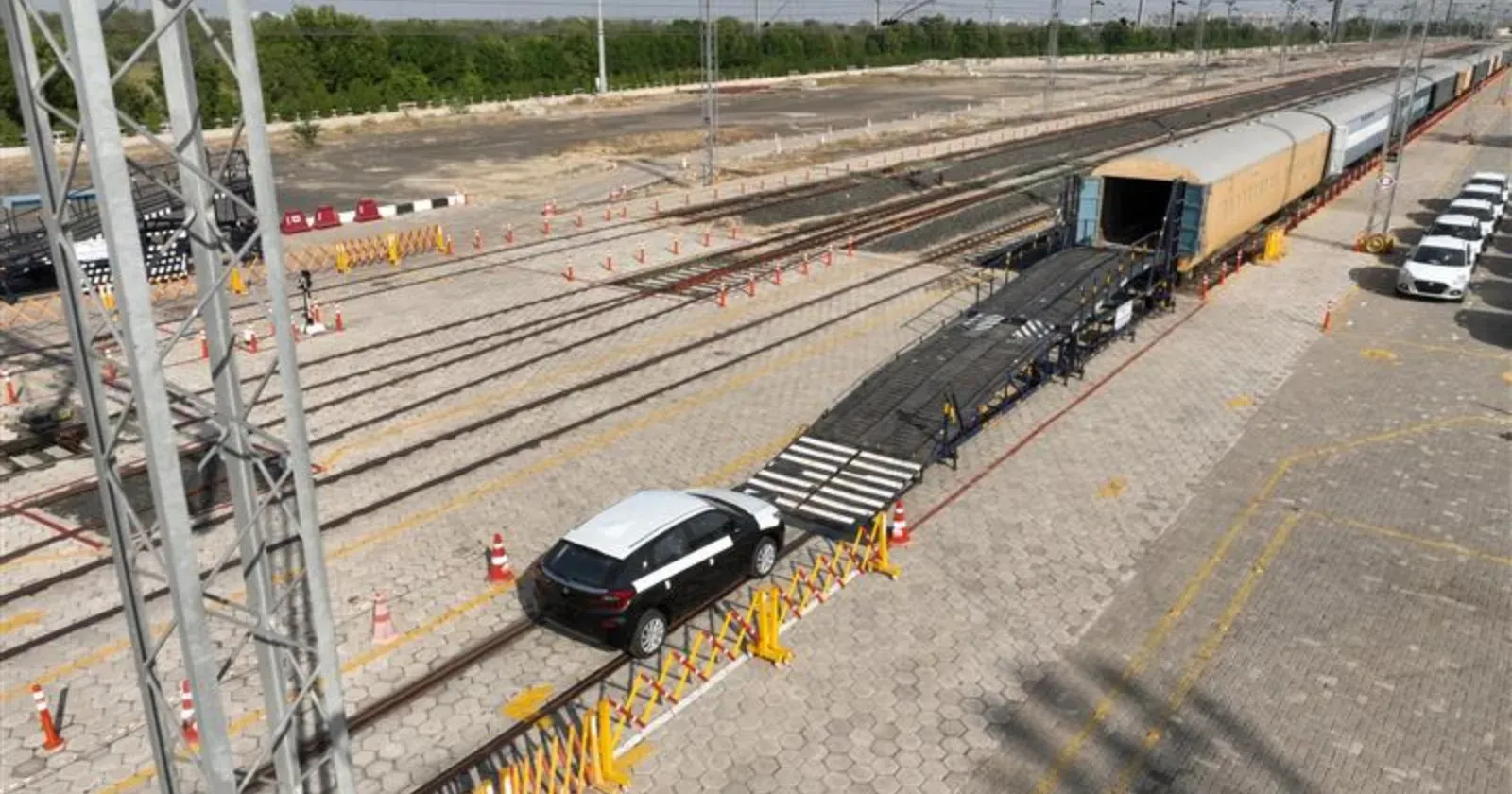
Rail logistics is said to offer higher fuel efficiency per vehicle transported, lower fossil fuel consumption, and reduced road congestion.


Share Post
Rail logistics is said to offer higher fuel efficiency per vehicle transported, lower fossil fuel consumption, and reduced road congestion.
Maruti Suzuki India Limited (MSIL) has achieved a global milestone in sustainable logistics, with its in-plant railway siding at the Gujarat manufacturing facility becoming the world’s first modal shift transportation project in the automobile sector to generate carbon credits. The project has been registered under the Verified Carbon Standard (VCS) programme administered by Verra, the world’s largest voluntary carbon credit registry.
The initiative centres on shifting vehicle dispatches from road transport to rail, a move that significantly reduces greenhouse gas emissions while improving logistical efficiency. Over a 10-year crediting period from FY2023–24 to FY2032–33, the project is expected to reduce approximately 1.7 lakh tonnes of CO₂ equivalent emissions and generate an equal number of carbon credits following independent verification.
Speaking on this achievement, Hisashi Takeuchi, Managing Director & CEO, MSIL, said “This is a proud moment for Maruti Suzuki as our Gujarat in-plant railway siding is recognized as the world’s first Verra-registered Modal Shift in Transportation project. By transitioning vehicle movement from road to rail, the project demonstrates how scale, operational efficiency and environmental responsibility can seamlessly go hand in hand.”
Emission reductions have been quantified using the AM0090 methodology under the Clean Development Mechanism of the United Nations Framework Convention on Climate Change. Upon verification, Verra will issue the carbon credits, reinforcing the credibility and transparency of the initiative within the global voluntary carbon market.
Beyond environmental gains, the modal shift to rail transport also delivers operational and societal benefits. Rail logistics offer higher fuel efficiency per vehicle transported, lower fossil fuel consumption, and reduced road congestion. The project aligns with India’s broader sustainability goals and contributes to key United Nations Sustainable Development Goals, including Good Health and Well-being (SDG 3), Decent Work and Economic Growth (SDG 8), and Climate Action (SDG 13).
The Gujarat railway siding has been operational since March 2023 and has already dispatched more than 600,000 vehicles. The facility was inaugurated in March 2024 under the Government of India’s GatiShakti programme, highlighting the role of integrated infrastructure planning in improving industrial logistics. Maruti Suzuki has continued to expand its rail-based dispatch capabilities, including the inauguration of India’s largest automobile in-plant railway siding at its Manesar facility in 2025.
Also READ: TATA.ev, Shell Launch 21 Mega EV Charging Hubs Across Key Cities
This development underscores the growing importance of sustainable logistics in the automotive industry, where manufacturers are increasingly evaluating supply chain emissions alongside vehicle efficiency. By integrating rail transport into its dispatch strategy, Maruti Suzuki has demonstrated how large-scale manufacturing operations can reduce their carbon footprint while maintaining cost efficiency and operational scale.

Land Rover’s Baby Defender EV Spied, Set to Arrive by 2027
Acko Drive Team 25 Feb, 2026, 7:59 AM IST
Maruti Suzuki Sets Global First with Carbon Credit Rail Logistics in Gujarat
Acko Drive Team 25 Feb, 2026, 7:12 AM IST
UP Government Keen To Bring Back MotoGP To India, Signs MoU With Ex-Racer
Acko Drive Team 25 Feb, 2026, 6:58 AM IST
Electric Cars Available Battery As A Service In India
Acko Drive Team 25 Feb, 2026, 6:54 AM IST
Suzuki Motorcycle India Launches Nationwide Suzuki Motofest Campaign
Acko Drive Team 25 Feb, 2026, 2:52 AM IST

Looking for a new car?
We promise the best car deals and earliest delivery!
