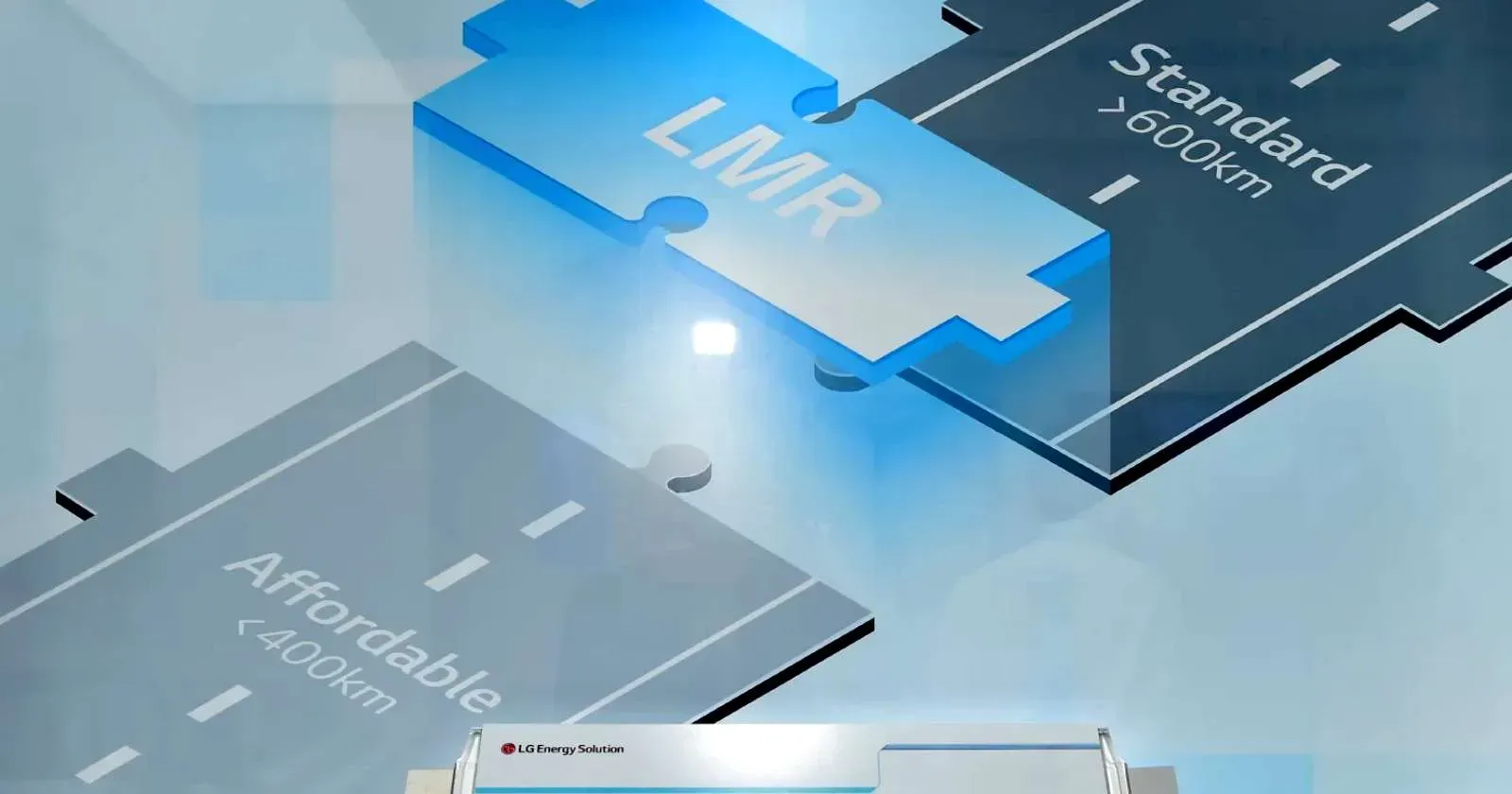
LG Energy Solution and Seoul National University have announced major progress in commercialising LMR batteries, which replace Cobalt with Manganese.

Share Post

LG Energy Solution and Seoul National University have announced major progress in commercialising LMR batteries, which replace Cobalt with Manganese.
A joint research team of scientists and engineers from LG Energy Solution and the Seoul National University has announced significant progress in its efforts to mass-produce next-generation lithium manganese-rich (LMR) batteries. The research has been published in the Nature Communications scientific journal.
LMR has so far been an experiential next-generation cathode material, used in place of more expensive cobalt to create a different type of Lithium ion batteries. High energy density is achieved by storing energy in transition metals such as nickel and manganese as well as oxygen in the cathode. This has the potential to reduce overall battery costs when manufactured at scale, also helping mitigate some supply chain risks associated with rare-earth minerals that are increasingly difficult to obtain. A beneficial side effect is easier and less hazardous battery disposal and repurposing at the end of their life or in case of damage.
This battery chemistry is also well suited to EV applications, thanks to its thermal stability, better performance in cold temperatures, and more predictable chemical behaviour. It can be manufactured in the form of dense rigid prismatic cells, reducing costs further. EV industry sources estimate 33 percent better energy density than today’s prevailing Lithium Iron Phosphate (LFP) cells, potentially leading to dramatic improvements in range or reductions in battery size and weight for EVs.
However, while the concept has been promising for years, real-world issues have prevented mass adoption so far. Oxygen is lost during charging because it cannot return to its original state after oxidation, also leading to damage to the battery’s chemical structure and the production of gas, increasing internal pressure. Research to improve LMR batteries has been in progress for decades. Auto industry players, most notably GM and Ford, have announced progress close to scaling their research into commercial production. Indian firm Ola is also committed to researching LMR among other battery chemistries.
The joint research team’s announcement describes this as one of the most difficult challenges in commercialising LMR batteries. The big milestone that the team achieved was managing to suppress gas evolution by controlling the reversibility of oxygen in the reaction.
By identifying factors causing this, and engineering the battery chemistry to operate optimally, researchers have proven that the problem can be mitigated. The team discovered that regulating cutoff voltages during charging and discharging could reduce oxidation to manageable levels. Up to 97 percent of oxygen oxidation was reduced while charging, and it was almost completely eliminated while discharging after applying the team’s findings.
This means the stability of such cells has been improved significantly, supporting potential future use in large-format applications such as electric vehicle batteries. In addition, a lower-temperature formation process was found to effectively suppress gas generation.
In lab tests, these new techniques resulted in cells retaining 92.2 percent of their initial energy capacity after 883 discharge cycles. Capacity degradation related to gas generation was previously one of the main challenges to real-world deployment.
LG Energy Solution now says it has been able to design large-format 40 Ah-class LMR cells with an optimal operating voltage range and manufacturing process conditions, opening the doors to cost-effective commercialisation.
“This study identified the causes of degradation in LMR batteries from the perspective of oxygen reversibility and demonstrated that cell stability can be improved through electrochemical protocol design alone,” said Professor Jongwoo Lim of Seoul National University. “We confirmed that achieving long-term stability in LMR batteries requires comprehensive consideration of not only charging conditions but also discharge conditions.”

Suzuki Gixxer Range Gets New Colours; Launched Starting at ₹1.37 Lakh
Acko Drive Team 8 Sept, 2026, 9:21 AM IST
Next-Gen Lithium Manganese-Rich EV Batteries Closer to Reality: Lower Cost, Better Range, Safer to Recycle
Jamshed Avari 8 Sept, 2026, 8:59 AM IST
Maruti Suzuki Cars to Become Dearer by Up To ₹20,000
Acko Drive Team 8 Sept, 2026, 7:32 AM IST
Jaguar Land Rover to Cut 4,000 Jobs Amid EV Transition and Global Pressures
Acko Drive Team 8 Sept, 2026, 6:28 AM IST
Citroën India Launches New AircrossX and BasaltX Variants, e-C3X With Extended Range
Jamshed Avari 7 Sept, 2026, 7:00 PM IST
Looking for a new car?
We promise the best car deals and earliest delivery!