
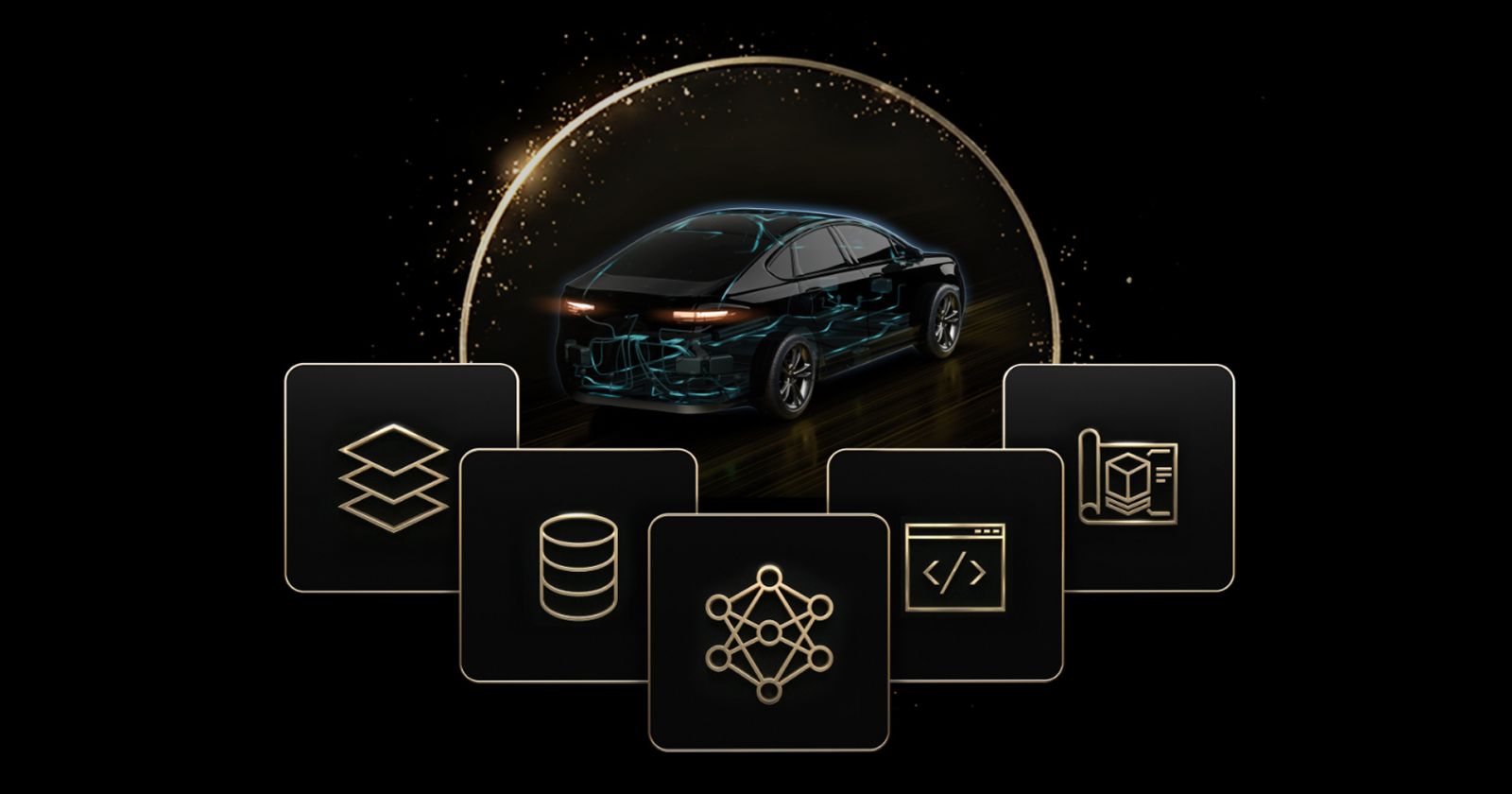
Nvidia unveils Alpamayo family of open AI models, tools, and datasets at CES to enhance reasoning in autonomous vehicles, addressing edge cases for safer development.


Share Post
Nvidia unveils Alpamayo family of open AI models, tools, and datasets at CES to enhance reasoning in autonomous vehicles, addressing edge cases for safer development.
At CES 2026, Nvidia launched the Nvidia Alpamayo family of open AI models, simulation tools, and datasets aimed at supporting advancements in safe, reasoning-based autonomous vehicle systems.
Autonomous vehicles need to handle diverse driving scenarios, with rare edge cases posing ongoing challenges. Conventional approaches separate perception and planning, potentially limiting adaptability. Recent end-to-end learning methods have shown progress, but addressing uncommon situations requires models capable of reasoning about causality beyond training data.
The Alpamayo series features chain-of-thought, reasoning-based vision language action models that apply step-by-step logic to novel scenarios, enhancing decision-making and explainability. These are supported by the Nvidia Halos safety framework.
Jensen Huang, founder and Chief Executive Officer of Nvidia, noted that this development represents a key moment for physical AI, enabling vehicles to reason through complex environments and justify actions, forming a basis for scalable autonomy.
The ecosystem includes open models, simulation platforms, and datasets for developers to customise AV systems. Alpamayo models act as foundational teachers for fine-tuning rather than direct in-vehicle use.
At CES, Nvidia released Alpamayo 1, a 10-billion-parameter model for research, available on Hugging Face, processing video to output trajectories with reasoning explanations. It includes open weights and inference scripts, with future versions planned for expanded capabilities and commercial applications.
AlpaSim, an open-source simulation framework on GitHub, offers sensor modelling, traffic simulation, and testing environments. Physical AI Open Datasets provide over 1,700 hours of driving data from various conditions, accessible on Hugging Face. These components create a development cycle for reasoning-focused AV architectures.
Industry figures from Lucid, JLR, Uber, S&P Global, and Berkeley DeepDrive have expressed support, highlighting the role of open tools in advancing autonomy.
Additional Nvidia resources, such as Cosmos and Omniverse platforms, allow integration with proprietary data and validation on Drive Hyperion architecture using Drive AGX Thor compute.
Also read: Robot Vacuum Brand Dreame Enters Hypercar Space with Kosmera Nebula 1 Concept

Tata Punch EV Launch Tomorrow: Features, Specs, Price Expected
Acko Drive Team 19 Feb, 2026, 12:44 PM IST
JSW Begins Independent Journey in India’s Auto Industry with CVs
Acko Drive Team 19 Feb, 2026, 11:33 AM IST
Volkswagen Tayron R-Line Launched In India, Priced At ₹46.99 Lakh
Acko Drive Team 19 Feb, 2026, 9:22 AM IST
iOS 26.4 CarPlay Public Beta Previews Video Functionality, Conversational AI Apps
Acko Drive Team 19 Feb, 2026, 9:06 AM IST
Audi SQ8 India Launch on March 17: What to expect
Acko Drive Team 19 Feb, 2026, 8:44 AM IST

Looking for a new car?
We promise the best car deals and earliest delivery!
