

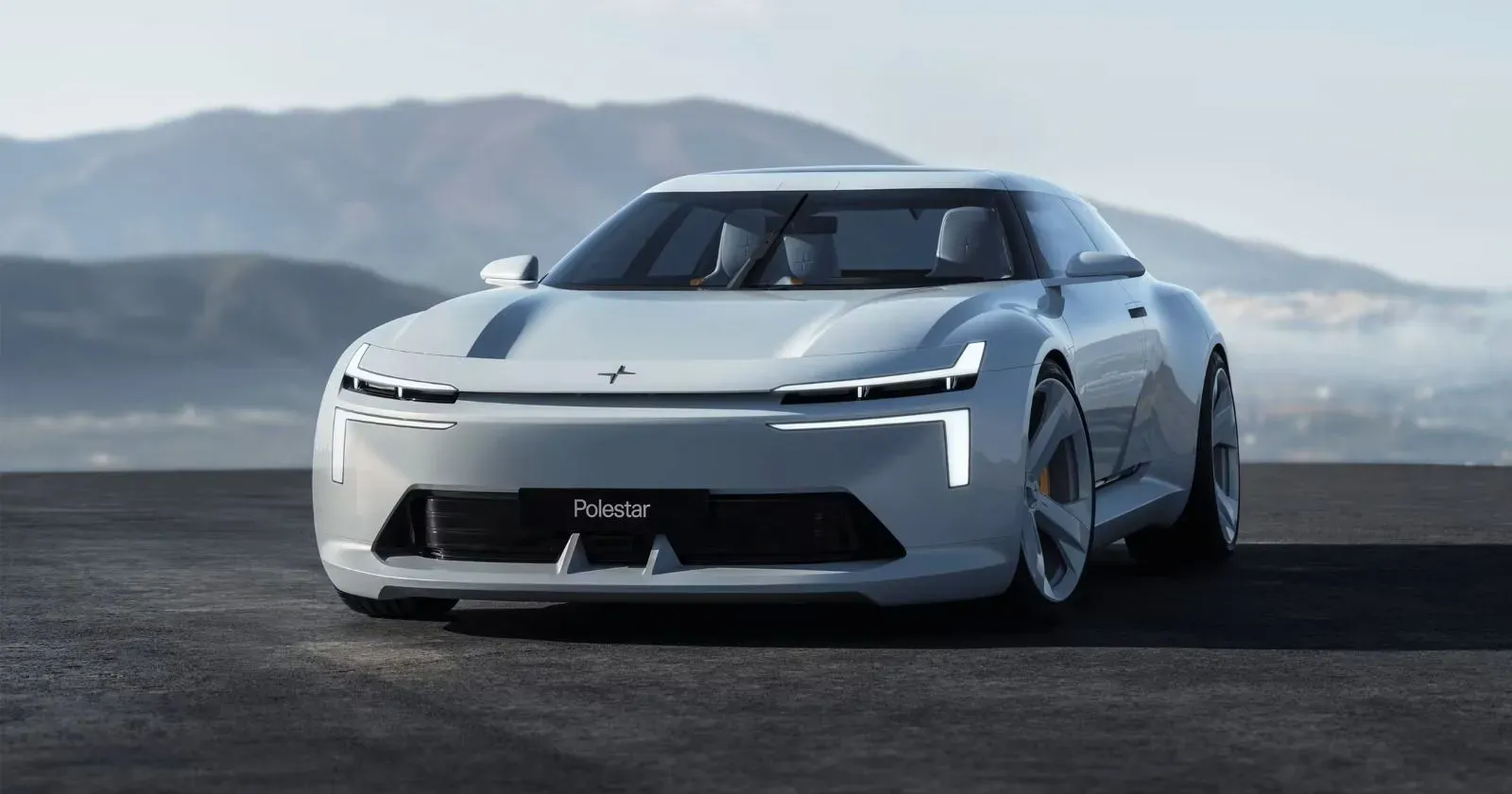
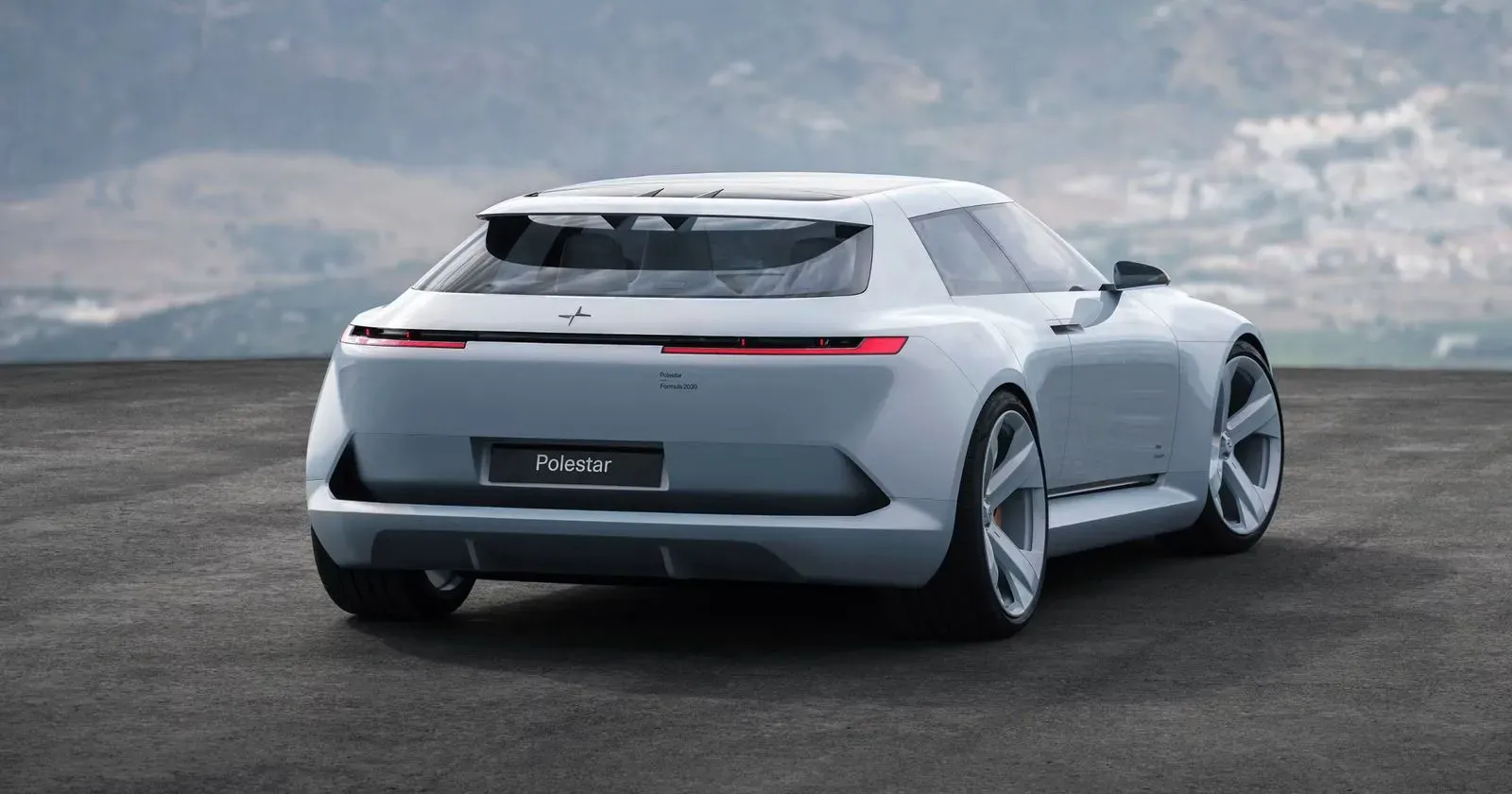
Polestar has officially revealed the Formula 2030 concept, a low-slung four-door electric showcar that the Swedish brand says will shape the design of its next generation of production models. The car was shown to media at the Polestar 4 SUV’s international drive in Spain in October, with full details and images released on 10 November, following a private preview for investors and retailers at the company’s Gothenburg headquarters in September.
The concept is the first car developed under Philipp Römers, who was appointed Polestar’s Head of Design in 2024 and took charge of the studio in early 2025. At 4,680mm long, 2,021mm wide and just 1,350mm tall, it sits dimensionally between the forthcoming Polestar 2 and the Polestar 7, borrowing practicality cues from the Polestar 4 SUV and a wraparound windscreen inspired by the original Polestar 2.
Its Dual Blade headlights, set into a front aero wing, preview the face of the next Polestar 2, due in early 2027. At the rear, a new Single Blade light signature replaces Polestar’s familiar lightbar and is expected to carry over to the Polestar 7, a compact SUV scheduled for 2028 and built at Volvo’s plant in Košice, Slovakia. Pillarless doors, a concealed LiDAR unit for autonomous driving, and gold-finished Brembo brakes and Öhlins dampers underline the car’s performance intent.
Inside, a curved 20-inch driver display mounted to the steering column and a 12.2-inch centre screen adjust position depending on whether the car is in Performance, Normal or Autonomous mode — a mechanical response to drive mode rarely seen outside motorsport. Eight customisable physical controls sit alongside Google Gemini voice assistance, reflecting what interior design head Juan Pablo Bernal called a rebalancing of digital and physical controls toward “tactile harmony.” Sustainability runs through the cabin too, with seat frames in low-emission galvanised steel and seatbacks woven from flax and bio-based polypropylene.
Also read: Volvo EX90 vs Volvo XC90: What’s Different?
Polestar has been explicit that the Formula 2030 itself will never be built; only elements of its design will migrate into production cars. That roadmap matters more than usual for the brand, which posted a net loss of $842 million in the first half of 2026 and lost US market access from 2027 after American regulators declined to renew its authorisation under connected-vehicle rules in June. Europe is now Polestar’s priority market, and the next Polestar 2 and Polestar 7 are central to a stated plan to launch four new models in three years.