Volvo EX90 vs Volvo XC90: What’s Different?

The new electric Volvo EX90 and the older ICE XC90 are both spacious, high-tech, luxury SUVs. Here's everything you need to know to help you decide between them.

volvo-ex90-xc90-front.webp

The EX90 has more modern features and styling, but the XC90 is still capable and versatile.

Volvo has just announced the launch of its flagship EX90 electric three-row SUV in India. Priced at ₹1.26 crore (introductory, ex-showroom), this is now the company’s most expensive model here, displacing the mild-hybrid petrol-based XC90. While both are premium SUVs, their powertrains are just the beginning of the differences between them. Here’s everything you need to know so you can decide which one is right for you.

Volvo EX90 vs Volvo XC90: Price and Rivals

The new Volvo EX90 has been launched with an introductory offer. All cars booked before December 31 will come with a free 11kW wall charger, three-year service package, and 65 percent assured buyback value after three years (subject to terms and conditions). On the other hand, the Volvo XC90 costs ₹98.80 lakh, which is a much lower up-front cost. 

In the electric luxury three-row SUV space, the EX90 competes with the Mercedes-Benz EQS SUV and the Kia EV9, but slightly undercuts both on pricing while the introductory offer is in effect. It’s worth noting that the EX90 will only be delivered to buyers starting in January 2027.

On the other hand, the XC90 goes up against the Audi Q7, but the five-seater BMW X5 and Mercedes-Benz GLE are also in the same price category. 

volvo-ex90-xc90-rear.webp
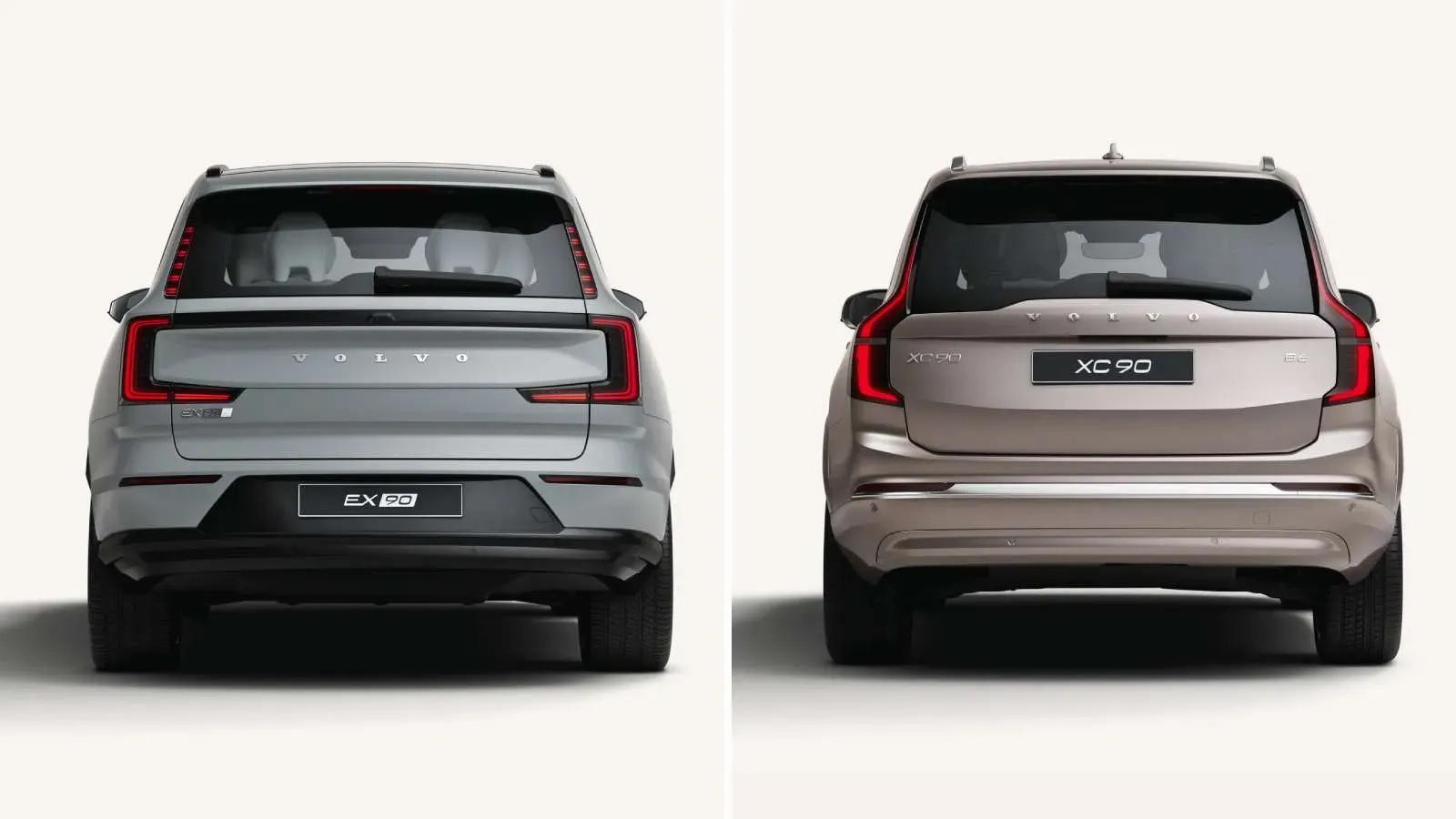
Volvo EX90 (left), Volvo XC90 (right)

Volvo EX90 vs Volvo XC90: Design and Interior


Volvo EX90

Volvo XC90

Price in India (ex-showroom)

₹1,26,00,000 (introductory)

₹98,80,000

Length

5,037 mm

4,953 mm

Wheelbase

2,985 mm

2,984 mm

Width

1,964 mm

1,931 mm

Height

1,744 mm

1,771 mm

Luggage Capacity (max)

2,082 l + 46 l (frunk)

1,856 l

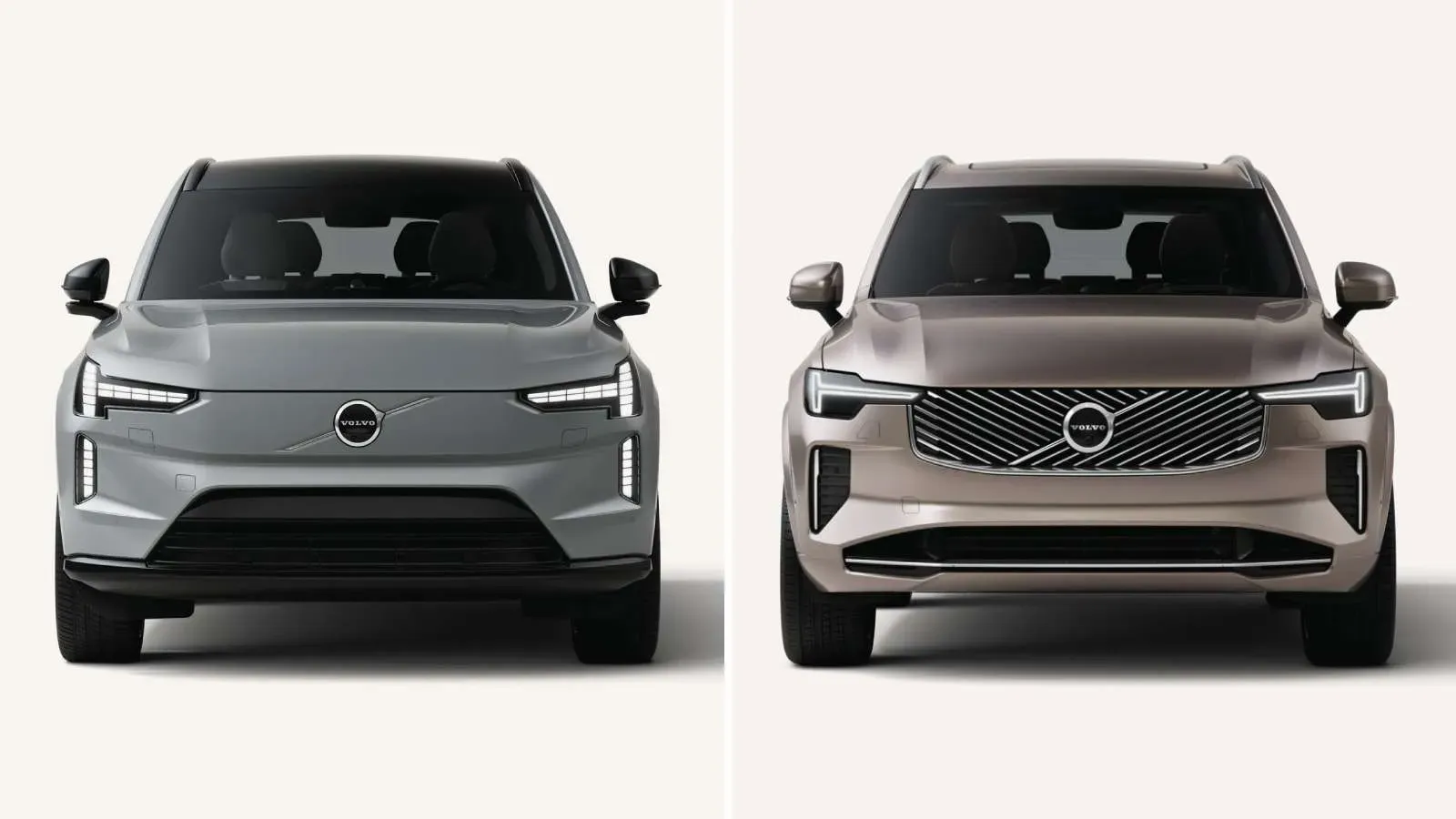
Both SUVs are large and imposing, with noticeable road presence. The electric EX90 is somewhat more modern, with a more minimalist look and sharper details, while the older XC90 has more flowing lines and pronounced contours. The font faces are obviously different, with a shiny chrome grille on the ICE XC90, while the electric EX90 has a flat, solid surface and a decorative diagonal slash behind the Volvo badge.

While both cars have T-shaped “Thor’s hammer” headlights, the newer model uses segmented LEDs for a more digital, pixel-grid look. The taillights are also updated with a connecting bar linking the left and right clusters instead of tall units that extend all the way to flank the rear windshield.

Both are available in six colours, of which five are common: Vapour Grey, Crystal White, Onyx Black, Denim Blue, and Mulberry Red. The EX90 comes in a new Sand Dune finish, replacing the XC90’s Bright Dusk option. The EX90 is listed only with grey-beige Dawn interiors, while the XC90 offers a choice of a darker brown Cardamom and a lighter Blond for the seats and trim.

The EX90 in India is listed with six seats, while the XC90 has seven, with one extra in the centre of the middle row. Both promise high-end finishes using nature-inspired materials, along with premium Scandinavian design. Both have panoramic glass sunroof’s but the EX90’s is electrochromic which means you can adjust its opacity electronically.

Volvo EX90 vs Volvo XC90: Features

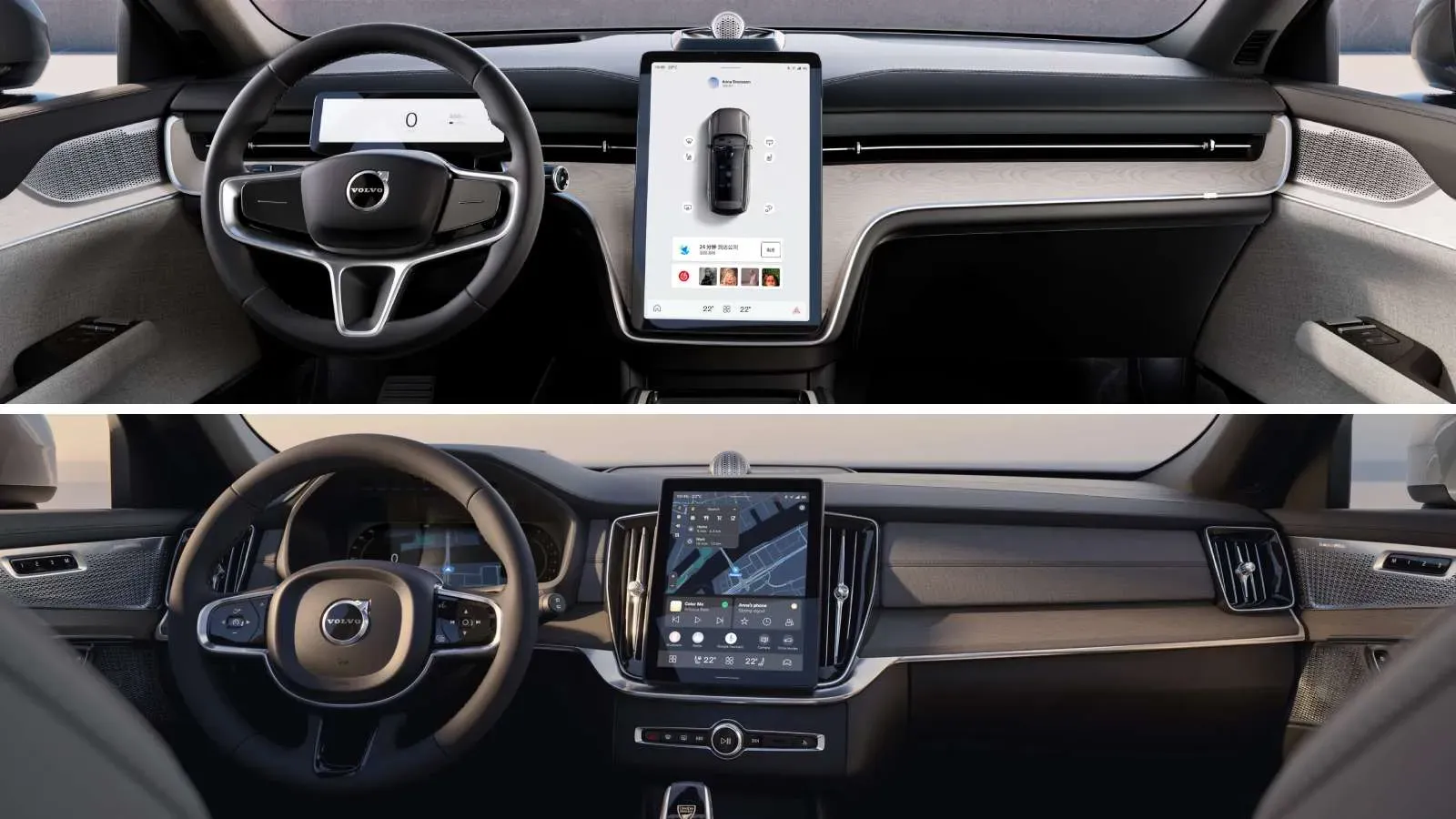
The XC90 has a 11.2-inch vertical infotainment touchscreen and a 12.3-inch digital instrument cluster, while the EX90 has a much larger 14.5-inch central screen and a slicker 9-inch driver’s display. The newer model gets Google Built In (also known as Android Automotive) with multiple online services, wireless CarPlay and Android Auto, and periodic over-the-air updates via cellular 5G. The older one is also eligible to receive Volvo's latest software, giving it a modern UI and user-friendly features. Both models can use the Volvo Cars app which enables remote access, status, location, and more.

volvo-ex90-xc90-interior.webp
Volvo EX90 (above), Volvo XC90 (below)


Both luxury SUVs have Bowers & Wilkins sound systems, but with 25 speakers for the EX90 versus 19 for the XC90. The newer model also has in-cabin microphones to allow occupants in the front and rear to communicate easily without distractions. Both have heated and ventilated front seats with massage functions and multiple adjustment options.

You get wireless phone charging pads in both cars. The XC90 has four USB Type-C ports while the EX90 has six, one for each seat. Both have integrated air purifiers with PM2.5 filters and cabin pre-cleaning. 

In terms of safety, both models have Volvo’s pedigree. The company says the EX90 has a new high-strength steel safety cage protecting all occupants, plus an independent one for the battery. Cabin and steering wheel sensors detect driver alertness and deviations from usual driving behaviour. Buyers also get assisted driving and parking, and HD adaptive headlights. Both models feature a blind-spot alert system, dual-stage airbags, side curtain airbags, driver’s knee airbag, ISOFIX child seat mounts, seatbelts with pre-tensioners, whiplash protection, and much more.

Volvo EX90 vs Volvo XC90: Performance

With completely different powertrains, there are of course huge differences in the performance and character of each car. The new EX90 has dual electric motors putting out 335 kW and 456 hp of power with 670 Nm of torque. Top speed is 180 kmph and it can accelerate from zero to 100 kmph in 5.5 seconds. With an 800V electric architecture, its 106 kWh battery can charge from zero to 100 percent in 10 hours using a domestic 16A AC connection, but it only takes 22 minutes to get from 10 to 80 percent using a 350W DC charger. WLTP range is rated at up to 625 km. 

On the other hand, the XC90 in India has a mild-hybrid petrol engine rated for 184 kW or 250 hp of power with 360 Nm of torque. It has the same 180 kmph top speed but takes 7.7 seconds to get to 100kmph. The only things these cars have in common are their automatic transmissions and AWD capability.