


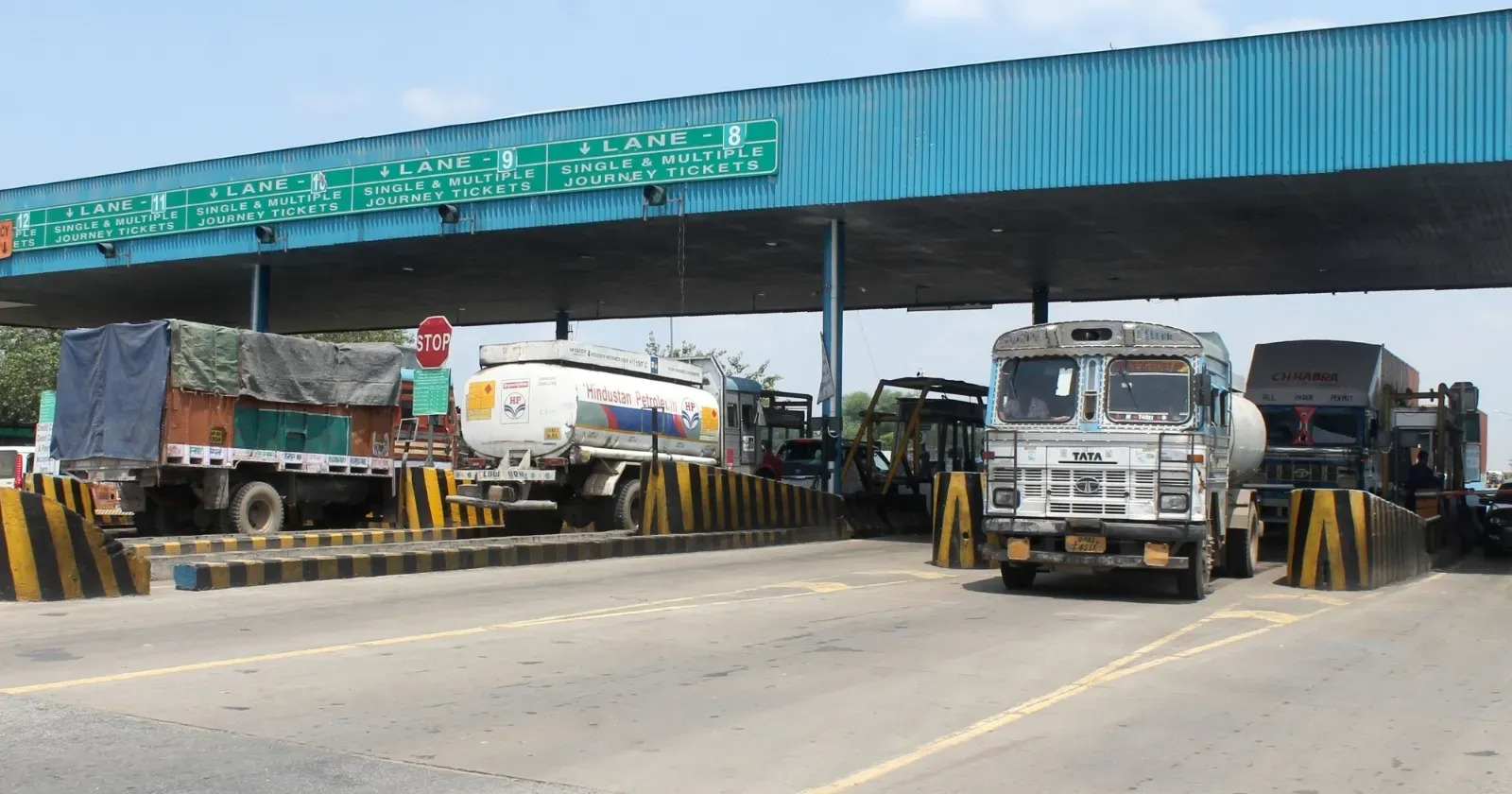
The court ruled that no heavy or commercial vehicle may park or stop on any national highway carriageway or paved shoulder, unless it is at a designated bay, lay-bye or wayside amenity.
The Supreme Court has issued sweeping, nationwide directions to improve road safety on expressways and national highways, including a ban on the parking of heavy vehicles on carriageways and paved shoulders except at designated locations. A Bench of Justices J.K. Maheshwari and A.S. Chandurkar observed that national highways make up only around 2 percent of India’s total road network, but are linked to nearly 30 percent of road fatalities.
The top court said avoidable risks such as illegal parking and accident blackspots cannot be allowed to turn expressways into “corridors of peril” because of administrative delay or gaps in infrastructure. In its order dated April 13, the court said the loss of even one life due to preventable hazards reflects a failure of the State’s duty to protect citizens.
It underlined that the right to life under Article 21 is not limited to protection from unlawful action, but also places a positive obligation on the State to ensure a safe environment. The directions were issued in a suo motu matter taken up after 34 people died in a series of road accidents in Phalodi, Rajasthan, and Rangareddy, Telangana, on November 2 and 3, 2025. The court linked those incidents to systemic negligence and serious infrastructure shortcomings.
Calling commuter safety an essential part of the right to live with dignity, the Bench said the interim measures were necessary to address the root causes of recurring highway accidents. It also said no financial or administrative difficulty could outweigh the value of human life. Among the key directions, the court said no heavy or commercial vehicle may park or stop on any national highway carriageway or paved shoulder, unless it is at a designated bay, lay-bye or wayside amenity.
Implementation of Advanced Traffic Management System
To enforce the rule, the court said authorities should rely on the Advanced Traffic Management System (ATMS), real-time alerts to state police, GPS-tagged photographic evidence and integrated e-challan generation. The directions will apply to officials of the National Highways Authority of India, state police and state transport departments. District magistrates concerned have been asked to frame a standard operating procedure covering periodic inspections and patrolling by the relevant agencies.
The court said these steps must be implemented within 60 days. The Bench also prohibited the construction or operation of any new dhaba, eatery or commercial structure within the right of way of any national highway with immediate effect. It further ordered district magistrates to remove or demolish all unauthorised structures, new or existing, within 60 days in line with the applicable procedure.
The court said no department, authority or local body should issue or renew any licence, no-objection certificate or trade approval for any site within highway safety zones without prior clearance from NHAI or the relevant public works department. Existing licences in such zones are to be reviewed within 30 days.
Also READ: Delhi EV Policy Must Protect Dealer Livelihoods: FADA
Establish District Highway Task Forces
In another major direction, the Bench asked district magistrates to constitute district highway safety task forces in every district through which a national highway passes. These bodies are to include representatives from the district administration, police, NHAI or the concerned land-owning agency, PWD and local bodies.
The court also asked for stronger surveillance on highways, better enforcement against illegal parking, wider use of ATMS infrastructure such as cameras and speed detectors, emergency response systems, more truck lay-bye facilities, improved lighting at accident blackspots, and better coordination among institutions handling road safety.
The Ministry of Road Transport and Highways has been directed to file a compliance report within 75 days after collecting data from states and agencies. The matter has been listed again for compliance after two months.
The court said the authorities may coordinate with all stakeholders for implementation and may return to the court if compliance issues arise. It also noted that on December 15 last year, it had been considering the idea of pan-India guidelines to reduce accidents on expressways and national highways.