

Tata Motors expects advantages for both companies in terms of product development and capital expenditure reduction.
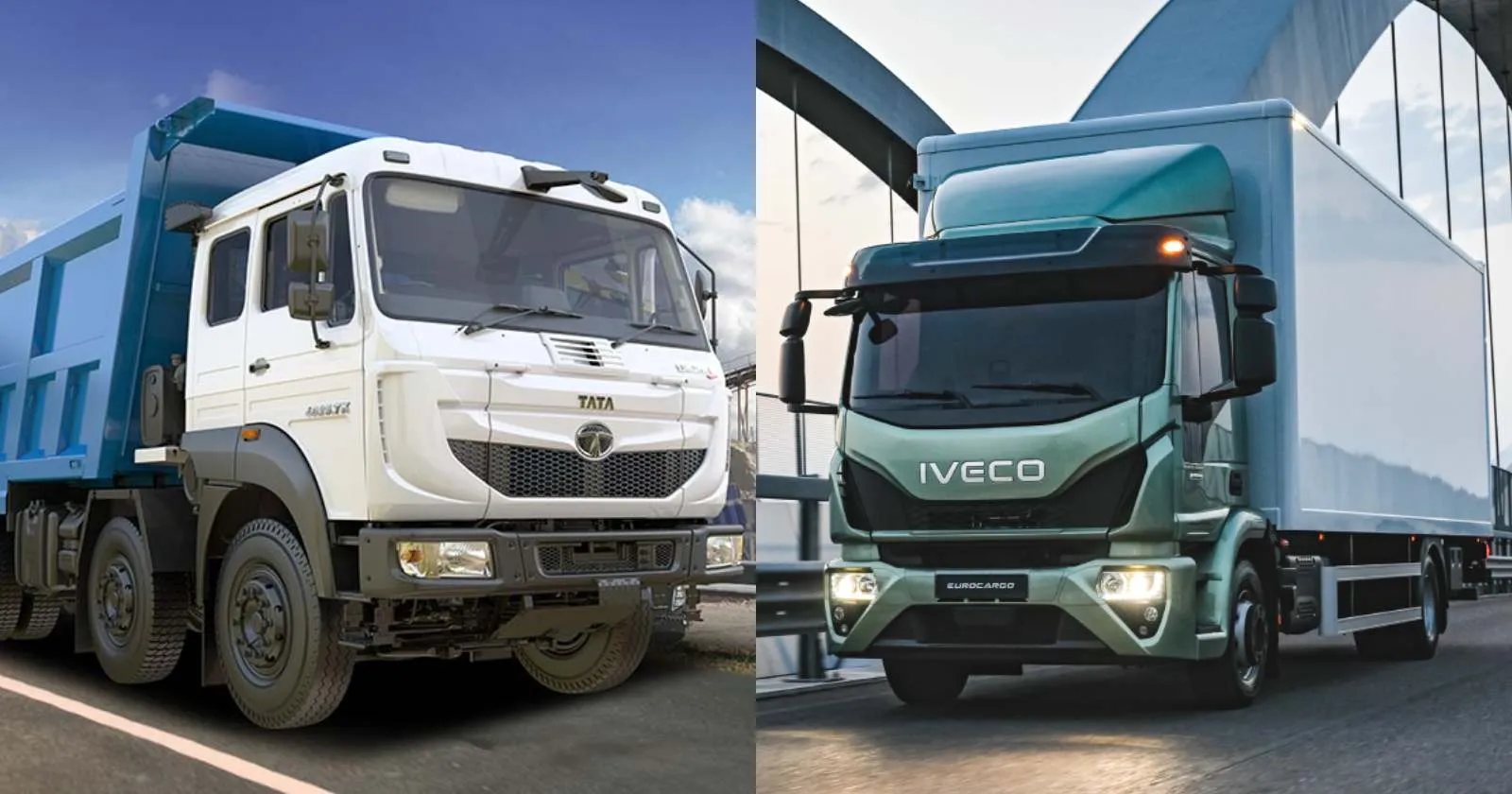
Tata Motors expects its third major acquisition, and the second for its commercial vehicles business – the $4.4 bn Iveco acquisition – to deliver right from the word go. That’s once it secures all the necessary approvals, which may take another 9 months or so. The commercial vehicle major will raise 1 billion euros in equity to repay the loan for the acquisition.
If all goes well with the deal, Tata Motors will claim the fourth position globally, in the 6 tonne and above commercial vehicle industry, with a combined turnover of ₹2,20,000 crore. The Mumbai-headquartered CV major is bullish for a synergistic drive between the two “cashflow positive” commercial vehicle players. Three key synergy buckets, as explained by Tata Motors Executive Director Girish Wagh, are revenue, capital expenditure, and operating expenditure.
In terms of products, the key drivers for the revenue bucket, Tata Motors sees opportunities in introducing some of Iveco’s vans, tippers, and buses in India, “We can also look at the Latin American market where some of our trucks, or small commercial vehicles can go because we have a price complementarity," said Wagh during an interactive session with journalists on Thursday.
According to P Balaji, CFO, Tata Motors, revenue is the “fundamental” synergy behind Tata Motors’ offer to acquire the Italian commercial vehicle maker.
An equally big opportunity could be capital expenditure synergy in terms of R&D expenditure. “There’s an overlap, and we can look at therefore optimising and commonising; synergising some of these programmes,” explains Wagh. The key technology areas the company has identified are powertrain, ADAS (Advanced Driver Assistance Systems), SDV (Software Defined Vehicles), and electrification. The strategy is also to adapt and adopt them for the Indian market, and be “ahead of time” to gain a competitive advantage.
Tata Motors will aim to develop synergies in these tech areas not only by tapping what’s already available with Iveco, which has invested ahead of Tata Motors in these advanced technologies, but also by “leveraging the frugal engineering skills of India”, which Tata Motors’ engineering team may be able to offer. This could also lead to material cost savings for Iveco.
Apart from cost reduction opportunities, there’s also “quite a bit that can be done” through complexity reduction in Iveco’s portfolio. Desiging to value would also contribute to synergies in operational expenditure.