

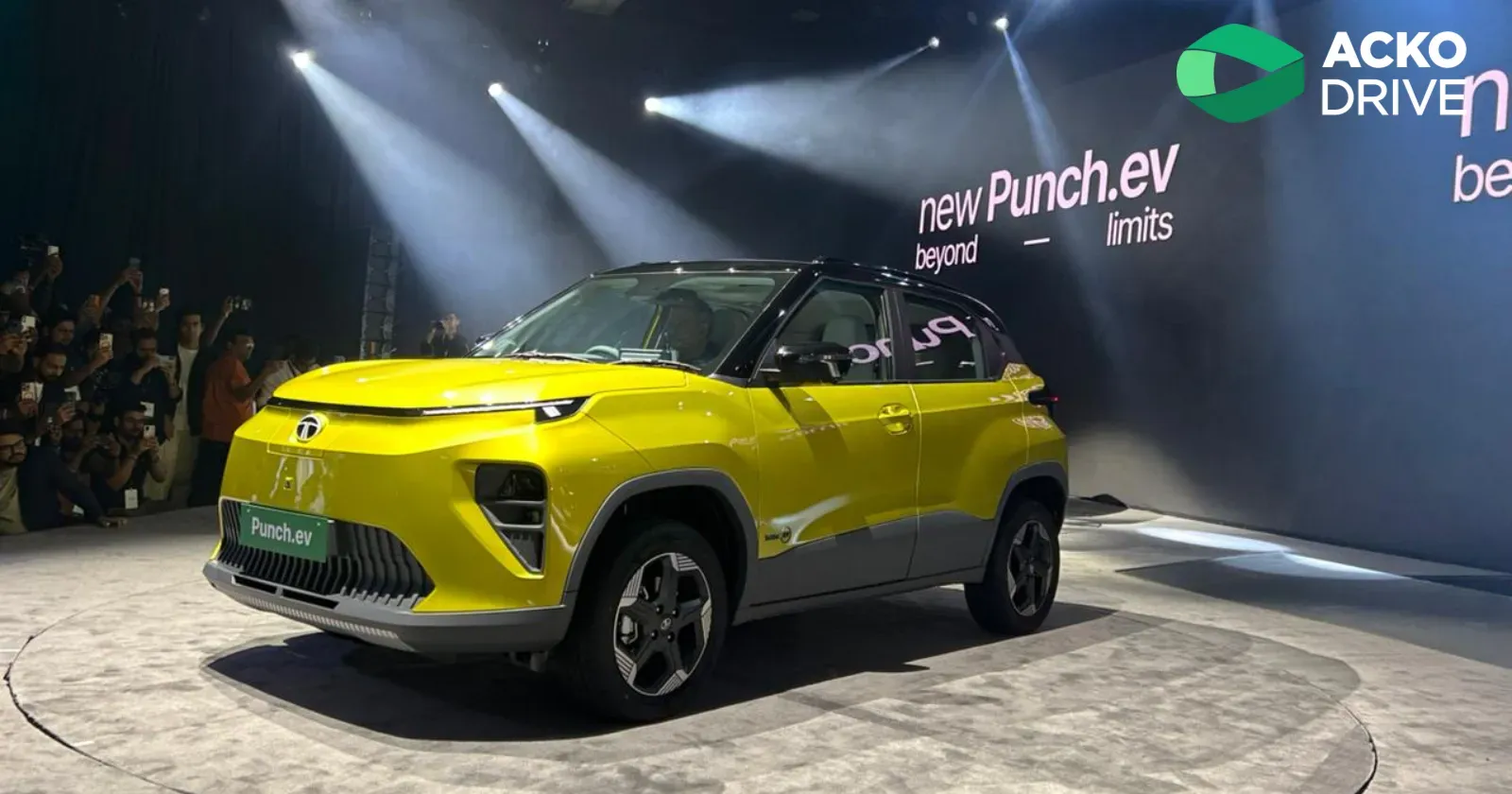
The Tata Punch.ev crossed 5,000 units in monthly wholesales in October, a level Tata Motors says no standalone electric car model in India has reached before. The company disclosed the milestone alongside its October sales figures, which showed Tata Motors Passenger Vehicles dispatching 75,426 units overall, up 23 percent from a year earlier and its highest monthly tally yet.
Tata has not released an exact figure for the Punch.ev, saying only that sales crossed the 5,000 mark. That followed 4,702 units in September and 4,430 in August, a run that has made the compact EV Tata's best-selling electric model, ahead of the Nexon EV and the newer Curvv and Sierra electric variants.
The claim of a first sits on reasonably firm ground. Among rival electric cars, the MG Windsor's best month on record is 4,741 units, set in September last year, while the Mahindra XEV 9S peaked at 4,636 units in September 2026. Neither has broken 5,000 in a single month, at least on the figures available so far.

The jump follows a February facelift that cut the Punch.ev's starting price to Rs 9.69 lakh and introduced larger 30kWh and 40kWh battery packs, offering a claimed range of up to 468km. Tata had projected a 30–50 percent volume increase from the update; the actual rise has been considerably steeper, with sales nearly quadrupling from the 915 units sold in October last year.
The timing reflects a broader shift in India's electric car market. The Federal Automobile Dealers Association recorded passenger EV retail sales of 36,108 units in September, a record, with electric penetration rising to around 8.5 percent of the car market from 5.7 percent a year earlier. Festive-season demand and continued price competition in the sub-Rs 15 lakh segment have both played a part, as has the absence of any central purchase subsidy for private electric cars, leaving the lower GST rate and state-level road tax waivers as the principal incentives.
Also read: Tata Motors Completes Iveco Takeover With 89.42% Stake After First Settlement
For Tata, the Punch.ev's run has arrived at a useful moment. Company-wide EV sales, including exports, reached 16,244 units in October, up 75 percent year-on-year and equivalent to roughly 21.5 percent of its total passenger vehicle sales — a share that has grown steadily as the EV portfolio has widened to include the Nexon, Curvv, Harrier, Sierra and Tiago electric variants.
Whether the Punch.ev holds its lead remains to be seen. On registration data, the Windsor and XEV 9S have both led in individual months this year, underlining how closely contested the segment under Rs 20 lakh has become as electrification spreads beyond premium SUVs into India's smallest, most price-sensitive car segment.