

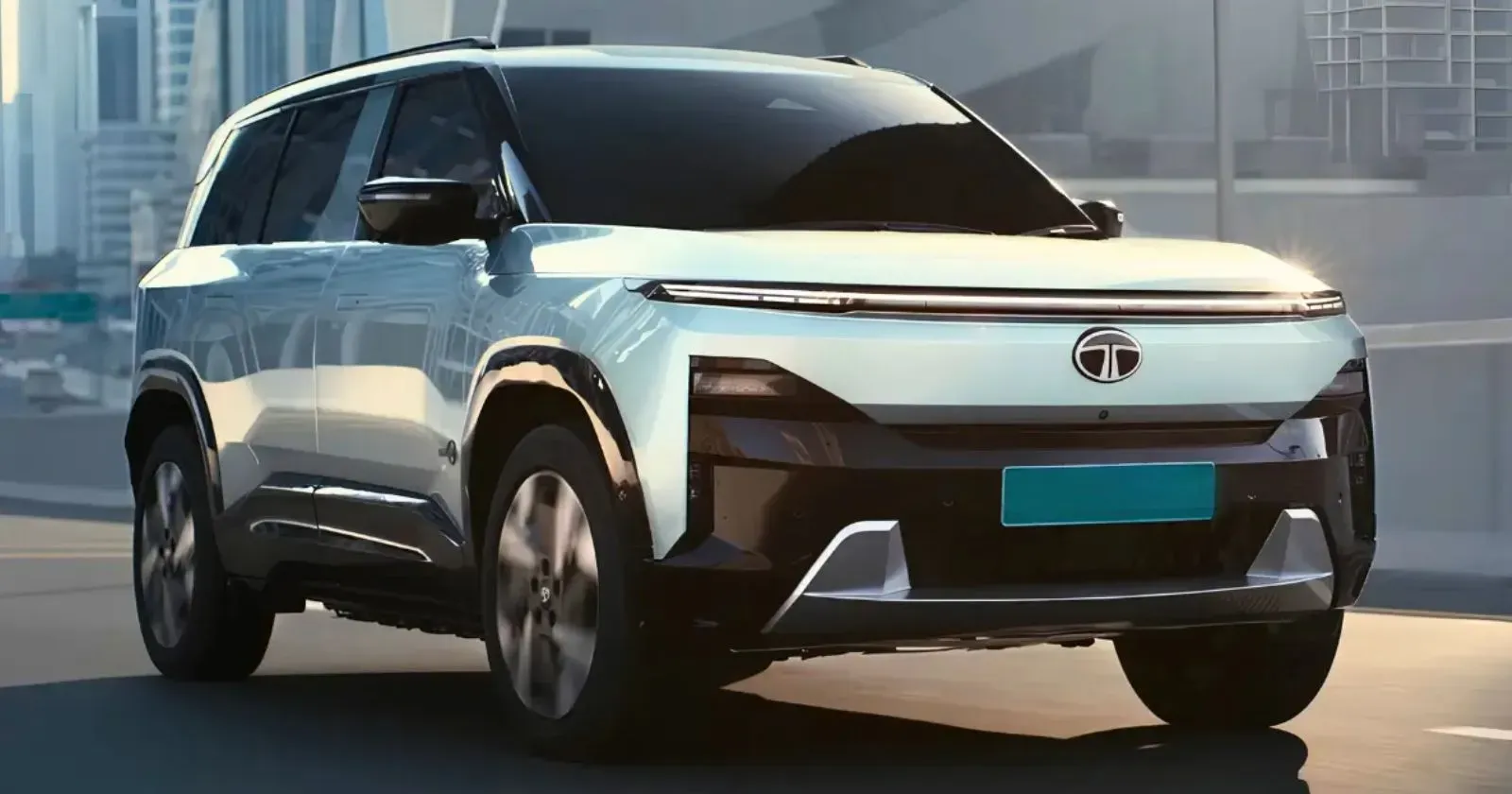
The Sierra EV is expected to enter Tata’s electric SUV portfolio with a 65 kWh battery on the base Pure trim and a larger 75 kWh pack for AWD versions. The launch, scheduled for 30 June 2026, will place it in an increasingly crowded midsize electric SUV segment.
Tata Motors’ upcoming Sierra EV is likely to be offered with a 65 kWh battery pack in its entry-level Pure variant. Dealer sources have told Acko Drive that higher-spec all-wheel-drive versions are expected to use the larger 75 kWh battery pack already seen on the Harrier EV, giving Tata a two-battery strategy for one of its most closely watched electric SUV launches.
The reported configuration suggests Tata is preparing the Sierra EV with a familiar powertrain ladder rather than an entirely new battery set-up. In the Harrier EV, Tata offers 65 kWh and 75 kWh battery packs, with the 65 kWh version using a rear-wheel-drive layout and an electric motor rated at 235 bhp. The 75 kWh battery is also used in higher variants, while the QWD dual-motor version gets 504 Nm of torque.
For the Sierra EV, that approach could help Tata control costs, simplify homologation and use existing EV component commonality across its larger SUV portfolio. The Harrier EV’s 65 kWh version has a claimed MIDC range of 538km, while the 75 kWh QWD version is associated with a claimed range of up to 622 km. The Sierra EV’s final certified range figures, however, have not yet been officially announced, so the Harrier EV numbers should be treated only as a reference point at this stage.
The 65 kWh Pure variant will be important for pricing. Tata needs the Sierra EV to sit above the Curvv EV while remaining accessible enough to attract buyers upgrading from compact electric SUVs. We expect the Sierra EV to cost between ₹20 lakh–25 lakh.
Competition will be intense. The Sierra EV will face products such as the Hyundai Creta Electric, Mahindra BE 6, Mahindra XEV 9e, Tata Curvv EV and upcoming Maruti and Toyota electric SUVs. That means Tata’s positioning will have to balance nostalgia around the Sierra nameplate with hard purchase factors: battery size, usable range, charging convenience, cabin features, safety equipment and monthly running costs.
Also read: Tata Motors Sold 6.4 Lakh Cars in FY2026-27: 92,000 EVs, 1.7 Lakh CNG Units
The charging package is also expected to mirror the Harrier EV, with a 3.3 kW charger and an optional 7.2 kW AC fast charger depending on variant strategy. This will matter for home charging buyers, especially in large urban markets where apartment charging access remains uneven.
The Sierra EV is significant beyond one nameplate. It will test how far Tata can stretch its EV portfolio into a more premium, lifestyle-led SUV space while still relying on localisation, shared platforms and battery commonality to keep the business case viable. If Tata gets the pricing and variant walk right, the Sierra EV could become a key bridge between mainstream EV adoption and the next phase of premium electric SUV demand in India.