What is ABS?
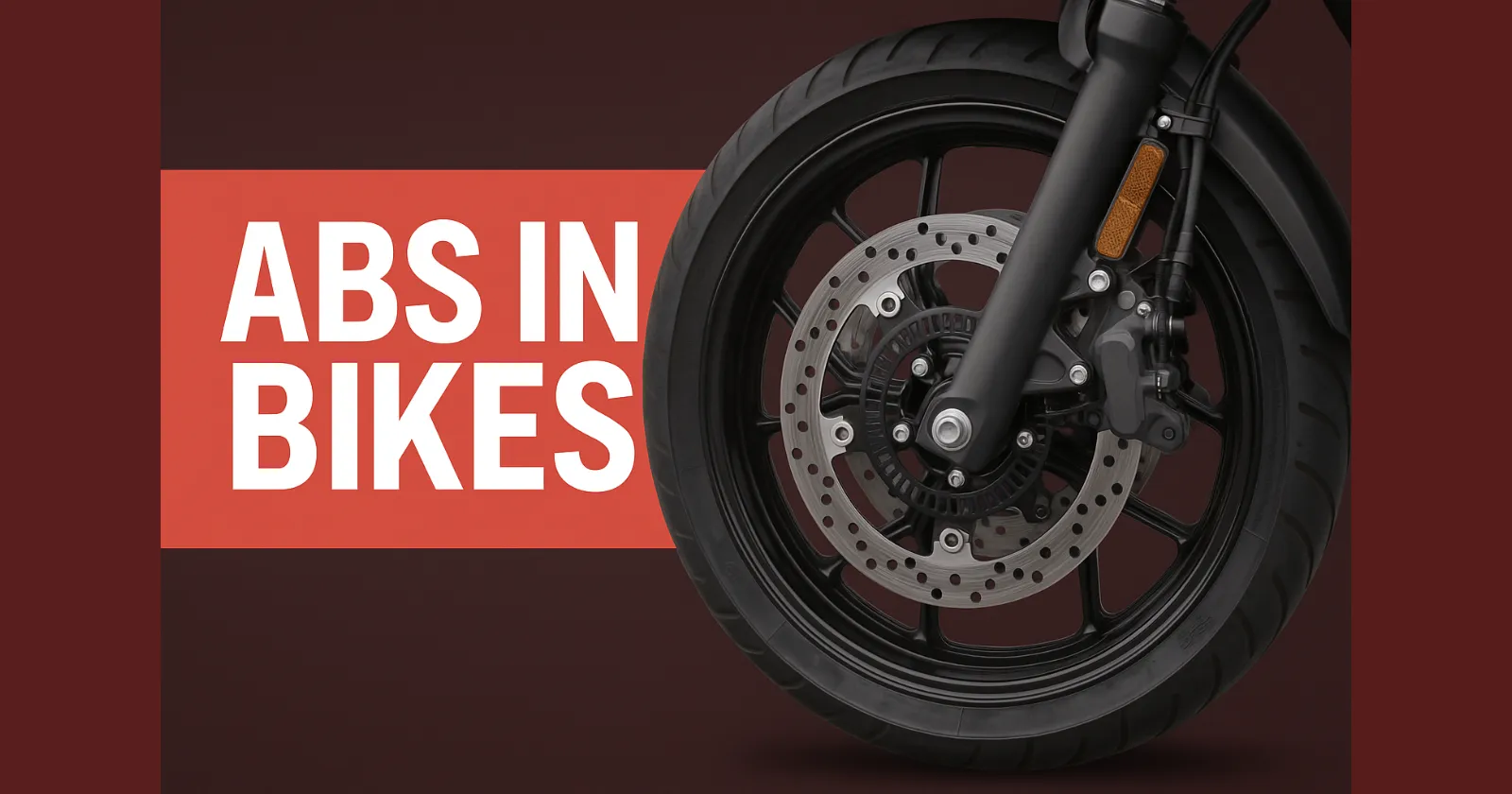
ABS stands for Anti-lock Braking System. In two-wheelers, it prevents the wheels, especially the front wheel, from locking up during hard braking. A locked wheel will slide rather than roll, drastically reducing control and increasing stopping distance. ABS continuously monitors wheel speed and, during skid-prone conditions, electronically pulses the brake pressure to maintain traction, reducing the risk of a fall.
How ABS Works on Bikes
ABS relies on four primary components, which are as follows:
- Wheel-speed sensors: Continuously monitor each wheel’s rotational speed.
- Hydraulic actuator: Controls the brake pressure when sensors detect an impending skid.
- Control module (ECU): Acts as the system’s brain, calculating when and how to intervene.
- ABS pump: Restores hydraulic pressure quickly after modulation, enabling continued braking without interruption.
In a panic-braking situation, if the system detects one of the wheels slowing down more rapidly than the others, ABS momentarily reduces brake pressure up to 10 times per second and then reapplies it. This rapid cycling prevents wheel lock-up and allows the rider to maintain control of the motorcycle, even under emergency braking.
Types of ABS in Bikes
There are three types of ABS, which are discussed below.
1. Single-Channel ABS (Front or Rear Wheel Only)
- Only controls one wheel, usually the front, which provides the majority of stopping power.
- Found on commuter and budget sports bikes in the 100 -150 cc segment.
- Less expensive but not as effective as dual-channel ABS in maintaining full-bike stability.
2. Dual-Channel ABS
- Monitors and modulates braking on both the front and rear wheels.
- Offers more complete stability and safety during all braking scenarios.
- Now common on most mid-weight and premium motorcycles (200 cc and above).
3. Cornering or Lean-Sensitive ABS
- The most advanced ABS version, found on premium bikes equipped with Inertial Measurement Units (IMUs).
- Adjusts braking intervention according to lean angle and cornering forces.
- Enables safer braking while cornering, especially useful in sport riding or touring at speed.
Why ABS is a Necessity
India’s varied and unpredictable riding conditions turn ABS into a genuine lifesaver.
- Slippery and wet roads: Potholes, oil spills, water-drenched roads, and uneven patches are everyday hazards, especially during monsoons. ABS helps avoid accidental skids.
- Panic stops: Sudden braking in dense traffic or due to stray animals can cause the wheels to lock. ABS intervenes to maintain control.
- Unpredictable debris: Gravel, construction materials, leaves, or wet clay can destabilise a locked wheel. ABS maintains stability on such surfaces.
- New and returning riders: ABS provides a safety net for riders who are still getting accustomed to their bike or those returning to riding after a gap.
ABS improves braking control under typical Indian conditions, helps avoid accidents, and minimises fall-related injuries.
Comparison: ABS vs. CBS vs. Conventional Brakes
Here’s a quick comparison between these three, which you should know.
| Feature | ABS (Anti-lock Braking System) | CBS (Combined Braking System) | Conventional Brakes |
| How it works | Prevents wheel lock by adjusting brake pressure automatically | Applies brake force to both wheels when one brake is pressed | Braking is done separately using the front and rear brakes |
| Safety during sudden braking | High (helps maintain control and prevents skidding) | Moderate (improves balance but may not prevent skidding) | Low (higher chances of skidding or losing control) |
| Best for | High-speed, emergency, and slippery road braking | Daily commuting and city use, especially for new riders | Experienced riders on predictable roads |
| Electronic assistance | Yes | No electronic sensors, uses a hydraulic link | None |
| Found in | Mid to high-end motorcycles | Scooters and entry-level bikes | Older or very basic models |
Indian Legal Scenario You Must Know
As per Indian government regulations:
- All new two-wheelers above 125 cc must be equipped with dual-channel ABS.
- Scooters and mopeds under 125 cc are required to have at least single-channel ABS or CBS.
Manufacturers have responded by incorporating ABS into their line-ups, and it is now an industry standard in compliance with safety regulations.
Benefits of ABS to the Riders
| Benefit | Effect |
| Shorter braking distance | Reduces skid-related travel, especially on wet or loose surfaces. |
| Improved stability | Prevents the motorcycle from fishtailing or losing balance during hard stops. |
| Enhanced rider confidence | Enables full braking force use without fear of locking wheels. |
| Protection for new riders | Offers a safety net while mastering braking techniques. |
| Insurance benefits | Some insurers offer discounts for ABS-equipped motorcycles. |
Effect on Tyre Life and Fuel Efficiency
ABS doesn’t directly affect fuel efficiency. However, smoother braking and throttle transitions promoted by ABS may reduce overall strain on tyres, brake pads, and chains. This leads to a slightly extended lifespan for components and long-term savings in running costs.
Disadvantages of ABS
ABS is not without its limitations. Some of them are discussed below.
- You may feel pulsing or vibrations through the brake lever when ABS is activated, this is normal and confirms the system is functioning.
- On loose surfaces like deep gravel or sand, ABS may reduce braking force more than desired, requiring rider skill and adaptation.
- Many modern bikes do not allow ABS to be fully disabled, and doing so may void warranties or invalidate insurance.
- Lack of regular maintenance, such as fluid checks or sensor cleaning, can reduce effectiveness.
Still, these drawbacks are relatively minor when weighed against the significant safety benefits ABS offers.
How to Choose the Ideal ABS Bike
Listed below are some tips that will help you in picking the right ABS type.
Assess your riding style: Are you a city commuter, long-distance tourer, off-road adventurer, or performance enthusiast?
Choose the suitable ABS type: Single-channel ABS is adequate for budget commuters. Dual-channel ABS is recommended for most riders, especially those riding on highways or in hilly regions. Cornering ABS is ideal for riders who prioritise performance and safety while leaning or cornering.
Compare models: Even bikes within the same segment may offer ABS as an optional or standard feature.
Read rider reviews: Riders often comment on real-world ABS performance and reliability.
Test ride the motorcycle: Safely perform light emergency stops to feel how the ABS engages.
Avoid aftermarket ABS kits: Retrofitting ABS is not recommended as it lacks manufacturer precision and can be unreliable or dangerous.
Repair and Maintenance of ABS
- ABS sensor protection: Keep wires undisturbed and sensor rings free from dirt or damage, especially during tyre or wheel servicing.
- Brake fluid care: Follow the service manual for periodic bleeding and fluid replacement; ABS systems are sensitive to hydraulic issues.
- Software updates: Some manufacturers issue software patches or firmware upgrades. Always check with authorised service centres.
- Warning lights: If the ABS indicator stays on, consult a technician immediately as it signals a fault in the system.
Final words
ABS is a must-have feature, and every rider deserves this layer of safety, especially in unpredictable traffic and weather conditions. ABS helps prevent wheel lock-up and keeps you upright and stable, whether you’re on a daily commute or an emergency stop. It’s a small upfront investment that delivers great returns in safety, control, and peace of mind.
Frequently Asked Questions