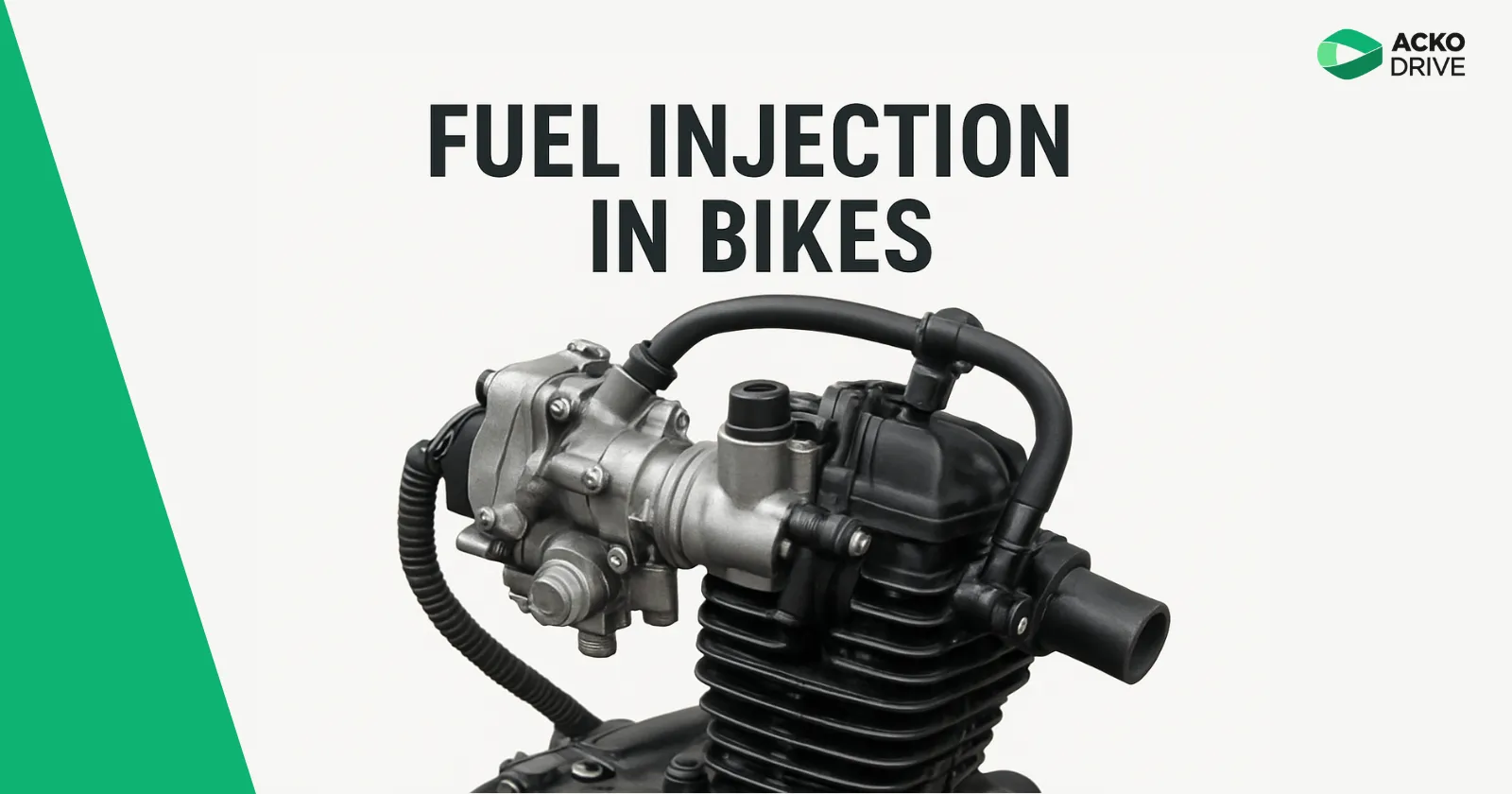
What is Fuel Injection in Bikes?
Fuel injection, as it relates to bikes, refers to a system that sends fuel directly into the bike’s combustion chamber or intake manifold through electronically controlled injectors. Although carburetors used air to mix fuel and air with pressure differences, fuel injection systems use sensors as well as an Electronic Control Unit (ECU) to accurately meter and inject fuel based on the requirements of the running engine.
This leads to a more effective and reliable air-fuel mixture that results in more efficient combustion, improved throttle response, and lower emissions. The advantages of a fuel injection system become obvious in changing weather and altitude situations where carburettors tend to fall short of optimal performance. Fuel injection has become prevalent in some form across all bike models, from budget commuter models to high-performance machines.
Components of a Fuel Injection System
A common fuel injection system used in bikes has different components that are essential in proper and efficient fuel delivery:
- Fuel Injector: Functions as a nozzle that releases a fine mist of fuel (atomised) into the intake manifold for combustion.
- Electronic Control Unit (ECU): This enclosure acts as the brain of the system. The ECU will receive data from sensors, then calculate the proper amount of fuel to inject for each operating condition.
- Throttle Position Sensor: The throttle position sensor detects the position of the throttle, then sends a signal to the ECU to adjust fuel delivery corresponding to the rider’s input.
- Oxygen Sensor: The oxygen sensor is located in the exhaust, measuring the oxygen content in the exhaust and sending this information to the ECU. The ECU adjusts the air-fuel ratio for lower emissions and better efficiency.
- Fuel Pump: The fuel pump will deliver fuel from the tank to the injector at the correct pressure, ensuring supply of consistent fuel for every operating condition.
There are other parts that support operation such as the fuel tank, fuel filter, fuel lines, and sometimes a fuel pressure regulator. Some parts are necessary for operation while others, while supportive, provide inconsequential impact on performance.
How Does Fuel Injection Work?
To fully appreciate the benefits of a fuel injection system, it helps to have a basic understanding of how it works on your bike. Below, we highlight the necessary pointers for you to learn:
- When you turn the throttle, the position sensor sends an electrical signal to the ECU.
- The ECU then takes in several inputs: engine RPM, temperature, oxygen sensor values, etc. and determines the appropriate amount of fuel to add to the air-fuel ratio.
- The ECU then commands the fuel pump to pressurize the fuel, the injector mechanically opens, and it delivers the right precise amount of fuel to the intake manifold or combustion chamber.
- This entire system provides a consistent and optimal air-fuel mixture that allows for efficient combustion, improved throttle response, reduced emissions, and real-time adjustments.
These aspects show how fuel injection works in bikes. Essentially, you can now get the benefits of fuelling injection system technology for your cold starts, wide-open-throttle acceleration, and those high-altitude rides on the side of the mountain.
Types of Fuel Injection in Bikes
Fuel injection on bike models can be separated by how and where fuel is injected:
- Single-point Fuel Injection: Utilises a single injector to deliver fuel to all cylinders. This can be easier and cheaper to manufacture, but it is not as accurate as others.
- Multi-Point Fuel Injection (MPFI): Uses a fuel injector for each cylinder, delivering fuel directly to the intake port. This allows for more accurate and efficient fuel delivery to each cylinder and increases performance with better fuel injection mileage benefits.
- Direct Fuel Injection: Directly injects fuel at high pressure into the combustion chamber. This is extremely common in cars and is growing in popularity; it's rare to see it on motorcycle engines due to the complexity, cost, and motorcycle performance. Nevertheless, it provides better efficiency with more power.
Advantages of Fuel Injection
Fuel injection as a bike technology has some clear advantages over carburettors, check it out:
- Better Fuel Efficiency: The exact metering of fuel produces optimal combustion and optimum fuel injection mileage advantages for daily riders.
- Improved Throttle Response: The system responds immediately to throttle input for smoother acceleration and more predictable throttle response. This is certainly one of the first FI bike advantages.
- Lower emission levels: Because the system is electronically controlled, the air-fuel mixture is always ideal, minimising harmful exhaust emissions and allowing bikes to meet strict government requirements.
- Easier Cold Starts: Automatic adjustments for temperature means bikes are easy to start when cold weather conditions exist. When compared, carburettor-equipped models often rely on a mechanical choke to function, which places the rider at risk for stiff mechanical overrides.
- Needs Less Maintenance: Fewer mechanical parts and no jets or floats to be cleaned means that fuel injected bikes can often have longer intervals between maintenance.
Disadvantages of Fuel Injection
Fuel injection system technology has undoubtedly brought many advantages, but there are some drawbacks to consider:
- Higher Initial Price Tag: FI bikes tend to cost more up front than carburettor-equipped bikes.
- Complicated and Expensive Repair Process: Often, diagnosis and repair are done with special tools, which increases the cost of fuel-injected bike maintenance when things go wrong.
- Dependence on Electronics and Sensors: The fuel injection system is a complex network of sensors and an ECU, which means that one electrical failure or one faulty sensor can leave you stranded.
Fuel Injection vs. Carburettor
Below, we highlight the difference between fuel injection vs carburettor systems in bikes to make things clear to you. Check it out:
| Feature | Fuel Injection | Carburettor |
| Performance | Consistent, responsive, precise | Can be inconsistent, less precise |
| Maintenance | Less frequent, needs expertise | Frequent, can be DIY |
| Environmental Impact | Lower emissions, cleaner burn | Higher emissions, less control |
| Cost and Availability | Higher upfront and repair costs | Lower cost, widely available |
Maintenance Tips for Fuel-Injected Bikes
A properly-maintained fuel-injected motorcycle will deliver long-term reliability and performance:
- Always use quality fuel to avoid clogging injectors.
- Check and replace the fuel filter as per your manufacturer's recommendations.
- Look after your battery, as the ECU and associated sensors rely on it to provide a stable voltage.
- Check wires and sensors during each service period.
- Avoid running the fuel tank dry to protect your fuel pump.
Best Fuel-Injected Bikes in India
India's two-wheeler market has a plethora of fuel-injected bikes at every price point. Some of the best FI bikes around are:
- Commuter Segment: Hero Glamour FI, Honda SP 125, TVS Raider 125 FI
- Sports Segment: Yamaha R15 V4, KTM RC 200, Suzuki Gixxer SF 250
- Adventure or Touring Segment: Royal Enfield Himalayan, KTM 390 Adventure, Honda CB500X
The selections above showcase the advantages fuel injection system technology can present, in terms of performance gains, efficiency level, & compliance with regulations regarding emission norms.
Adoption in Different Bike Segments
Fuel injection in bikes is now commonplace throughout all major segments:
- Commuter Bikes: Fuel-injected systems are found in this segment due to the various advantages, including fuel injection mileage, reliability, etc., for daily use.
- Sports Bikes: These motorcycle manufacturers prioritise fuel injection approach as it brings in the benefits including sharp throttle response, high-revving performance, etc. so that your experience very much resembles riding a race bike.
- Adventure and Touring Bikes: Fuel injected motorcycles provide advancement in all-round performance regardless of altitude or climate which can assist with added versatility for long rides.
Future of Fuel Injection in Motorcycles
Fuel injection in bikes is an exciting future, fueled by advancing technology and regulations:
- More Regulations on Emissions: More regulations are putting a lot of pressure on all manufacturers to deploy fuel injection systems versus carburettors for cleaner emissions.
- Shifting Towards an Electronic System: Electronic fuel injection (EFI) for bikes is continuing to develop, becoming the replacement standard for the mechanical systems to provide more control and adjustability.
- Compatibility with Emerging Technologies: Ride-by-wire, traction control, and smartphone connectivity systems often rely on EFI to perform their basic functions, adding even more safety and user experience to the riding experience.
Bottom Line
Fuel injection has changed the landscape of bike performance, and the gains far outweigh the disadvantages of using carburettor systems. Fuel injection provides some incredible benefits for most riders, that includes improved fuel consumption, reduced emissions, maintenance is easier and new level features. As we are seeing tighter emissions regulations and rider expectations have improved so much, Fuel injection systems and carburettors debates are fading and fuel injection systems are the future of Indian two-wheelers.
Frequently Asked Questions