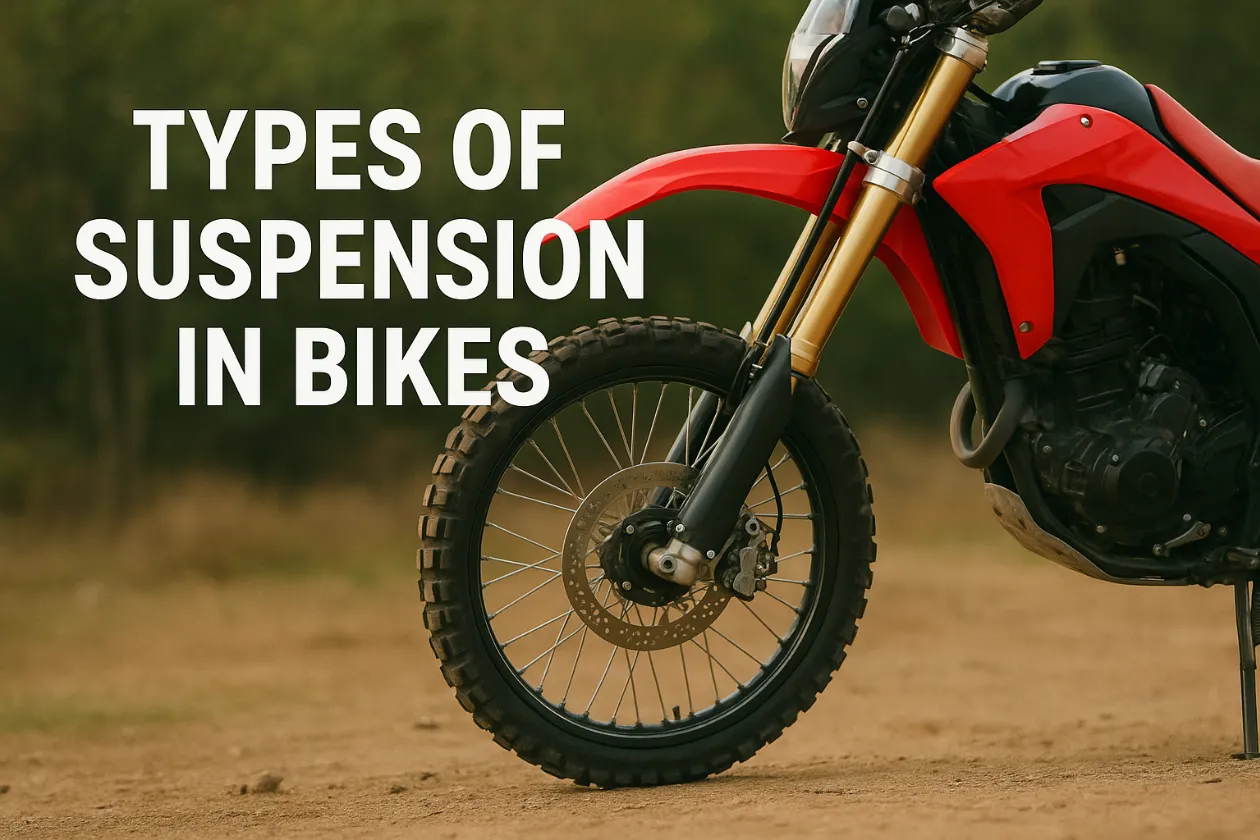
Why Suspension Matters in Bikes
Suspension plays a great role in making the ride comfortable. It affects handling, braking, and even tyre life. Here’s why it’s important.
- Comfort: Reduces the impact of bumps, potholes, and uneven roads.
- Control: Keeps the tyres in constant contact with the ground for better grip.
- Safety: Helps maintain stability while braking, turning, or riding over rough surfaces.
- Durability: Protects the bike’s frame and components from damage caused by road shocks.
Main Types of Bike Suspension
Motorcycle suspension can be divided into two main parts:
- Front Suspension: Attached to the front wheel.
- Rear Suspension: Attached to the rear wheel.
Each has different designs and working principles, which are discussed below.
1. Front Suspension Types
a) Telescopic Forks
Telescopic forks are the most common type of front suspension found in Indian bikes and scooters. They look like two metal tubes that connect the front wheel to the handlebar. Inside these tubes are springs and oil, which work together to absorb shocks.
How it works – When the wheel hits a bump, the tube compresses, and the spring absorbs the shock. The oil inside controls the movement, making it smooth instead of bouncy.
Advantages:
- Simple and reliable design.
- Easy to maintain and repair.
- Works well for most city and highway riding conditions.
Disadvantages:
- Limited performance in very rough terrains.
- Not as strong as advanced suspension types for heavy-duty use.
Best for – Daily commuting, city riding, and moderate touring.
b) Upside Down (USD) Forks
Upside-down forks, also called USD forks, are seen in premium and performance bikes. Here, the thicker part of the fork is at the top and the thinner part is at the bottom.
How it works – The design increases stiffness and reduces flex while cornering at high speeds. The suspension reacts quicker, giving better control.
Advantages:
- Superior handling at high speeds.
- Stronger and more stable during cornering.
- Looks sporty and premium.
Disadvantages:
- More expensive to manufacture and maintain.
- Overkill for slow-speed city riding.
Best for – Racing, sport biking, and aggressive highway riding.
2. Rear Suspension Types
a) Twin Shock Absorbers
Older bikes like the Hero Splendor, Bajaj CT100, and Royal Enfield Bullet 350 use two separate shock absorbers at the rear. These are mounted on each side of the wheel.
How it works – Springs and dampers inside absorb the shock when the rear wheel moves up and down.
Advantages:
- Simple and strong design.
- Easy to repair as well as maintain.
- It is affordable to replace.
Disadvantages:
- It is not as comfortable when compared with modern mono-shock setups.
- Offers less stability at high speeds.
Best for – Budget bikes and heavy-duty use.
b) Mono-Shock Suspension
This type of suspension uses a single shock absorber, which is usually placed under the seat and connected to the swingarm. Many modern bikes use this system.
How it works – The single shock is centrally mounted and is linked with levers to increase its effectiveness.
Advantages:
- Provide stability and better handling.
- Offers a more comfortable ride quality.
- It distributes weight better for improved balance.
Disadvantages:
- Slightly expensive to repair.
- Not as easy to replace as twin shocks.
Best for – Modern bikes, touring, and sporty riding.
c) Spring-Loaded Hydraulic Suspension
It is one of the most common types of bike suspension. This suspension uses a coil spring combined with hydraulic oil-filled dampers. The spring absorbs shocks from bumps, while the hydraulic system controls rebound and prevents excessive bouncing.
How It Works - When the bike hits a bump, the coil spring compresses in order to absorb the impact. At the same time, the hydraulic oil inside the damper moves through small valves and slows down the spring’s rebound so that the bike doesn’t bounce uncontrollably.
Advantages:
- Simple, reliable, and low-cost to maintain.
- Comfortable for everyday city and rural road riding.
Disadvantages:
- Not as smooth at very high speeds or on extremely rough terrain.
- It can lose effectiveness if the hydraulic oil leaks or wears out over time.
d) Gas-Filled (Nitrox) Shock Absorber
It is a modern upgrade over traditional hydraulic suspension. These shocks use pressurised nitrogen gas along with oil to reduce foaming and improve damping. This keeps the suspension performance consistent even during long rides or rough use.
How It Works - When the suspension moves, the hydraulic oil inside creates bubbles (foaming) under high stress, which can reduce performance. The nitrogen gas keeps the oil under pressure. This prevents foaming and ensures smooth damping even during long rides or on rough roads.
Advantages:
- Better stability and comfort compared to normal hydraulic shocks.
- Performs well on highways and long-distance rides without fading.
Disadvantages:
- More expensive than regular spring-hydraulic setups.
- Repair or refill can be costlier and require special equipment.
Suspension Maintenance Tips
Even the best suspension won’t work well if it’s not maintained. Here are some tips you must know.
- Clean regularly: Mud and dust can damage seals.
- Check oil in forks: For telescopic and USD forks, fork oil needs replacement every 15,000–20,000 km.
- Avoid overloading: Extra weight stresses the suspension.
- Check for leaks: Oil around the suspension area means the seal may be damaged.
- Service on time: Follow the manufacturer’s schedule.
Final Words
Suspension is a crucial system in a motorcycle. In India, roads can range from smooth highways to rough village tracks in a single ride. So, it is vital to have the right suspension setup. It not only improves comfort but also ensures safety and control.
Each of these suspension types has its purpose. The best choice depends on your riding style, budget, and where you ride most often.
Frequently Asked Questions