What is a Disc Brake?
A disc brake uses a metal disc (also called a rotor) that is attached to the wheel. When you pull the brake lever, the brake pads press against the disc. The friction slows down the wheel, which slows down the bike. Compared to drum brakes, disc brakes:
- Stop the bike faster
- Work better in the rain
- Handle heat better
- Give more control to the rider
Types of Disc Brakes in Bikes
Disc brakes can be classified in different ways depending on their design, position, and calliper type.
1. Based on Disc Design
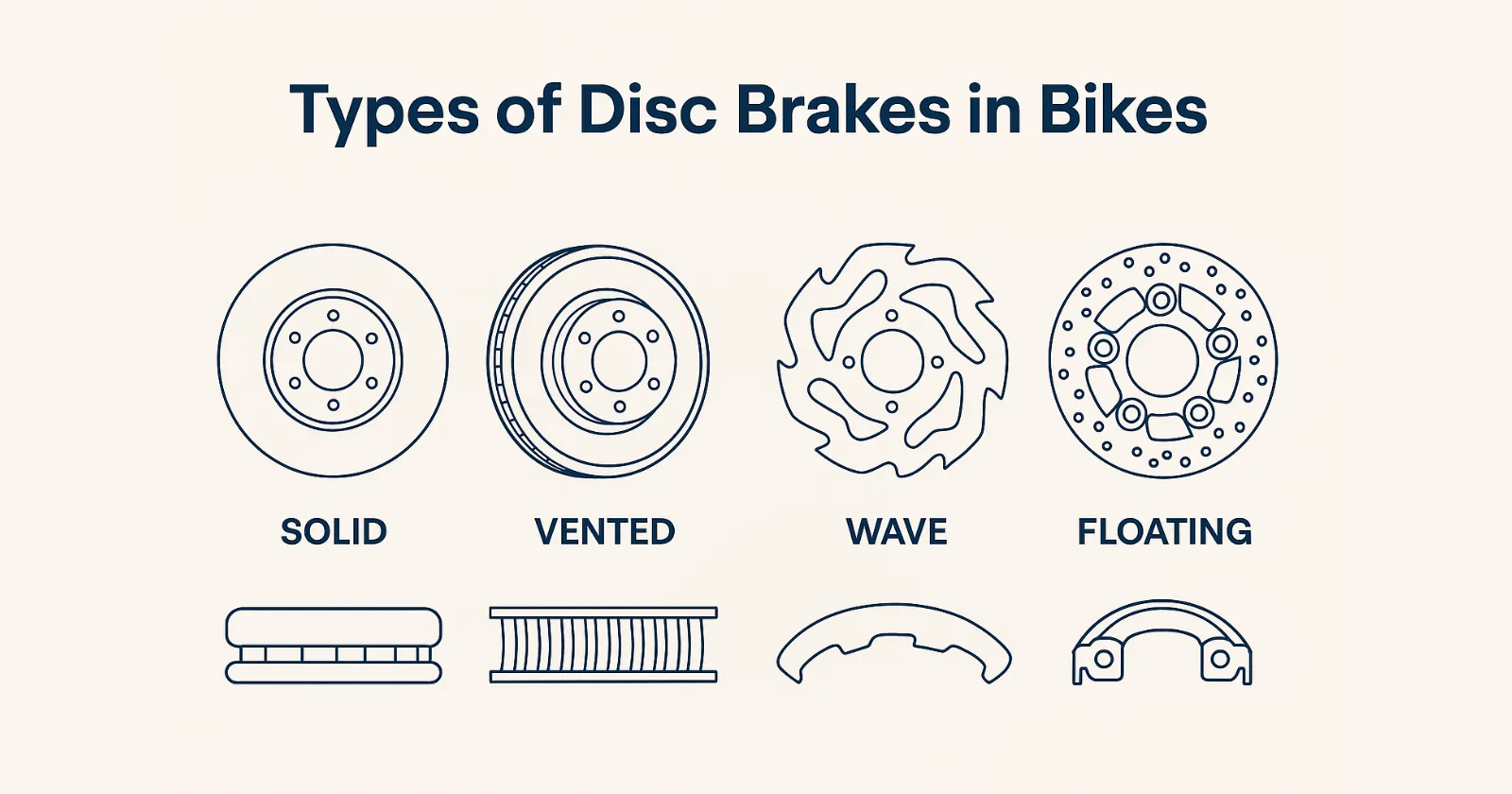
a) Solid Disc Brakes
A solid disc brake is simply a flat metal disc without any holes, slots, or patterns. The brake pads grip the smooth surface to slow down the bike. You will often find this type in budget-friendly commuter bikes and scooters.
The main advantage is that they are cheap to manufacture, durable, and last a long time. However, they can heat up quickly during heavy braking because there are no holes for airflow. These are best suited for city rides and short commutes where you don’t brake heavily for long periods.
b) Vented Disc Brakes
Vented disc brakes have air channels or vents inside the disc that help in faster cooling. When the wheel spins, air flows through these vents and carries away heat. This reduces the risk of overheating during repeated braking.
They are more commonly seen in cars but may also be used in premium motorcycles for better cooling performance. They offer better heat management than solid discs but cost slightly more. These are great for riders who do a lot of downhill or highway riding.
c) Drilled Disc Brakes
Drilled disc brakes have multiple small holes drilled into them. These holes allow heat, gases, and water to escape quickly, making them effective in wet weather. The drilled pattern also makes the disc lighter, improving performance slightly.
You’ll see these in many mid-range and high-end bikes. They provide great braking power in both city and highway conditions. However, the holes can cause the brake pads to wear out a little faster over time.
d) Slotted (Grooved) Disc Brakes
Instead of holes, slotted discs have shallow grooves cut into the surface. These grooves help scrape away dust, dirt, and water from the brake pads, ensuring consistent braking even in rough conditions.
They are mostly used in performance motorcycles and are excellent for dusty or muddy environments. However, they can wear out brake pads faster than solid discs, so they may require more frequent maintenance.
e) Wave or Petal Disc Brakes
Wave or petal discs have uniquely shaped edges that look like flower petals or waves. This design reduces weight and increases airflow around the disc, helping it cool down faster.
You can see these in sporty bikes like the Bajaj Pulsar 220F, TVS Apache RTR, and some Royal Enfield models. They offer style, performance, and cooling efficiency, but are more expensive to replace than standard discs. They’re perfect for riders who want a sporty look with high performance.
2. Based on the Position of the Disc
a) Front Disc Brake
The front disc brake is mounted on the front wheel and is operated by the hand lever. It provides about 70% of the bike’s stopping power, making it the most important brake for safety.
However, pressing it too hard without skill can cause the front wheel to skid. For maximum safety, every rider should be comfortable using the front brake correctly.
b) Rear Disc Brake
The rear disc brake is mounted on the rear wheel and is operated by the foot pedal. It helps maintain stability and control when braking, especially in emergencies.
While it’s not as powerful as the front brake for stopping quickly, it works well for balancing the bike during braking.
c) Both Front and Rear Disc Brakes
Some bikes come with disc brakes on both the front and rear wheels. This setup provides the best stopping power and control, especially at high speeds.
The only downside is that it slightly increases the bike’s cost. It’s ideal for riders who travel long distances, ride on highways, or want maximum braking performance.
3. Based on Calliper Type
a) Floating (Sliding) Calliper
In floating calliper disc brakes, the calliper moves slightly to press both brake pads evenly on the disc. This design is lighter, cheaper, and easier to maintain than fixed callipers.
However, they provide slightly less braking power than fixed callipers. They are commonly used in commuter and mid-range motorcycles.
b) Fixed Calliper
A fixed calliper is bolted firmly in place and uses pistons on both sides to press the brake pads against the disc. This design provides stronger and more consistent braking power, especially at high speeds.
On the downside, they are heavier, more expensive, and require more effort to service. They are usually found in high-performance and premium motorcycles.
c) Radially Mounted Calliper
A radially mounted calliper is a type of fixed calliper that is bolted to the fork so the mounting bolts run parallel to the disc’s radius. This setup makes the calliper stiffer and improves braking accuracy under heavy loads.
While it offers superior braking feel and precision, it is more expensive and mainly found on superbikes and racing motorcycles.
Types of Disc Brakes and Their Differences
| Type | Description | Advantages | Disadvantages | Best For |
| Solid | Flat metal disc with no holes | Cheap, strong, durable | Overheats quickly under heavy braking | City rides, short commutes |
| Vented | Disc with internal air channels | Better cooling, reduces heat fade | Costlier than solid discs | Downhill or highway riding |
| Drilled | Disc with multiple small holes | Great in rain, lighter, cools faster | Pads wear faster | City + highway use |
| Slotted | Disc with grooves | Removes dirt, consistent braking | Wears pads faster | Dusty or muddy areas |
| Petal/Wave | Petal or wave-shaped edges | Stylish, lighter, better cooling | Expensive to replace | Sporty, performance bikes |
| Front Disc | On the front wheel | 70% braking power, essential for safety | Can skid if used wrong | All riders |
| Rear Disc | On the rear wheel | Better balance and control | Less stopping power | Added safety |
| Both Discs | Front + rear | Maximum control and stopping power | Slightly higher price | Highway/touring riders |
| Floating Caliper | Moves to press pads evenly | Light, cheap, easy to maintain | Less powerful | Commuter, mid-range bikes |
| Fixed Caliper | Fixed in place with pistons on both sides | Strong, consistent braking | Expensive, heavy | Premium/sports bikes |
| Radially Mounted Calliper | Fixed calliper mounted with bolts parallel to the disc’s radius | Stiffer, more precise braking, better at high forces | Very expensive, mostly on superbikes | Racing, superbikes, high-end performance bikes |
Final Words
Disc brakes have changed the way bikes stop in India. They provide better safety, more control, and confidence to riders in every condition, from crowded city streets to open highways.
Choosing the right type depends on your riding style, budget, and the kind of roads you travel on. Whether it’s a simple solid disc for a commuter bike or a stylish petal disc for a sporty motorcycle, the main goal is safety first.
With proper maintenance and the right braking technique, disc brakes will keep you safe for years to come. So, the next time you look at a bike’s spec sheet, pay close attention to the type of disc brake it has; it’s as important as the engine itself.
Frequently Asked Questions