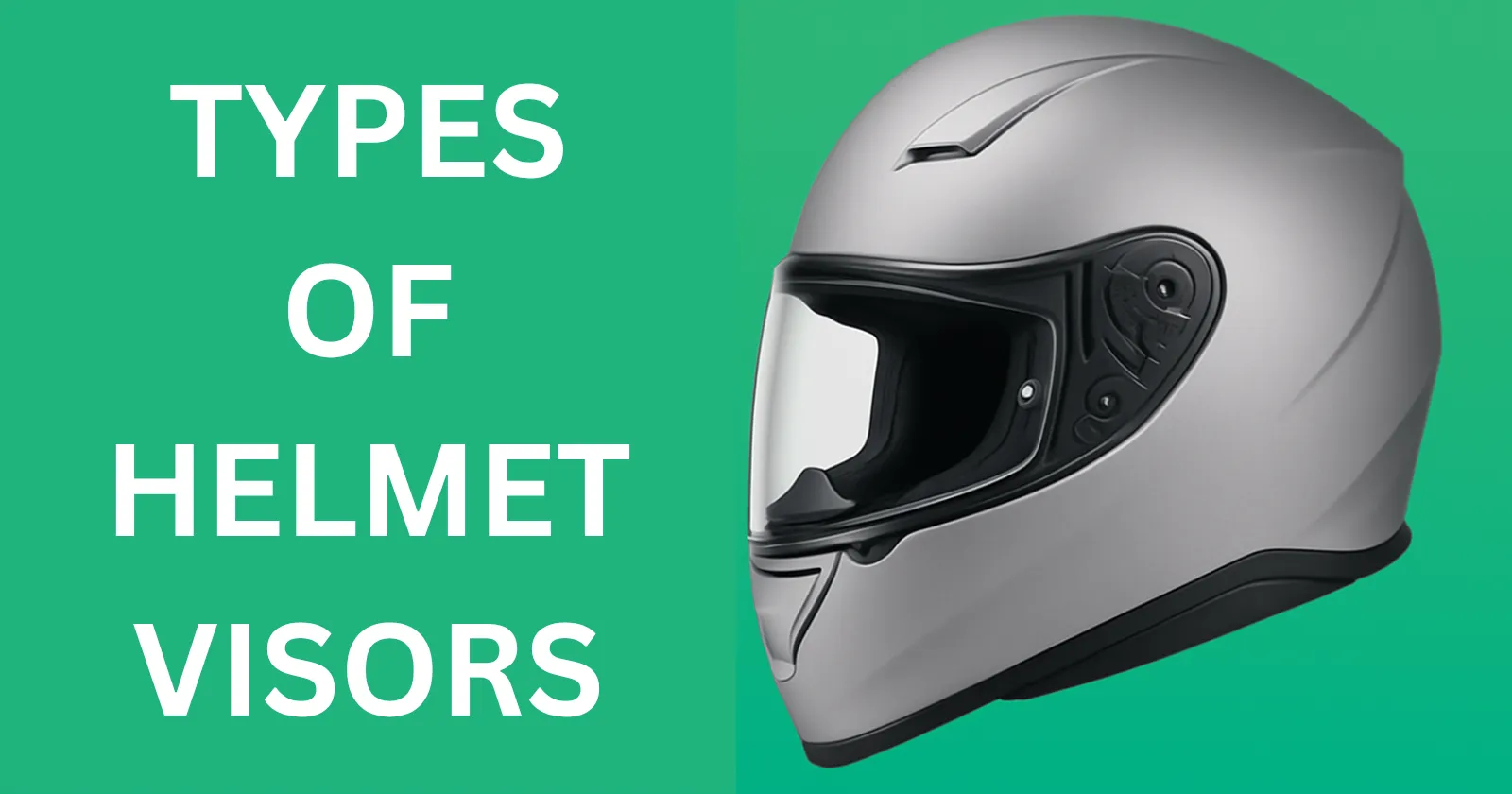
Why is Choosing the Right Helmet Visor Important
Helmet visors are your first line of defence against glare, dust, insects, and debris. A good visor:
- Enhances visibility in all light conditions
- Protects from UV rays and environmental elements
- Reduces eye strain and fatigue
- Complements the aerodynamics of your helmet
- Complies with Indian safety norms (ISI/BIS)
Poor-quality or unsuitable visors can fog up, scratch easily, or impair your vision, potentially leading to accidents.
Types of Helmet Visors in India
Here's an overview of the most common helmet visor types available in the market.
1. Clear Visor
The clear visor is the most common and default type. It provides an unrestricted field of vision and is the best choice for general use. It is best suited for night riding, overcast weather, and during the monsoon season. For safety, ensure your clear visor is ISI certified to guarantee that it complies with Indian standards of optical clarity.
Pros:
- Excellent visibility in low light
- Legal for all riding conditions
- Often included with new helmets
Cons:
- Offers no sun protection or glare reduction
2. Tinted Visor
Tinted visors work like sunglasses, reducing the intensity of sunlight to improve riding comfort. However, these visors should not be used at night or in low-light conditions, as visibility becomes significantly reduced. Riders must also ensure that the tint complies with traffic regulations and allows adequate light transmission.
Pros:
- Cuts down glare and eye strain
- Improves comfort on sunny days
Cons:
- Unsafe in low-light or night-time conditions
- May be restricted by local traffic laws if too dark
3. Mirrored or Iridium Visor
Mirrored visors, also known as iridium visors, have a reflective coating that reduces UV exposure. They add a sleek, stylish appearance, making them ideal for day riders who want comfort with aesthetics.
Pros:
- Reduces harsh sunlight and UV exposure
- Stylish and modern look
Cons:
- Scratch-prone and expensive
- Useless at night unless swappable
4. Photochromic (Transition) Visor
Photochromic visors automatically alter tint with the light conditions, darkening in bright sunlight and clearing in bad light. They are perfect for those riders who ride in alternating light conditions throughout the day. This visor does away with the necessity to switch from tinted to clear and back. Although convenient, they are more expensive, and the light alteration takes a second or two, which can be undesirable in altering conditions at high speed.
Pros:
- Adaptive to light conditions
- Eliminates the need for swapping visors
Cons:
- Slow response time (can take seconds to adjust)
- High price range
5. Dual Visor Helmet (Internal Sun Visor)
Dual visor helmets have an inbuilt retractable tinted visor within a clear outer shield for quick access to sun protection or clear vision. They are best for city riders or commuters moving from sunny to shaded areas. The internal visor is handy but may fog or deteriorate with time, and the dual-layer system contributes additional weight.
Pros:
- Easy switch between day and night modes
- No need to carry or change visors
Cons:
- The internal visor may fog or wear out faster
- Adds weight to the helmet
6. Anti-Fog Visor or Pinlock-Ready Visor
These visors combat internal fogging by incorporating a Pinlock insert or a coating. They are especially useful in rain, cold, or high-humidity conditions, such as Indian monsoons or winter mornings. Riders need to ensure that the Pinlock insert is original and properly fitted, as a badly fitted one will not work. They are a bit more expensive, but the clarity they offer in poor weather is second to none.
Pros:
- Clear vision during rainy or cold rides
- Reduces the risk of fog-related accidents
Cons:
- Slightly more expensive
- Pinlock inserts need replacement over time
7. Off-Road or Motocross Goggles
Off-road helmets often use removable goggles to protect the rider's eyes in place of traditional visors. These goggles suit motocross or trail riders who encounter a lot of dust and debris. However, they do not protect the face unless paired with a full-face or modular helmet. Riders should choose goggles with anti-fogging and UV protection for the best performance.
Pros:
- Offers flexibility and ventilation
- Easily replaceable or upgraded
Cons:
- No facial protection unless combined with a full-face helmet
Legal Standards for Helmet Visors in India
India’s Bureau of Indian Standards (BIS) under IS 4151 mandates safety features for helmet visors, which are as follows:
- Minimum light transmission: For tinted visors, should allow at least 50% light transmission
- Optical clarity: Should not distort vision or cause glare
- Impact resistance: Must resist cracking from flying debris
Imported or decorative visors may look appealing, but are often not road-legal if they fail to meet ISI/BIS norms.
Tips for Selecting the Right Helmet Visor for Yourself
The following are some tips you can keep in mind before buying a helmet visor in India:
Match Visor According to Your Riding Style
- Commuting? Dual visor or photochromic visors are ideal.
- For long-distance touring, anti-fog and UV-protected visors are ideal.
- If you are a weekend rider, then mirrored or tinted visors may be for you.
- Off-roading? Tear-off lens goggles are more effective.
Think About Weather and Visibility
- Monsoons call for fog-resistant functionalities.
- Summer demands UV and glare protection.
- Night riding is safest with a clear visor only.
ISI or BIS Certification comes first
ISI-marked visors must always be obtained for legal and safe use on Indian roads. Avoid cheap, unbranded visors that compromise safety.
Final Thoughts
Helmet visors are an essential safety component for Indian riders. You may like a clear visor for nighttime riding, a mirrored visor for appearance, or a photochromic visor for convenience, but make sure it's suitable for your ride and is legal.
By donning the right visor, you can ride more comfortably, more safely, and with better concentration. Choose wisely, maintain them well in between, and never ever compromise on security.
Frequently Asked Questions