What is ABS?
ABS uses sensors integrated into the wheels to monitor their rotational speed. If the wheels lock due to heavy braking, the system automatically reduces braking pressure to that wheel during the locking phase. In challenging braking situations, this pulsing action, where the brakes gently release and re-engage, helps maintain traction and reduces the risk of skidding or falling.
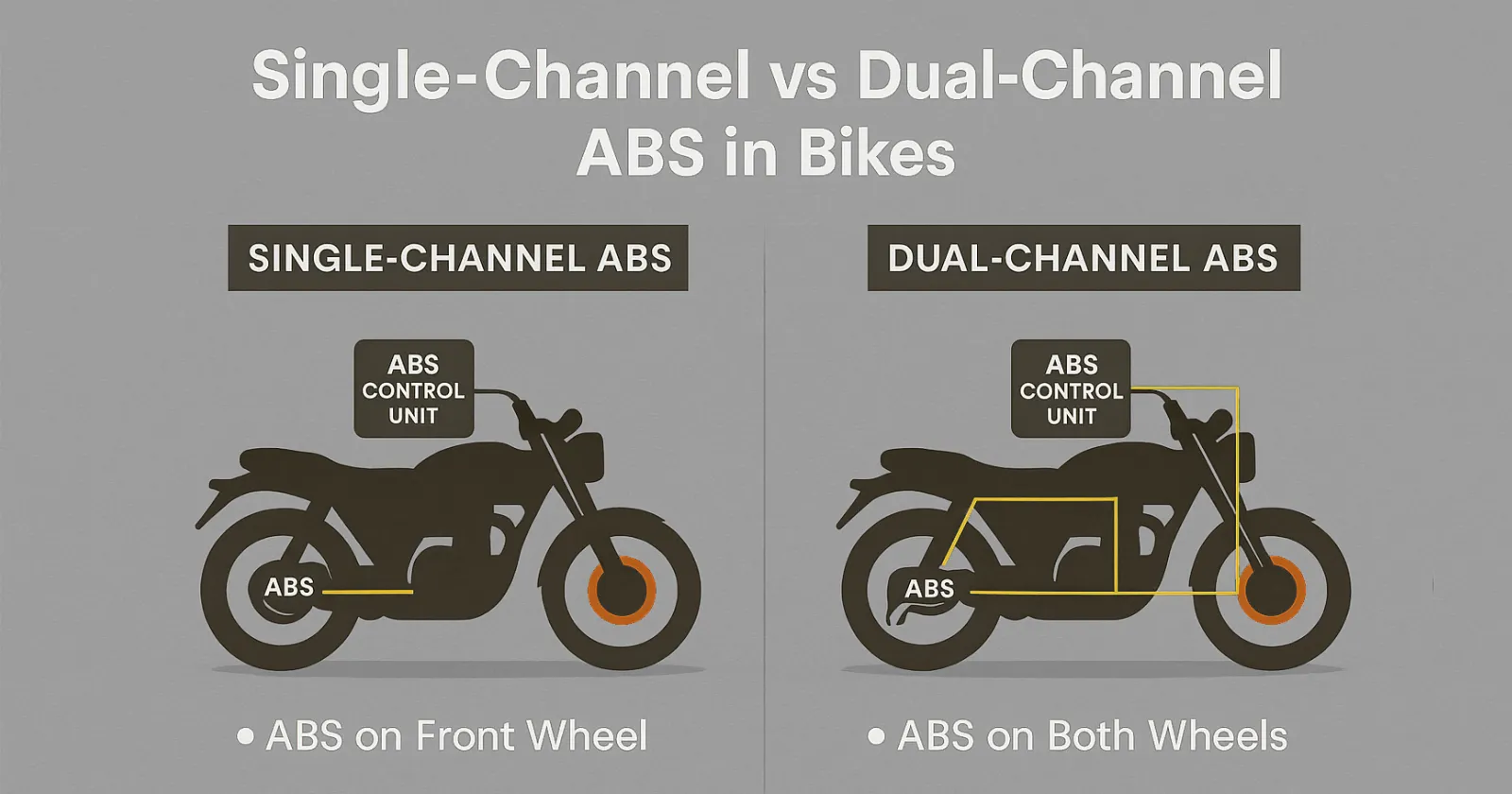
There are two types of anti-lock braking systems, single-channel ABS and dual-channel ABS. Both are discussed below in detail.
What is Single-Channel ABS?
Single-channel ABS (Anti-lock Braking System) works only on one wheel, usually the front wheel. Since most of a bike's braking power comes from the front, having ABS on the front wheel helps prevent it from locking during sudden braking. This adds more safety than conventional brakes but not as much as dual-channel ABS. Many budget bikes and scooters in India come with single-channel ABS to keep the cost low while offering basic safety.
What is Dual-Channel ABS?
Dual-channel ABS works on both the front and rear wheels. It monitors the speed of each wheel separately and applies or releases brake pressure to avoid wheel lock-up. This gives better control and stability during emergency braking, especially on wet or uneven roads. Dual-channel ABS is usually found on higher-end bikes or performance motorcycles, where safety and handling matter more.
Difference Between Single-Channel and Dual-Channel ABS
Single-channel ABS controls braking on just one wheel, usually the front, while dual-channel ABS works on both wheels. Single-channel improves safety, but dual-channel offers better balance and control, especially during hard braking or on slippery roads. It’s ideal for riders who travel at higher speeds or with a passenger.
| Feature | Single-Channel ABS | Dual-Channel ABS |
| Braking Wheel Covered | Only one wheel (usually front) | Both front and rear wheels |
| Cost | Less expensive | More expensive |
| Safety Level | Safer than no ABS | Offers the best braking safety |
| Common On | Budget bikes and scooters | Mid-range to premium motorcycles |
| Suitable For | City riders with moderate speeds | Highway riders or those carrying pillion |
Why Front-Only vs Front and Rear Makes a Difference
Braking Force Distribution
During emergency braking, most of the weight shifts to the front wheel, making it crucial for stopping. A front-wheel skid can cause major instability. Single-channel ABS prevents this, but the rear wheel can still lock up if the rear brake is used too harshly. Dual-channel ABS manages both wheels, ensuring consistent grip during intense braking on any surface.
Roads are often unpredictable, and potholes, gravel, oil patches, mud puddles, and road debris are common. While single-channel ABS helps avoid front-end crashes, dual-channel ABS offers superior control in diverse conditions, especially during sudden rear-wheel lock-ups or while braking mid-corner.
Legislation and Manufacturer Trends
In India, two-wheelers above 125 cc must be fitted with dual-channel ABS, while scooters and motorcycles below this threshold can use either single-channel ABS or CBS (Combined Braking System). Consequently, many bikes in the 100 - 125 cc range offer single-channel ABS at a lower price point. Most new bikes above 150 cc now come with dual-channel ABS as standard.
Major Indian OEMs, including Hero, Bajaj, TVS, Honda, and Yamaha, are following these regulations, ensuring ABS is available across various price segments.
Care and Long-Term Reliability
Both single-channel and dual-channel ABS systems require regular maintenance to ensure optimum performance.
Ride Height and Tyre Size
Changing tyre or rim sizes from OEM specifications can disrupt ABS calibration and result in incorrect readings. Always consult your mechanic or owner's manual before making such modifications. Odd tyre sizes can confuse the ABS.
Brake Fluid
Frequent brake fluid changes prevent moisture build-up, corrosion, and fluid degradation, especially in India’s humid climate. Old or contaminated fluid can affect braking performance and damage internal ABS components.
Sensor Care
Keep ABS sensor wires and tone rings free from mud, rust, and debris. Washing your bike regularly and realigning sensors during wheel changes can prevent false ABS triggers and system malfunctions.
While dual-channel ABS involves more components and slightly higher upkeep costs, the improved safety and braking control make it a worthwhile investment.
| Road Type | Single-Channel ABS | Dual-Channel ABS |
| Dry Tarmac | Competent and safe | Optimal grip and quicker emergency stops |
| Wet/Rainy Roads | Front-wheel stability only | Full grip and safer braking in wet conditions |
| Gravel/Mud | Front lock-up is less likely | Better rear stability and fewer fishtail incidents |
| Heavy Traffic | Good for sudden stops | Balanced braking in unpredictable situations |
| Curves/Technical Riding | The rear can skid or lose control | Safer entry and exit during cornering |
Should You Upgrade?
If you're wondering whether to upgrade, consider these scenarios:
- City commuters on familiar routes: Single-channel ABS is usually sufficient. It provides basic front-end safety during sudden braking in low-speed, predictable traffic.
- Riders facing mixed conditions and monsoons: Dual-channel ABS is ideal. It prevents rear-wheel skids on wet or uneven roads, common in urban Indian areas.
- Long-distance or hilly rides: Dual-channel ABS is highly recommended. It offers reliable braking on slopes and winding highways, providing better control at high speeds and during downhill descents.
- Performance or spirited riding: Dual-channel or lean-sensitive ABS is essential. It ensures stability during aggressive braking, helping prevent loss of control at high speeds or in sharp corners.
Final words
The choice between single-channel and dual-channel ABS depends on your riding conditions and safety requirements. Single-Channel ABS is a good entry-level option offering enhanced front braking safety at a lower cost. Dual-Channel ABS offers a complete safety system that ensures better stability and control in all conditions.
As ABS becomes a standard feature, riders should view dual-channel ABS as an important investment in safety and confidence.
Frequently Asked Questions