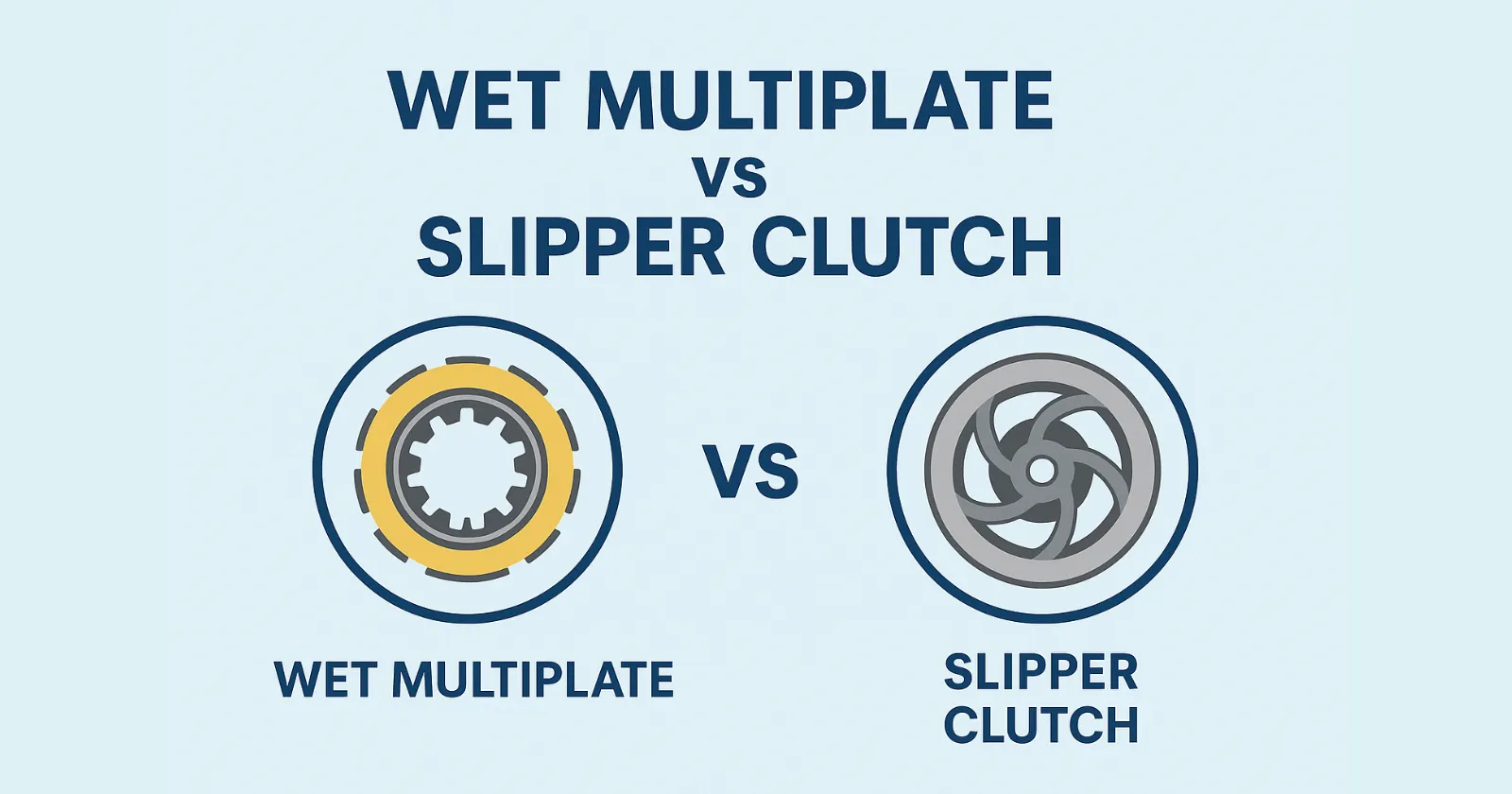
What Is a Wet Multiplate Clutch?
A wet multiplate clutch is the most common type of clutch found in Indian motorcycles, especially in bikes under 250cc. The word "wet" means the clutch works with oil. Inside the engine, there are several thin metal plates stacked together; these are called clutch plates. The oil helps to keep these plates cool, clean, and running smoothly.
When you pull the clutch lever, these plates move apart and disconnect the engine from the rear wheel. This allows you to change gears easily. When you release the lever, the plates come back together and send power to the rear wheel, so the bike moves. Because of the oil, the clutch stays quiet and doesn’t overheat, even during long rides in traffic.
Pros and Cons of Wet Multiplate Clutch
Pros:
- Smooth gear shifting: The oil helps the plates slide nicely, so changing gears feels smoother.
- Quieter operation: It doesn't make loud or rough sounds like some dry clutches.
- Long life: If you change the engine oil regularly, the clutch lasts longer.
- Lower cost of repair: Parts are easily available, and mechanics know how to fix them.
- Good for Indian riding: Works well for city rides, stop-and-go traffic, and even highways.
Cons:
- Can be jerky during sudden downshifts: If you suddenly shift to a lower gear without matching engine speed, the bike may jerk.
- No special protection during engine braking: It doesn’t help much if you accidentally downshift too fast, which can make the rear wheel feel unstable.
- Less suited for racing or aggressive riding: It’s not ideal for people who ride fast, especially around corners or mountains.
What Is a Slipper Clutch?
A slipper clutch is a special type of clutch that helps during fast riding, especially when you quickly shift to a lower gear. If you are riding fast and suddenly downshift, then this puts pressure on the engine and can cause the rear wheel to slow down suddenly. That sudden change might make the back wheel jump, skid, or lock up. A slipper clutch helps avoid that.
It works by allowing the clutch plates to slip slightly when the engine is forced to go slower than the wheel. This gives smoother control and better stability. It is commonly used in sports bikes or bikes with higher power, but many new commuter motorcycles in India (150cc and above) also have it now.
Pros and Cons of Slipper Clutch
Pros:
- Prevents rear wheel skidding: Helps the back wheel stay stable during fast or wrong downshifts.
- Smoother ride: Makes sudden slowing down or engine braking feel less harsh.
- Protects engine and gearbox: Reduces the stress on parts when you're riding fast or shifting gears quickly.
- Improves safety: Especially helpful while riding on hilly roads, wet roads, or cornering at high speeds.
- Popular in modern bikes: Many mid-range bikes in India now come with this feature, even under ₹2 lakh.
Cons:
- More expensive: Bikes with slipper clutch usually cost more because of the advanced parts.
- Extra maintenance: Needs proper servicing to keep it working smoothly.
- Less engine braking: Some riders feel that the engine braking becomes less sharp.
- Not easy to add later: You can’t just install it on an old bike.
Difference between Wet Multiplate Clutch vs Slipper Clutch
| Feature | Wet Multiplate Clutch | Slipper Clutch |
| Power Transmission | Direct and reliable | Allows controlled slip under back torque |
| Main Function | Smooth gear shifts | Prevents rear wheel lock during downshifts |
| Maintenance | Just requires oil changes | May need occasional adjustment or checks |
| Cost | Standard on most bikes | Higher initial cost and maintenance |
| Best For | Every day, city riding | Touring, hills, performance riding |
Which One Should You Choose?
Choosing between a wet multiplate clutch and a slipper clutch depends on how and where you ride your bike. Both types are good, but they serve different purposes. Here’s a quick breakdown so that you can pick the one that suits your riding style, needs, and budget.
Choose a Wet Multiplate Clutch if:
- You ride mostly in cities or towns
- You are a new rider or on a tight budget
- You prefer easy and affordable servicing
- You don’t ride aggressively
Choose a Slipper Clutch if:
- You ride a powerful or sport bike (150cc and above)
- You enjoy fast rides or touring
- You often downshift aggressively
- You want more safety and smoother rides
If you’re buying a commuter bike under 150cc, most models will have a wet clutch, and that’s perfectly fine for everyday use.
If you’re buying a bike with a sportier engine or any bike used for touring, a slipper clutch will give you more control and smoother rides.
Final Thoughts
Most riders in India will find a wet multiplate clutch reliable, economical, and easy to maintain. For those who enjoy spirited riding, touring, or frequent hill routes, a slipper clutch adds stability, smoothness, and reduced wear. Whichever clutch system you choose, regular oil changes and careful shifting will keep the bike performing well.
Frequently Asked Questions