1. Keep an Eye on Engine Oil
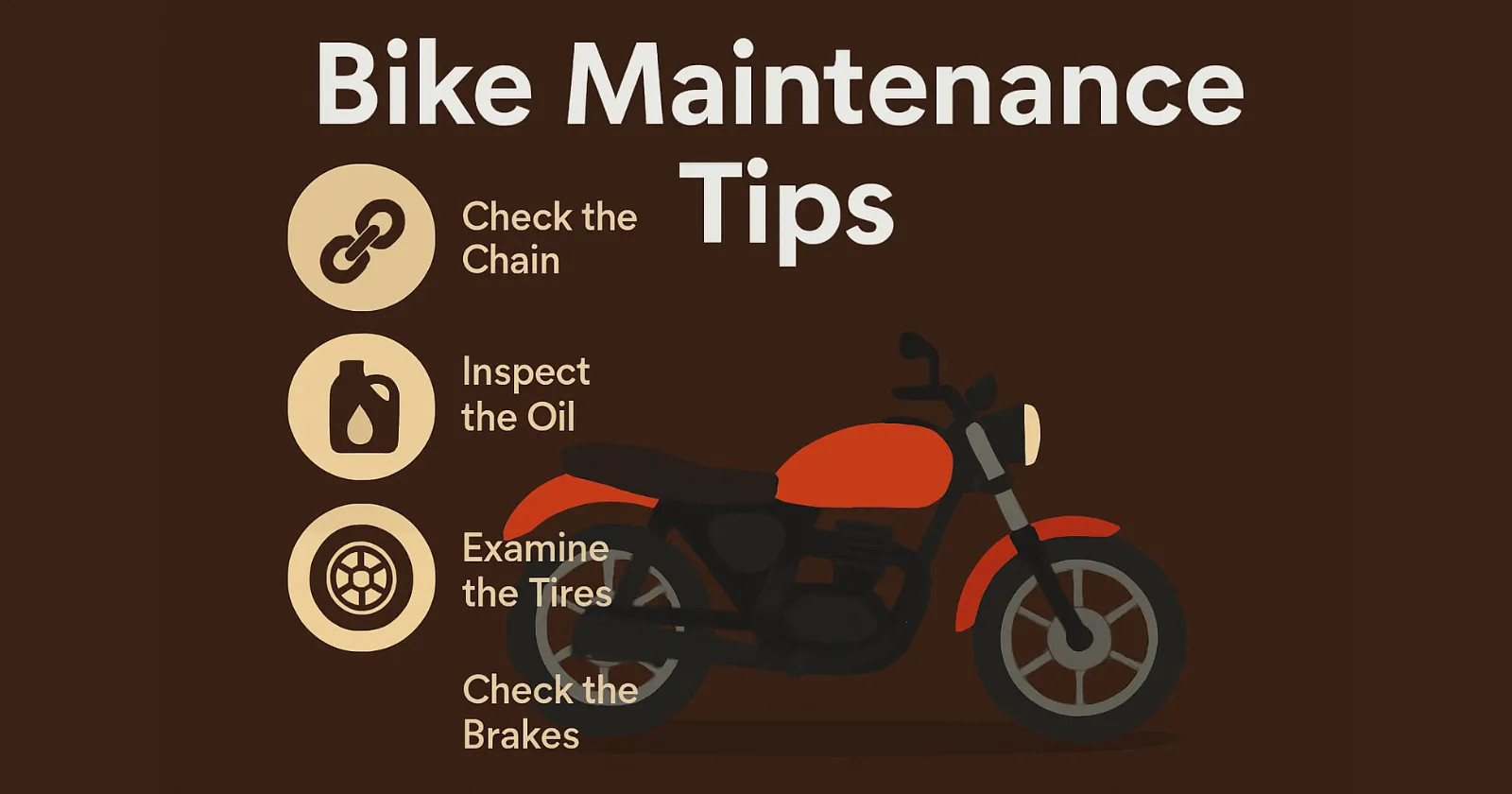
Engine oil is the backbone of a motorcycle as it lubricates the engine parts and reduces friction. It also helps with cooling. In the stop-and-go traffic, oil breaks down faster. So, check the oil level every week and especially before and after long rides.
If the oil is dark or has a burnt smell, it’s time to change it. Do not wait for the next service. Know that your engine runs more efficiently if the oil is clean and fresh.
2. Maintain the Chain and Sprockets
Dust, rain, and rough roads can lead to rapid wear and tear of the chain. Also, the loose chain can result in unsafe riding, gear shifting problems, and lead to reduced mileage.
So, make sure you clean the chain every 500 to 700 km. You can use a light degreaser and then re-lubricate it with chain oil specific to your motorcycle. The chain should neither be too loose nor too tight. A properly tensioned chain reduces stress on the drivetrain and provides smooth power.
3. Keep Tyre Pressure in Check
Tyres are generally the first to suffer when it comes to potholes, gravel, and temperature changes. Riding with the wrong tyre pressure affects mileage and also the grip, as well as the lifespan of the tyre. This is dangerous during the monsoon.
Check the pressure weekly or before going on long trips. Also, look for uneven wear or debris in the tread. You should change the tyres if you see visible cracks or cuts.
4. Check and Clean the Air Filter
The role of the air filter is to only pass clean air into the engine. In the cities, where there’s a lot of dust, these filters get clogged. This affects combustion and results in a reduction in fuel efficiency.
It is vital to inspect the air filter every 2,000 to 3,000 km. If your bike features foam filters, then they can be washed, while paper filters have to be replaced.
5. Inspect the Brakes Regularly
If you hear squealing sounds, notice reduced stopping power, or a spongy feel at the lever, then it is clear that there’s a problem with the brakes. The chances are that the brake pads may be worn thin and the discs may feel grooved, with a need for replacement. You can also check the brake fluid levels and make sure they are at optimum levels. The point is that brakes have to be responsive at all times so as to avoid any braking mistakes.
6. Ensure the Battery Is in Good Shape
From ignition to lights and indicators, the battery of your bike takes care of everything. If you do short rides frequently and park outdoors in the heat, then it can affect the battery’s life. Even prolonged inactivity can shorten its life.
To make sure it is in good condition, check the terminals for corrosion; they should be tightly secured. Remember that if the bike feels sluggish while starting or if the horn and lights are weak, the battery may need charging or replacement.
7. Clean the Spark Plug
A dirty or worn spark plug can lead to poor acceleration, cause misfires, and starting trouble. You must remove and inspect the plug every 5,000 km. Note that a healthy plug will have a light tan colour on the tip. If you notice black soot or oil residue, then this indicates a problem with either the fuel-air mixture or engine health. At such a time, you should clean or replace the plug to improve both performance and fuel economy.
8. Examine the Clutch and Throttle Response
A clutch ensures smooth gear changes and prevents engine damage. If the clutch feels loose or if gear shifts are hard, then you must adjust the cable tension. Likewise, check the throttle for smooth operation. Any stickiness or resistance can cause a delayed response and must be addressed immediately. Also, both cables should be lubricated periodically to avoid stiffness.
9. Monitor Coolant and Radiator (for Liquid-Cooled Bikes)
In bikes equipped with liquid cooling, the coolant prevents overheating and ensures consistent engine temperature. Make sure you check coolant levels regularly, especially before long rides or summer trips.
Also, ensure the radiator fins are clean and free from mud or insects. Blocked airflow can cause overheating even when coolant levels are fine. So, never mix tap water with coolant because it corrodes internal components over time.
10. Wash and Wax with Care
Regularly cleaning your bike will remove dust, grime, and pollutants. However, if you use high-pressure water near electricals, it can cause more harm than good.
Always use a mild bike shampoo and a soft cloth. Dry thoroughly and apply a wax polish on painted surfaces to protect them from UV damage. Never use harsh chemicals on plastic or rubber parts.
Final Words
Motorcycle maintenance requires attention and a bit of routine. If you regularly check oil, tyres, brakes, and chains, then you help extend the life of your bike. Well, you not only maintain your bike for a smoother ride but also for your safety. Always remember that the preventive care costs are always far less than the emergency repairs. So, take care of your bike and it will always provide you with uninterrupted journeys.
Frequently Asked Questions