

This is not BMW's first excursion into narrow, enclosed or semi-enclosed vehicle concepts.
The idea of a fully enclosed motorcycle is hardly revolutionary. Designers and engineers have been chasing it for decades without ever convincing the wider public to take the plunge. BMW, however, may be about to change the conversation, says a new report. A newly filed patent from the German manufacturer reveals plans for just such a vehicle, raising the prospect of a mainstream enclosed two-wheeler backed by one of the world's most recognised motorcycle brands.
The closest thing to a commercial success in this niche remains the Swiss-built Peraves Ecomobile, which arrived in 1984 -- powered, as it happens, by a BMW engine. Its modern descendant, the Peraves Monoracer, is still available today in electric form, offering a top speed of 250 km/h and a 400 km range from a 130 kW motor and 28.5 kWh battery. That performance is made possible largely by the car's narrow, streamlined body, which cuts through air with exceptional efficiency.
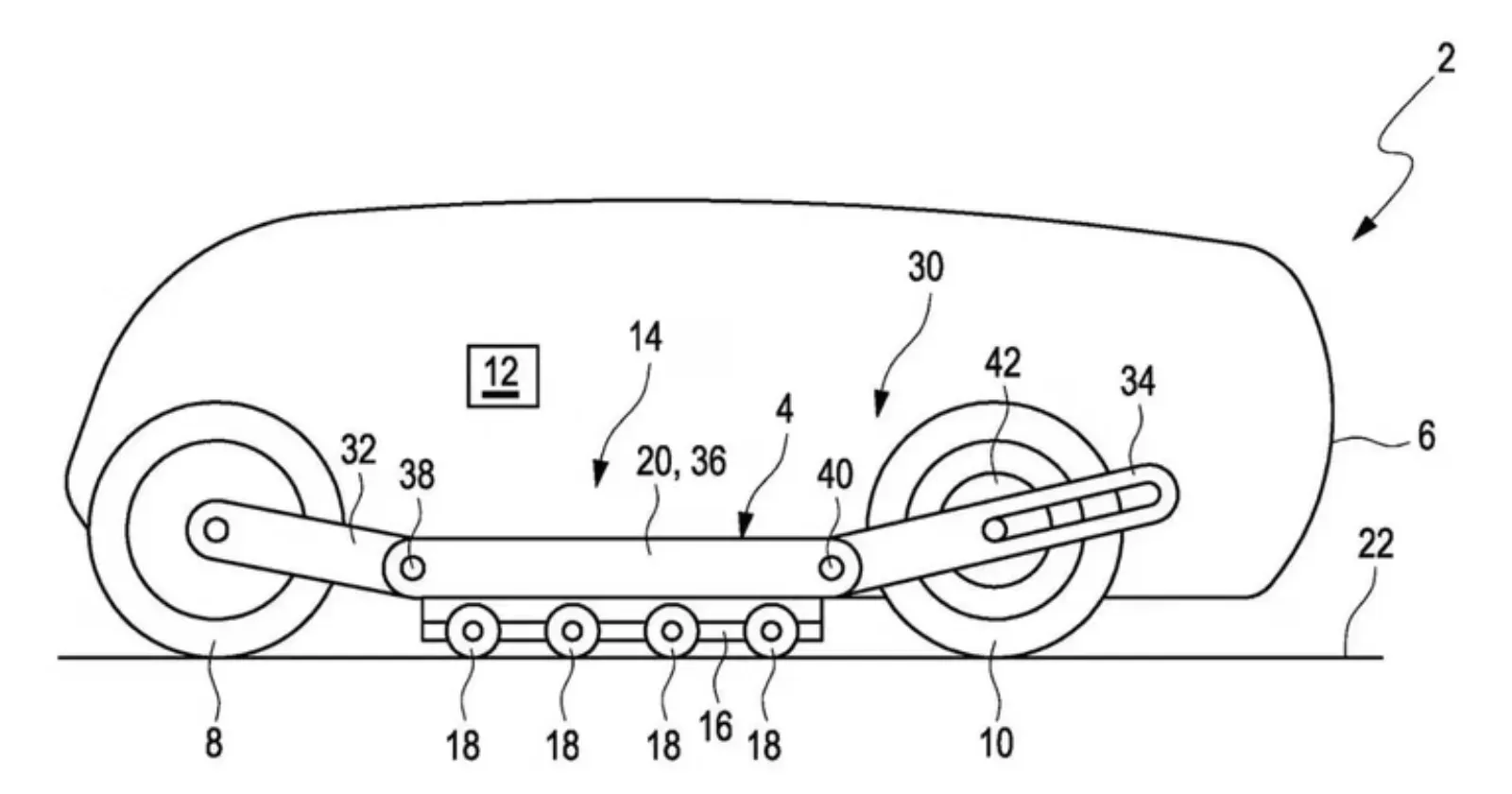
BMW's patent tackles what is perhaps the most obvious stumbling block of any enclosed two-wheeler: the question of what happens when the vehicle stops moving and the rider cannot simply put a foot down. Peraves deals with this through a pair of extendable outrigger wheels, one either side of the machine. Others have looked to gyroscopes -- most memorably the Gyro-X, a peculiar car-motorcycle hybrid that caused a stir in 1967. BMW's engineers have dismissed gyroscopic stabilisation on grounds of weight, opting instead for retractable wheels -- though with a significant twist. Rather than the two stabilisers used by Peraves, BMW's design deploys eight, arranged in two rows of four.
The patent describes several possible configurations for how these wheels would be deployed, but the principal advantage of the eight-wheel arrangement appears to be compactness. The Peraves system positions its outriggers wide apart to maintain stability on uneven ground; BMW's approach achieves the same resilience without the extra width. Should one or two of the eight wheels drop into a pothole, the remaining contact points keep the machine upright.
In the patent itself, BMW sets out the case for the enclosed format with some clarity: it takes up less road space than a conventional car, shields the occupant from the elements, and -- thanks to a small frontal area and smooth bodywork -- promises considerably better aerodynamic efficiency than an open motorcycle.
This is not BMW's first excursion into narrow, enclosed or semi-enclosed vehicle concepts. The company showed the Concept Simple in 2008 and the Concept C.L.E.V.E.R. the following year, both leaning three-wheelers offering a taste of this kind of travel. Earlier still, at the turn of the millennium, BMW put the C1 into production -- a roofed scooter that enjoyed a modest but genuine commercial run. Whether this latest patent leads to something similarly concrete remains to be seen, but the level of engineering detail involved suggests this is more than a thought experiment.