
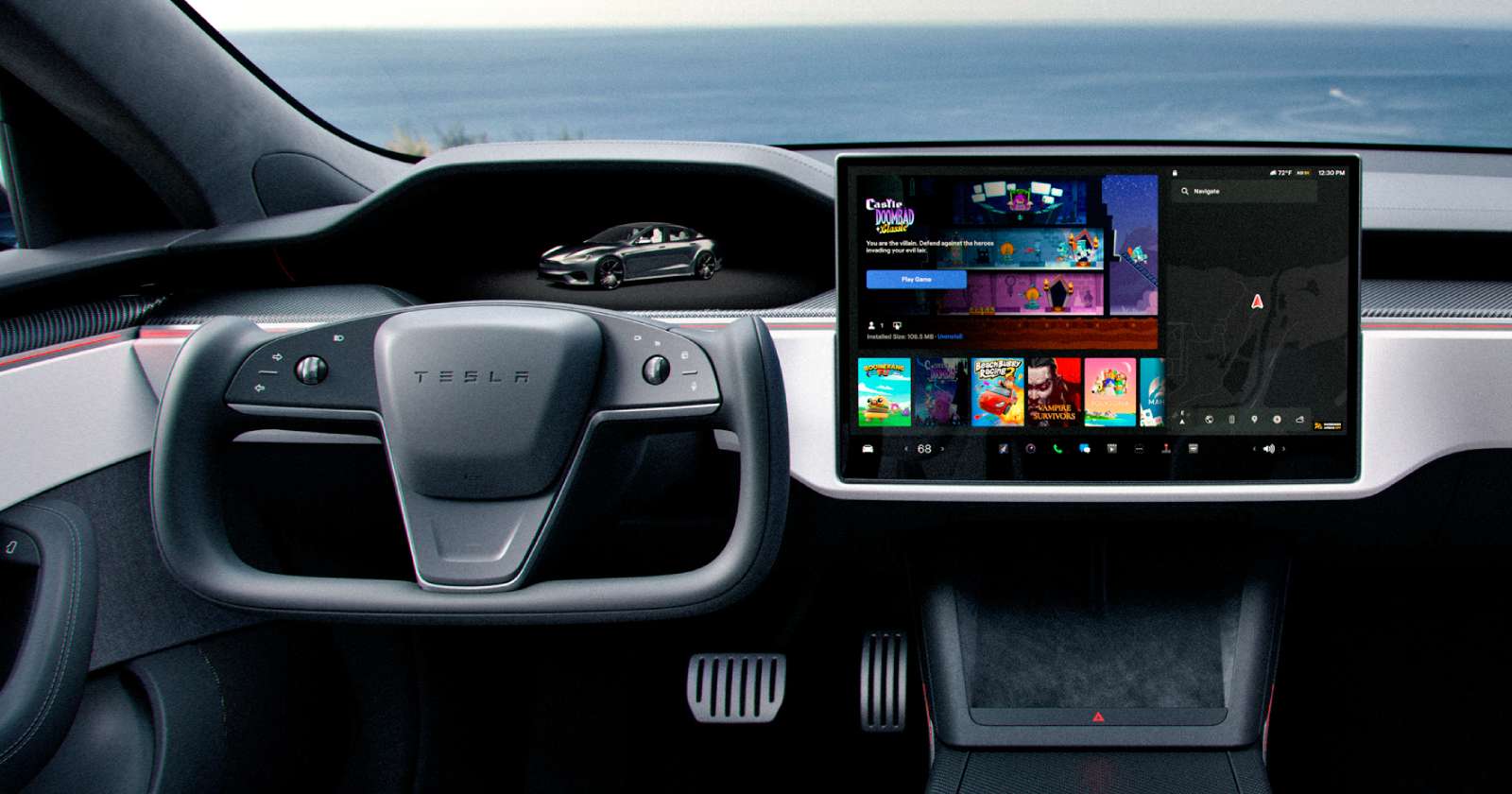
Tesla has popularised yoke-style steering wheels, as well as large central touchscreens in place of various car controls.


Share Post
Tesla has popularised yoke-style steering wheels, as well as large central touchscreens in place of various car controls.
Following its ban on flush and electronically operated car door handles, China’s Ministry of Industry and Information Technology (MIIT) is set to introduce even more rules for car safety. While these new rules will come as a relief to many buyers who have expressed frustration with recent cabin design trends, they will require manufacturers to make significant modifications to their cars.
Most notably, physical controls will be compulsory for several functions that are considered critical, starting with cars manufactured from July this year onwards. These functions include gear selection, activating turn signals and hazard indicators, raising and lowering windows, toggling ADAS features, and making emergency calls. Moreover, buttons will have to be at least 10mm square.
Minimalist cabins with large touchscreens have become commonplace over the past few years, especially for electric cars. While they might feel futuristic at first, several drivers and safety standards bodies have expressed concern over the lack of tactile feedback and the potential need for a driver to take their eyes off the road in order to use a touch control. Physical buttons, knobs, stalks, sliders and switches are easy to discern by touch alone, and a driver can understand when a control has been engaged more easily.
Software-based user interaction systems have also been criticised for burying important controls within menu systems that require multiple taps or swipes and glances at the screen. Global EV giant Tesla has faced criticism for using touch-based turn indicator buttons and has recently had to reintroduce stalks in China. The company has expressed in the past that it prefers software controls as they can be updated and new capabilities can be added over time, whereas physical buttons have limited functionality. Other companies, however, have begun reintroducing physical controls.
The MIIT has also published an updated draft of its Safety Requirements for Automated Driving Systems of Intelligent Connected Vehicles, which will establish safety standards for L3 and L4 autonomous vehicles, including the ability to handle situations at the level of a “competent human driver”, and a requirement for remote assistance allowing a human operator to take over. Manufacturers will have to submit undertakings that their vehicles can handle high-risk situations and can safely come to a stop if needed.
In a separate notification, the MIIT has proposed tougher requirements for driver safety in case of impact, which will result in a ban on yoke-style steering wheels. According to the agency, round wheels help cushion a driver if their body is pushed forward due to sudden braking. Half-wheels are also more likely to break apart when an airbag is deployed, and it’s possible for a driver’s clothes to get snagged on them.
Yoke-style wheels will not be able to pass a new, more stringent human impact test. This requirement will go into effect on January 1, 2027. The MIIT’s National Automotive Standardization Technical Committee will consider public comments on its proposed changes till April 13. It is possible that other countries will introduce similar measures, and carmakers will adopt them globally for uniformity and to consolidate design and manufacturing.

BMW M4 Repair Bill Goes Viral Online – Multi-Lakh Shocker for Headlight Replacement!
Acko Drive Team 8 Mar, 2026, 3:58 PM IST
Toyota Rumion MPV Gets New Entry-Level ‘E MT’ Variant, Lower Starting Price at ₹9.55 Lakh
Acko Drive Team 8 Mar, 2026, 1:17 PM IST
Honda Recalls Over 65,000 EVs in US After Digital Cockpits, Camera Views Go Blank
Acko Drive Team 8 Mar, 2026, 11:54 AM IST
Lotus Shocks with 948 bhp Hybrid SUV – 1200 km Range!
Acko Drive Team 8 Mar, 2026, 7:46 AM IST
F1 Australian GP 2026: Mercedes 1-2, Ferrari On Podium
Acko Drive Team 8 Mar, 2026, 7:20 AM IST

Looking for a new car?
We promise the best car deals and earliest delivery!
