

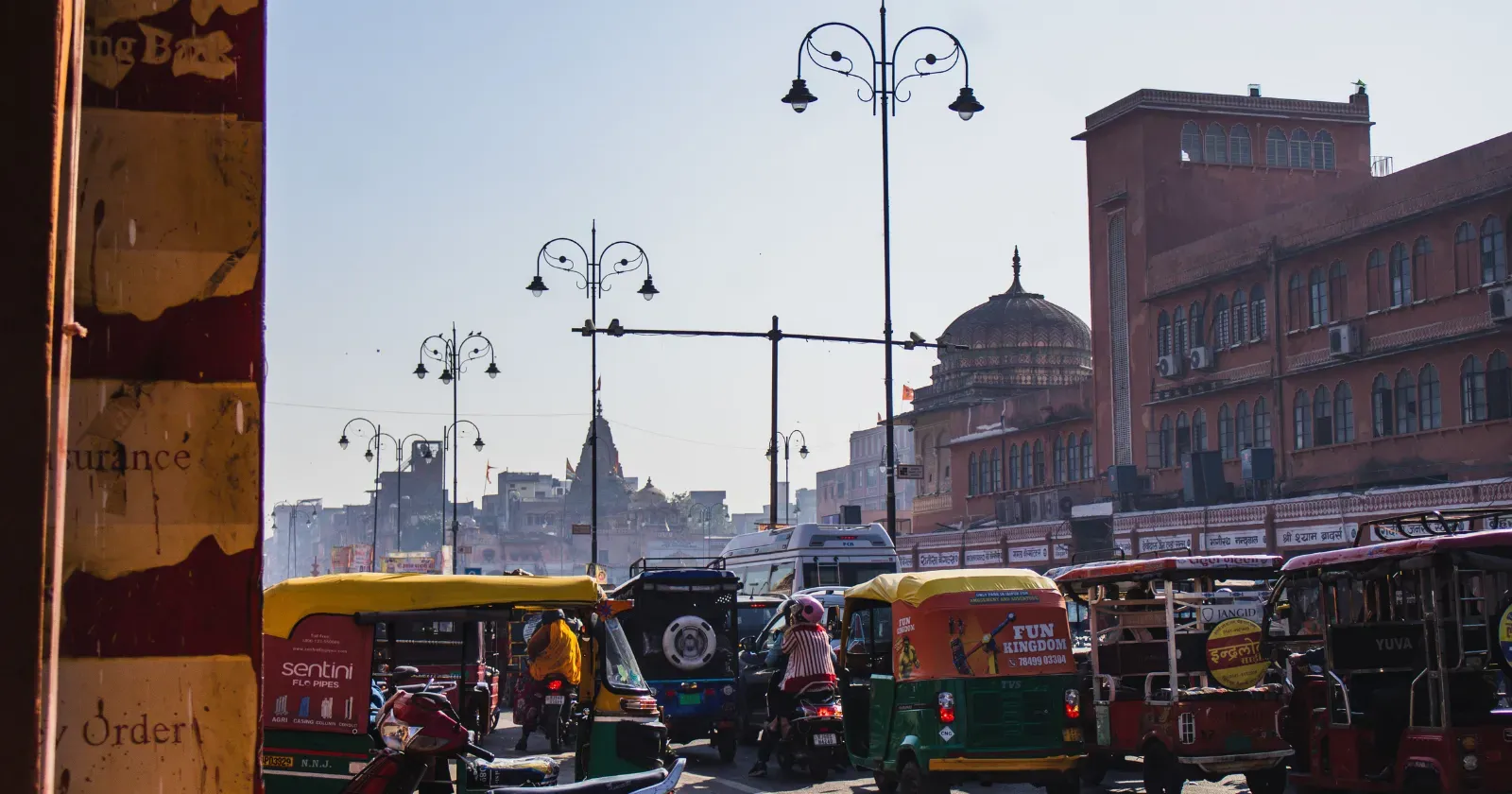
In the next phase, 253 of Jaipur's 423 major intersections will be equipped with AI-enabled smart cameras and integrated into the Intelligent Traffic Management System. (Image: Ethan Sarkar/Pexels)
Traffic management in Jaipur is set to get a major overhaul, with the city preparing to replace conventional fixed-timer traffic signals with an artificial intelligence (AI)-based system after a successful pilot project at Rambagh Circle, PTI reported quoting officials.
The pilot was jointly undertaken by Jaipur Traffic Police and Data Core Infotech between June 3 and July 11.
The 39-day trial of the AI-driven Intelligent Traffic Management System (ITMS) delivered what officials described as "100 per cent success", paving the way for a wider rollout across the Rajasthan capital.
In the next phase, 253 of Jaipur's 423 major intersections will be equipped with AI-enabled smart cameras and integrated into the Intelligent Traffic Management System, according to officials.
Also read: Flex-Fuel Vehicle Adoption Remains Slow in Delhi; 4 Registrations Since Launch
Explaining how the system functions, Data Core Infotech directors Basant Goswami and Ojas Shukla said the AI platform replaces the existing signal mechanism, which operates on fixed cycles regardless of traffic conditions.
According to the company, cameras installed at intersections continuously analyse vehicle movement and queue lengths in real time, allowing the system to adjust signal timings automatically.
The initiative has been launched under the direction of Director General of Police Rajeev Kumar Sharma as part of efforts to reduce traffic congestion and curb vehicular pollution in the city.
During the trial period, more than 4.88 lakh vehicles passed through Rambagh Circle without manual traffic control. As per officials, motorists saved between eight and 45 seconds per lane, while the average green signal duration was 33.63 seconds.
Beyond easing congestion, the AI-enabled system is also expected to improve traffic law enforcement. During the pilot, each camera monitored around 4,200 vehicles every day and automatically detected approximately 450 traffic violations, including overspeeding, red-light jumping and wrong-side driving.