

![]()
The Baleno has long dominated India's premium hatchback segment, but can the 2026 facelift keep it at the top?

Share Post
![]()
The Baleno has long dominated India's premium hatchback segment, but can the 2026 facelift keep it at the top?
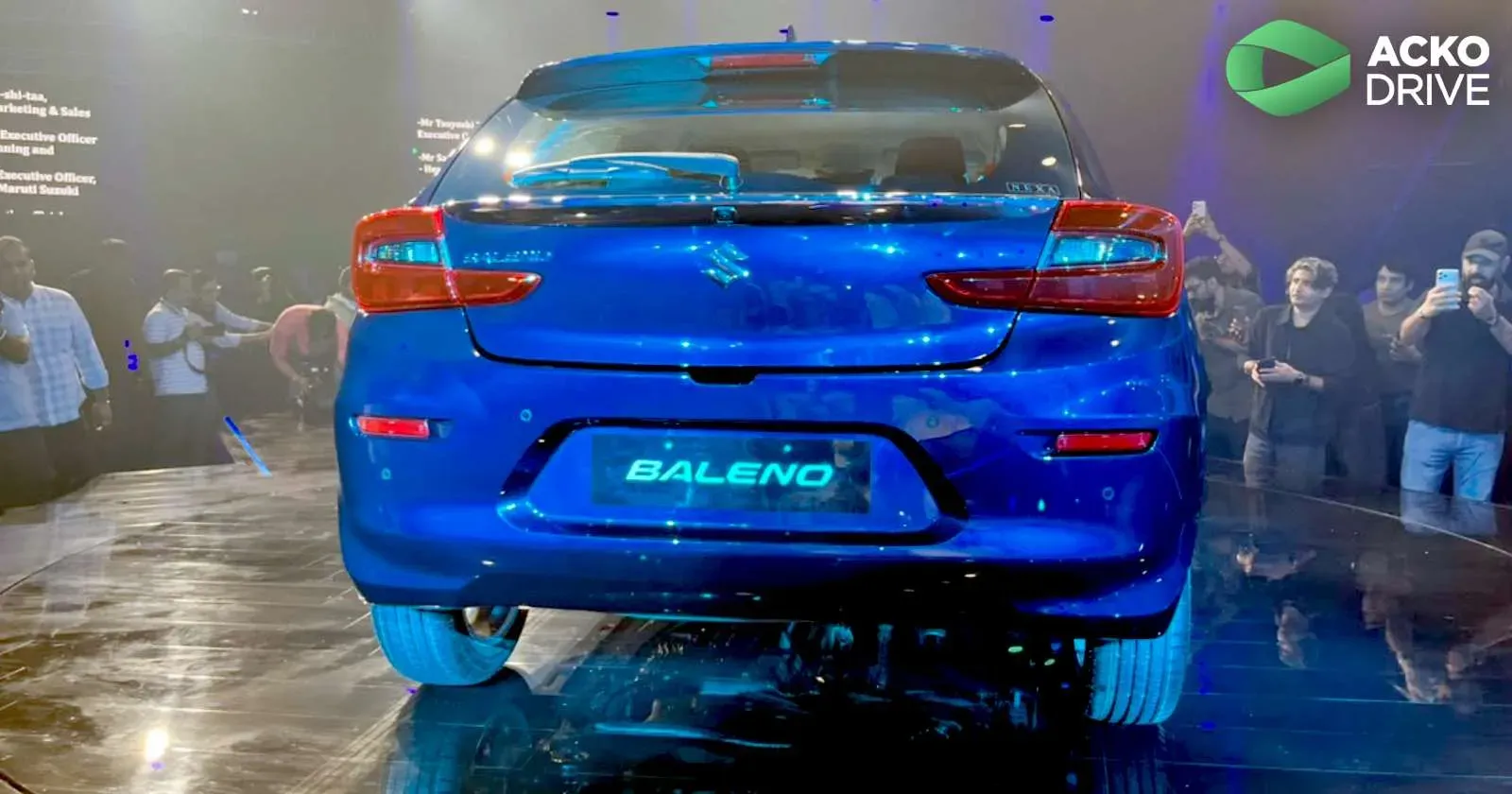
Maruti Suzuki has introduced the facelifted Baleno in India with an ex-showroom starting price of ₹6.099 lakh. Competing in the premium hatchback space, the refreshed Baleno faces familiar competition from the Tata Altroz and the Hyundai i20. While the Altroz received an update in 2025, the i20 awaits a full generational update following its 2023 facelift.
Visually, the new Baleno adopts a redesigned and bigger front grille, which is already dividing opinions on the internet. The front bumper has been revised as well. By comparison, the Altroz features 90-degree opening doors and connected LED lighting, while the i20 employs Hyundai's parametric design language with Z-shaped tail lamps.
Pricing remains a crucial factor in the premium hatchback market. The Tata Altroz is available in a broad price range spanning ₹5.99 lakh to ₹10.63 lakh ex-showroom. The Hyundai i20 ranges from ₹6.00 lakh to ₹10.90 lakh. Maruti Suzuki has priced the entry-level facelifted Baleno at ₹6.09 lakh, while full variant-wise pricing for top-spec trims remains to be announced.
Engine options differ significantly across all three models. The Tata Altroz provides three distinct powertrains: a 1.2-litre naturally aspirated petrol generating 88 bhp and 115 Nm, a segment-exclusive 1.5-litre turbo-diesel delivering 90 bhp and 200 Nm, and a twin-cylinder iCNG variant making 74 bhp and 103 Nm.
The Hyundai i20 offers a 1.2-litre naturally aspirated petrol making 83 bhp and 115 Nm, alongside a 1.0-litre direct-injection turbo-petrol producing 120 bhp and 172 Nm on N-Line trims. The new Baleno transitions to a 1.2-litre Z12E three-cylinder naturally aspirated petrol engine replacing the older four-cylinder unit.
Interior equipment and cabin technology see notable updates. The facelifted Baleno retains key amenities including a 360-degree camera, head-up display (HUD), automatic climate control, ventilated front seats, and a cooled wireless charging pad. However, its 9-inch touchscreen display with Clarion audio is smaller than rival setups.
The Tata Altroz features a 10.25-inch touchscreen with Harman Kardon sound, a 10.25-inch digital driver display, ventilated seats, and a single-pane sunroof. The Hyundai i20 offers a 10.25-inch touchscreen paired with a Bose sound system and a single-pane sunroof, but lacks ventilated seating. The Baleno stands out by introducing a segment-first Level-2 ADAS suite featuring Adaptive Cruise Control and Lane Keep Assist.

Safety equipment remains robust across all three hatchbacks. The Tata Altroz leads passive safety credentials, holding 5-star safety ratings from both Global NCAP and Bharat NCAP while featuring six airbags, electronic stability programme, and traction control.
The Hyundai i20 includes six airbags, hill-start assist, and electronic stability control, carrying a 3-star Global NCAP safety rating. The facelifted Baleno offers standard six airbags, ABS with EBD, electronic stability control, and a Level-2 ADAS suite aimed at achieving strong scores in Bharat NCAP 2.0 evaluation.
Also read: Maruti Suzuki Becomes India’s Largest EV Exporter: Over 46,000 e Vitara Units Exported Since Launch
BMW i5 LWB Launched at ₹79.60 Lakh
Tushaar Singh Gill 7 Sept, 2026, 10:32 AM IST
Citroën India Teases New “Value for Money” AircrossX, BasaltX Variants: Feature Upgrades Expected
Acko Drive Team 7 Sept, 2026, 10:01 AM IST
Kia Sorento Diesel vs Hybrid: Which Option Makes More Sense?
Acko Drive Team 7 Sept, 2026, 8:43 AM IST
Alternative Fuel Overtakes Petrol in Passenger Segment for First Time Ever, Dealers Expect Bumper Festive Season
Jamshed Avari 7 Sept, 2026, 8:37 AM IST
Maruti Baleno Facelift vs Tata Altroz vs Hyundai i20: Spec Comparison
Acko Drive Team 7 Sept, 2026, 6:54 AM IST
Looking for a new car?
We promise the best car deals and earliest delivery!