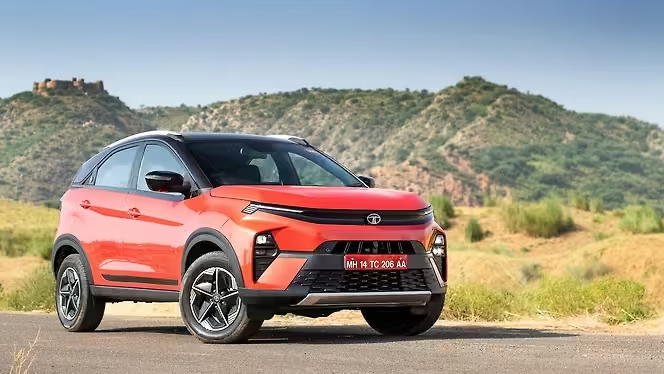


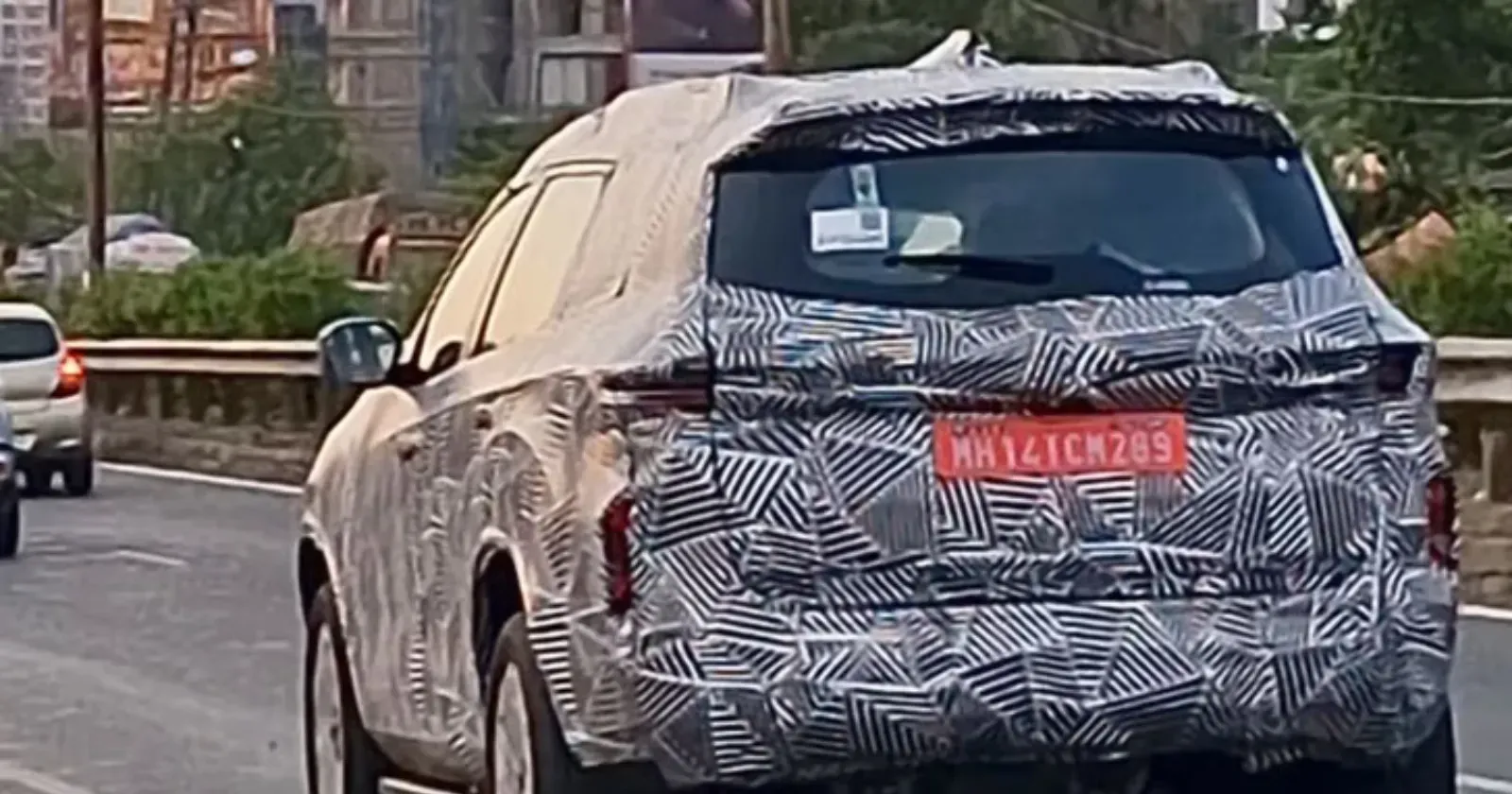
The first public road test sighting of Tata Motors’ upcoming three-row electric SUV signals progress towards its expected festive-season launch. The Safari EV is set to expand Tata’s premium EV portfolio and enter the emerging seven-seat electric SUV segment. (Image: @car_pantrr via YouTube)
Tata Motors’ forthcoming Safari EV has been spotted testing on Indian roads for the first time, offering the clearest indication yet that the company’s flagship three-row electric SUV is moving closer to production. The sighting comes as Tata continues to broaden its electric vehicle portfolio beyond compact and mid-size offerings into larger family-oriented SUVs.
Spy images shared online suggest that the electric Safari will retain much of the design and body structure of its internal combustion-engine counterpart. The test vehicle featured the familiar Safari silhouette, connected tail-lamps, roof rails and rear spoiler, underlining Tata’s strategy of maintaining brand continuity while transitioning established nameplates to electric power.
The test mule also appears to feature an independent multi-link rear suspension setup similar to that used on the recently introduced Harrier EV. That is significant because the Safari EV is expected to be built on Tata’s Acti.ev+ architecture, the same platform underpinning the Harrier EV. The platform has been developed to support multiple battery sizes, advanced electronics and dual-motor configurations.
While Tata Motors has not disclosed technical specifications, industry expectations point towards the Safari EV sharing much of its drivetrain package with the Harrier EV. This could include 65 kWh and 75 kWh battery pack options, along with both single-motor and dual-motor all-wheel-drive variants. Given the Safari’s larger size and additional seating capacity, range figures may be slightly lower than those of the Harrier EV.
The Safari EV carries broader strategic importance for Tata Motors. The company remains one of India’s leading electric passenger vehicle manufacturers, but competition has intensified as rivals expand their EV line-ups. A production-ready electric Safari would give Tata a presence in the growing premium electric SUV space while also addressing demand for larger family-focused EVs.
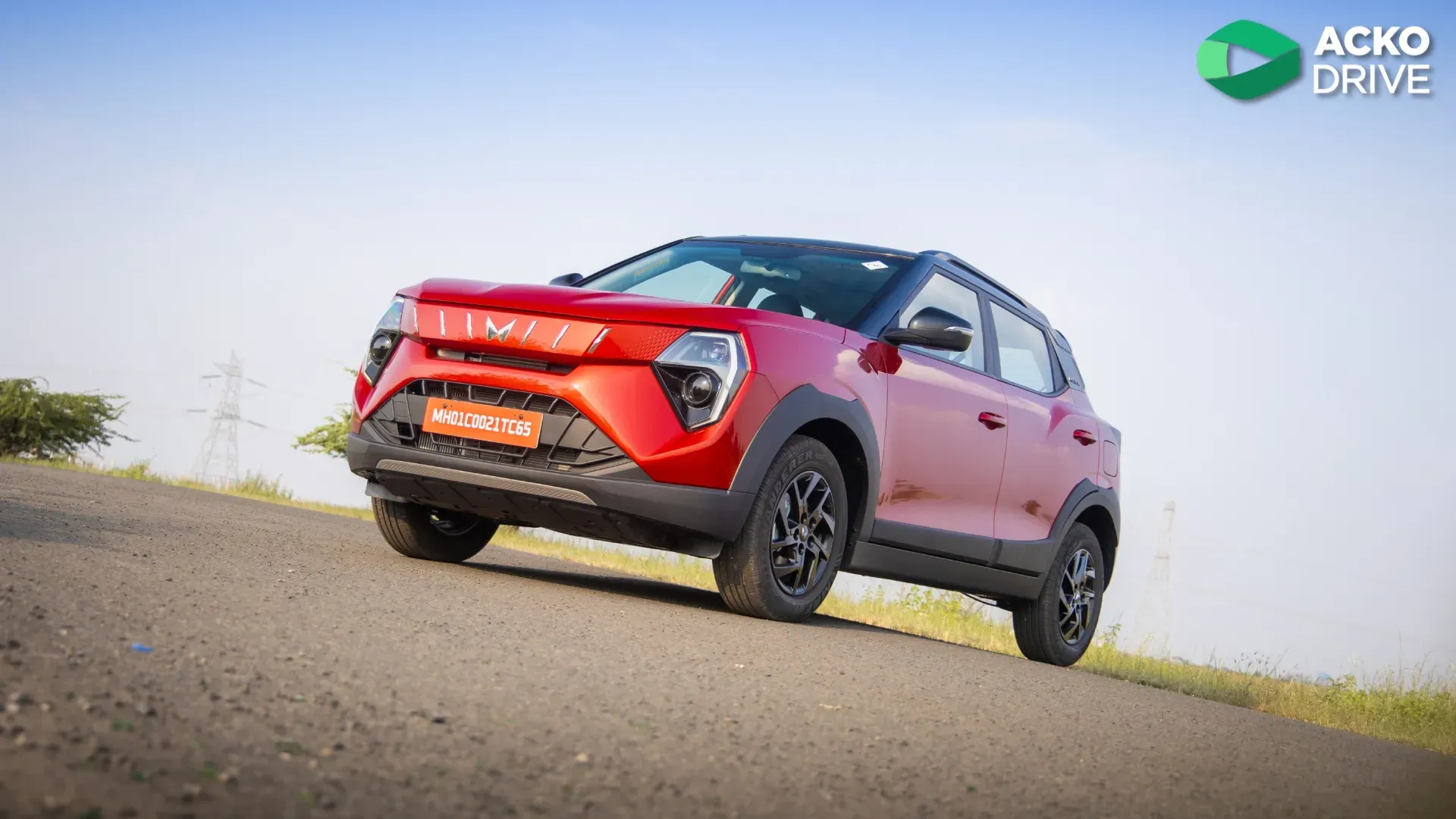
Market positioning is expected to place the Safari EV above the Harrier EV, making it Tata’s flagship electric SUV. It is also likely to become the brand’s first all-electric seven-seater passenger vehicle, targeting buyers seeking a combination of space, practicality and zero-emission mobility. Competition is expected to come from emerging premium electric SUVs, including Mahindra’s XEV 9S.
With road testing now underway, attention will turn to final calibration, homologation and production readiness. The latest sighting suggests Tata Motors is advancing towards the next phase of its EV expansion strategy, with the Safari EV expected to play a central role in strengthening the company’s presence in higher-value electric vehicle segments.