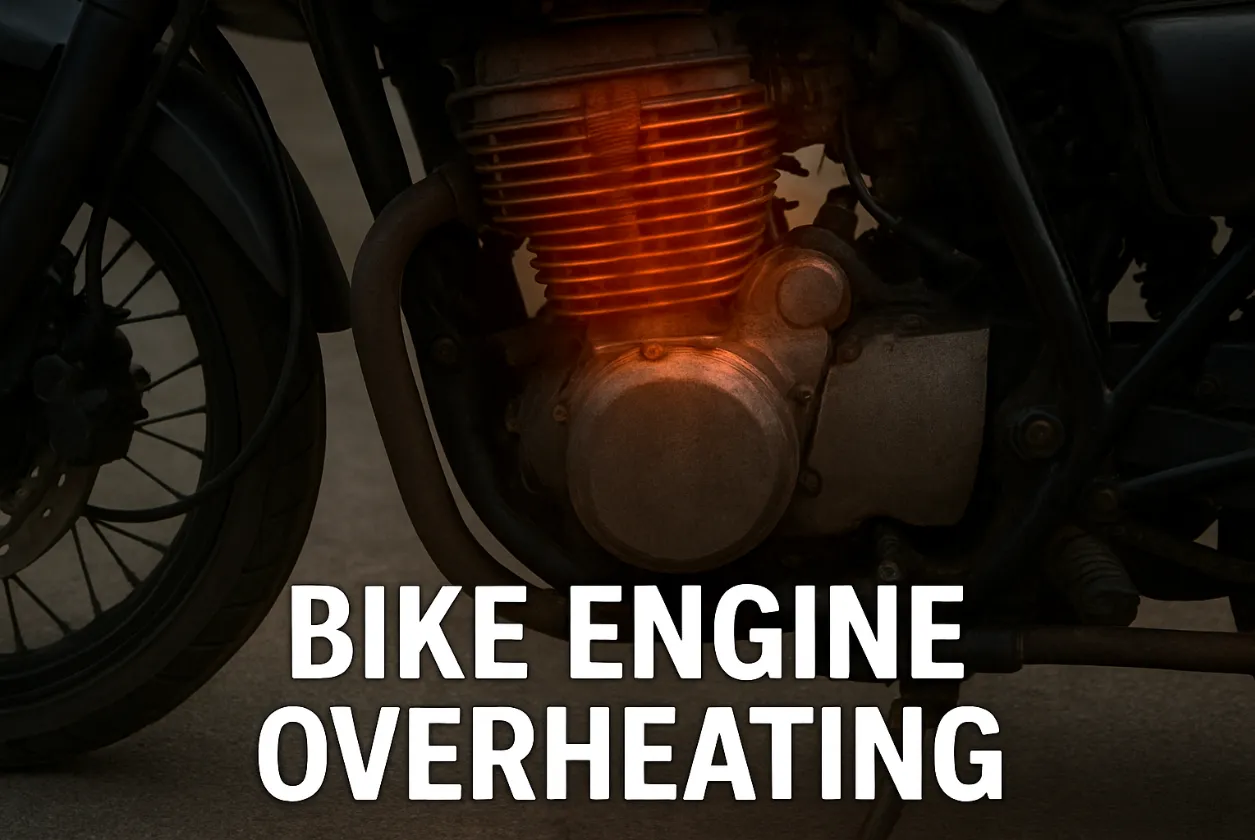
What is Engine Overheating?
Your bike's engine works by burning fuel inside the cylinder, creating power to move the bike. However, it also produces heat. Normally, the cooling system (air cooling, oil cooling, or liquid cooling) keeps the temperature under control. But when the cooling system fails to remove enough heat, the engine temperature rises beyond safe limits, leading to engine overheating.
If the heat goes too high:
- The engine oil becomes too thin and loses its ability to lubricate.
- Metal parts in the engine expand and rub against each other.
- This can cause permanent damage or even engine seizure.
Why Do Bike Engines Overheat?
The following are some reasons why your bike’s engine can overheat.
1. Low Engine Oil
Engine oil is like blood for your bike. It lubricates moving parts and carries away some heat. If the oil level is low or the oil is old and dirty, it cannot do its job properly. In such cases, friction between parts increases, which further creates even more heat.
2. Riding in Heavy Traffic
Cities often have long traffic jams, especially in summer. At low speeds, the engine does not get enough air for cooling. The heat builds up quickly because you keep the bike running, but it’s not moving fast enough for airflow.
3. Overloading the Bike
If you carry heavy luggage or ride with two adults plus an extra load, your bike’s engine works harder. This extra load makes the engine burn more fuel. As a result, it creates extra heat.
4. Faulty Cooling System
- In air-cooled bikes, blocked fins (due to dirt or mud) can stop air from reaching the engine.
- In oil-cooled bikes, if the oil is old or the cooler is damaged, heat won’t escape properly.
- In liquid-cooled bikes, a low coolant level or a broken radiator fan can cause overheating.
5. Poor Maintenance
Skipping regular servicing may cause your bike’s oil, air filter, and spark plugs to be in bad condition. This reduces performance and strains the engine, producing more heat.
6. Continuous High-Speed Riding
Long highway rides at very high speeds can cause the engine to run hot, especially if it is not designed for such speeds. Sports bikes handle this better, but smaller commuter bikes can struggle.
Signs That Your Bike Engine Is Overheating
You should be able to notice the early warning signs of overheating. Common signs include:
- Burning smell from the engine or oil.
- Loss of power while riding.
- Strange knocking or pinging sound from the engine.
- Excessive heat is felt on your legs near the engine.
- In liquid-cooled bikes, the temperature warning light may come on.
If you notice any of these, it’s better to stop and let the bike cool down before continuing.
What Happens If You Ignore Engine Overheating?
Ignoring overheating can be very costly. Problems may include:
- Piston Seizure: The piston can expand so much that it gets stuck inside the cylinder. This can completely stop the engine.
- Warped Cylinder Head: Excess heat can bend or warp engine parts, causing oil leaks or loss of compression.
- Oil Breakdown: Overheated oil loses its lubricating power, increasing wear and tear.
- Permanent Engine Damage: You may end up needing a full engine rebuild, which is expensive.
How to Prevent Bike Engine Overheating
Here are a few tips to prevent engine overheating.
1. Check Engine Oil Regularly
Make sure your oil level is correct and change it as per the manufacturer’s schedule. In Indian conditions, changing oil every 3,000–5,000 km is a safe rule for most bikes.
2. Keep the Cooling System Clean
If your bike is air-cooled, keep the fins clean from dust and mud. For liquid-cooled bikes, check coolant levels and radiator condition regularly.
3. Avoid Overloading
Do not carry excessive weight on your bike. It puts extra strain on the engine and increases heat generation.
4. Ride Smart in Traffic
If you are stuck in traffic for a long time, switch off the engine instead of keeping it running. This will help prevent unnecessary heat buildup.
5. Maintain Proper Tyre Pressure
Low tyre pressure increases the engine load, which indirectly causes more heat. Check tyre pressure once a week.
6. Service Your Bike on Time
Regular servicing ensures oil changes, air filter cleaning, and checking for worn-out parts. This keeps the engine healthy and cooler.
What to Do If Your Bike Overheats While Riding
If you are riding your bike and it overheats, here’s what you can do at the moment.
1. Stop in a Safe Place: Firstly, find a safe spot on the side of the road and park your bike. Make sure it’s away from traffic to avoid any accidents while you wait.
2. Switch Off the Engine: Let the engine cool down naturally for 15–20 minutes. This will prevent further heat buildup and protect internal parts.
3. Do Not Pour Water on the Engine: Sudden cooling can damage engine parts. The rapid temperature change can cause cracks in the cylinder head or other metal components.
4. Check Oil and Coolant Levels: A low oil/coolant level could be one reason. If it is low, top it up before riding again to prevent repeated overheating.
5. Ride Slowly to a Mechanic: If the problem continues, make sure to get professional help immediately. Riding slowly reduces engine strain and helps prevent further damage until you reach the workshop.
Final Words
It is vital to note that bike engine overheating is a serious issue that can damage your bike if ignored. You need to be extra careful in traffic jams, hot weather, and long rides. So, check oil regularly, keep your cooling system in good condition, and ride smartly. This will help prevent overheating and keep your bike running smoothly for years. Remember, prevention is always better and cheaper than repair.
Frequently Asked Questions