What are Drum Brakes?
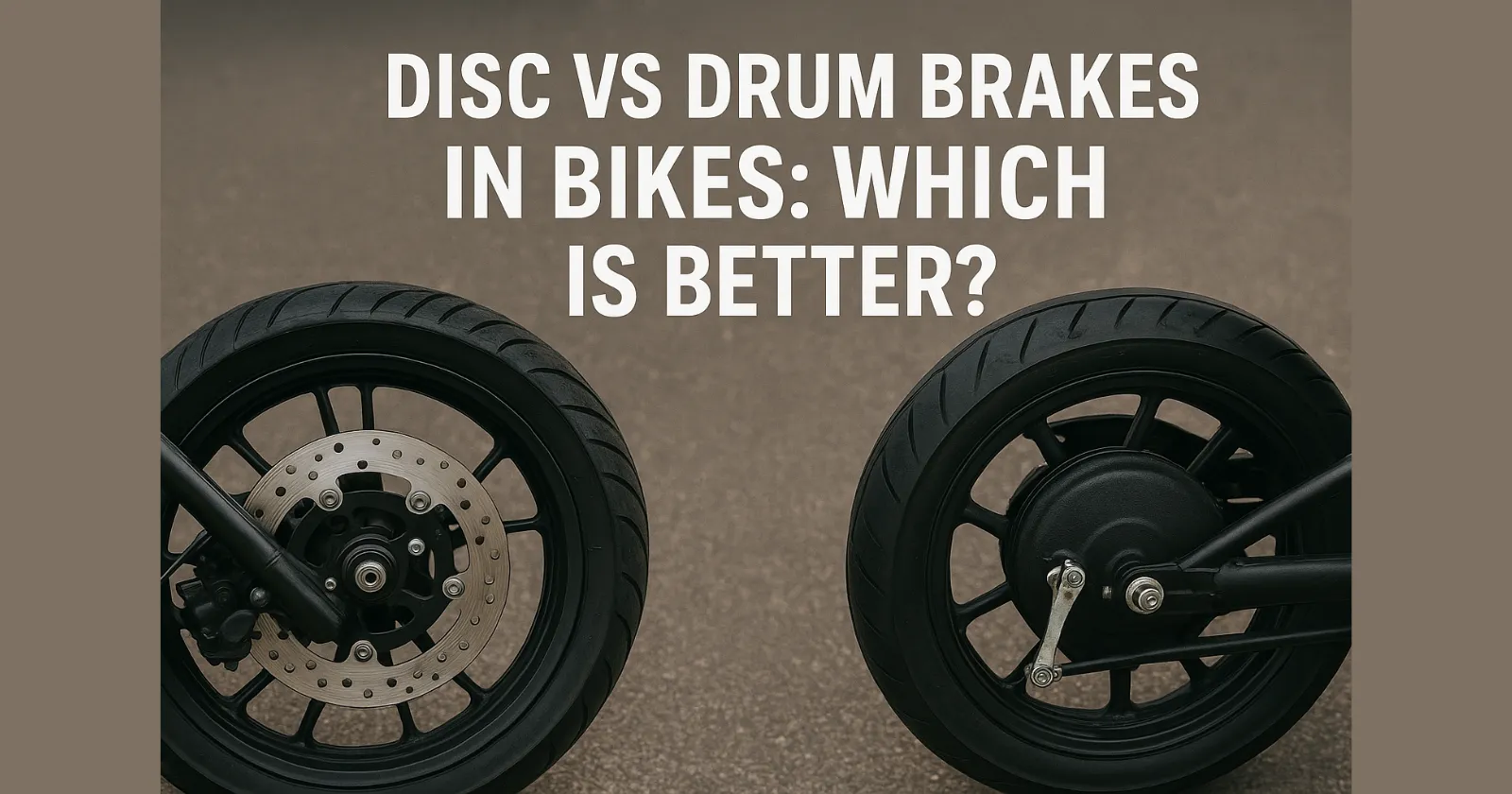
Drum brakes have been used in bikes for decades. They are simple in design and cost less to make. Inside the wheel hub, there is a hollow drum. When you press the brake lever or pedal, brake shoes inside the drum push outwards and rub against the inner surface of the drum. This rubbing slows down the wheel and stops the bike.
- Mainly used: On commuter bikes and scooters in India.
- Position: Mostly on the rear wheel; some budget bikes also have them on the front wheel.
What are Disc Brakes?
Disc brakes are more modern and are seen on many mid-range and premium bikes. Instead of a drum, there’s a flat metal disc (rotor) attached to the wheel. A brake calliper holds special pads on both sides of this disc. When you apply the brakes, the calliper squeezes the pads against the disc, creating friction that slows the wheel.
- Mainly used: On front wheels of most modern bikes; high-end bikes have them on both wheels.
- Position: Usually on the front wheel; rear discs are common in performance bikes.
How Does the Drum Brake Work
A drum brake works by using brake shoes inside a drum attached to the wheel. When you press the brake lever or pedal, a cam pushes these shoes outward so their brake lining presses against the inside of the drum. This creates friction, which slows down the wheel.
Drum brakes are common on budget-friendly bikes because they are simple, reliable, and cheap to maintain. However, they don’t cool down as quickly as disc brakes and can lose effectiveness during heavy braking.
How Does the Disc Brake Work
A disc brake uses a metal disc (rotor) attached to the wheel and a calliper with brake pads. When you press the brake lever, hydraulic fluid pushes the brake pads against the rotor, creating friction that slows the wheel.
Disc brakes are more effective than drum brakes, especially in wet conditions, because they offer better heat dissipation and stopping power. They are found on most modern bikes and are preferred for their quick, consistent braking performance.
Differences Between Disc and Drum Brakes
| Feature | Drum Brakes | Disc Brakes |
| Stopping Power | Moderate, enough for city riding | Strong, better for high speed |
| Heat Handling | Gets hot quickly; performance drops with long use | Handles heat better; works well even after repeated braking |
| Performance in Rain | Can be less effective when wet | Works better in wet conditions |
| Maintenance Cost | Cheaper to maintain | Slightly costlier to maintain |
| Durability | Lasts long in normal city use | Lasts long, but pads wear out faster |
| Weight | Slightly heavier | Lighter in comparison |
| Price of Bike | More affordable | Slightly increases bike cost |
Advantages of Drum Brakes
- Lower Cost: Drum brakes are cheaper to manufacture, so bikes with them are more affordable. This makes them a great choice for budget-conscious riders in India. You can get a bike with decent braking without spending extra money.
- Less Maintenance Cost: These are cheaper to replace than disc brake pads. Regular servicing is also simpler, as most mechanics are familiar with drum brake systems. This means you spend less over the lifetime of your bike.
- Good for Low-Speed Riding: For regular city commutes and light riding, they work fine. They provide enough stopping power for slow traffic and short distances. This is why many scooters and commuter bikes still use them.
- More Protection: Since the drum is enclosed, it is less affected by dust and mud, which is useful in rural or dusty areas. This design helps maintain braking performance in bad weather or off-road conditions. Riders in villages or unpaved areas benefit from this added protection.
Advantages of Disc Brakes
- Better Stopping Power: Disc brakes stop the bike faster, especially at higher speeds. This can make a big difference in emergencies, where every second counts.
- Handles Heat Better: Even after repeated braking (like on a downhill road), performance remains strong. The open design allows heat to escape quickly, preventing brake fade. This is especially useful during long rides or in hilly regions.
- Better in Rain: These work more effectively in wet conditions as water clears off the disc quickly. This means you get reliable braking performance even in heavy monsoon rains. It greatly reduces the risk of skidding during sudden stops.
- More Control: Disc brakes allow smoother braking. This helps you judge exactly how much force to apply for safe stopping. It also makes cornering and downhill riding more manageable.
Disadvantages of Drum Brakes
- Weaker at High Speed: These are not as effective for quick stops when riding fast. This can be risky on highways or when overtaking vehicles. You might need a longer distance to come to a complete stop.
- Overheating Problem: Continuous braking can make them hot, which reduces performance. Once overheated, drum brakes take longer to cool down. This can make them less reliable on long downhill roads.
- Poor in Wet Weather: They take longer to dry and work at full strength after getting wet. Water inside the drum can reduce friction, making the brakes feel weaker. This is a common issue during rainy season rides.
Disadvantages of Disc Brakes
- Higher Price: Bikes with disc brakes are usually a bit more expensive. This extra cost may not be worth it for riders who only do slow city commutes. Budget-conscious buyers may prefer drum brakes for affordability.
- Costlier to Maintain: Brake pads and discs can cost more to replace. Skilled mechanics and proper parts may also be harder to find in rural areas. Over time, this can add to the bike’s running costs.
- More Exposed: The open design means they can collect dust or get damaged if hit. This can slightly affect braking performance if not cleaned regularly. In rough terrains, they are more likely to get scratched or bent.
Which Is Safer in India?
In terms of pure stopping power, disc brakes are safer, especially in situations where you need to stop suddenly, like when a cow crosses the road or a car brakes without warning.
However, for slow-speed city riding in crowded areas, drum brakes are safe enough. Many commuter bikes use a disc in the front and a drum at the rear, which is a good balance between cost and safety.
Which One Should You Choose?
- If you ride mostly in the city at low speeds, drum brakes (or front disc + rear drum) are enough.
- If you ride at higher speeds, on highways, or tour long distances, go for disc brakes on at least the front wheel.
Final Words
Both disc and drum brakes can stop your bike, but they do it differently. In India, where we face unpredictable traffic, sudden obstacles, and mixed road conditions, a front disc brake is almost essential for safety. A rear drum brake is still fine for most riders, but if you do a lot of highway riding or carry heavy loads, consider a rear disc as well.
The right choice depends on your riding style, budget, and where you ride most often. Whatever brakes your bike has, remember that good braking is also about rider skill. So, use both brakes together, maintain them well, and ride responsibly. Safe riding starts with safe stopping.
Frequently Asked Questions