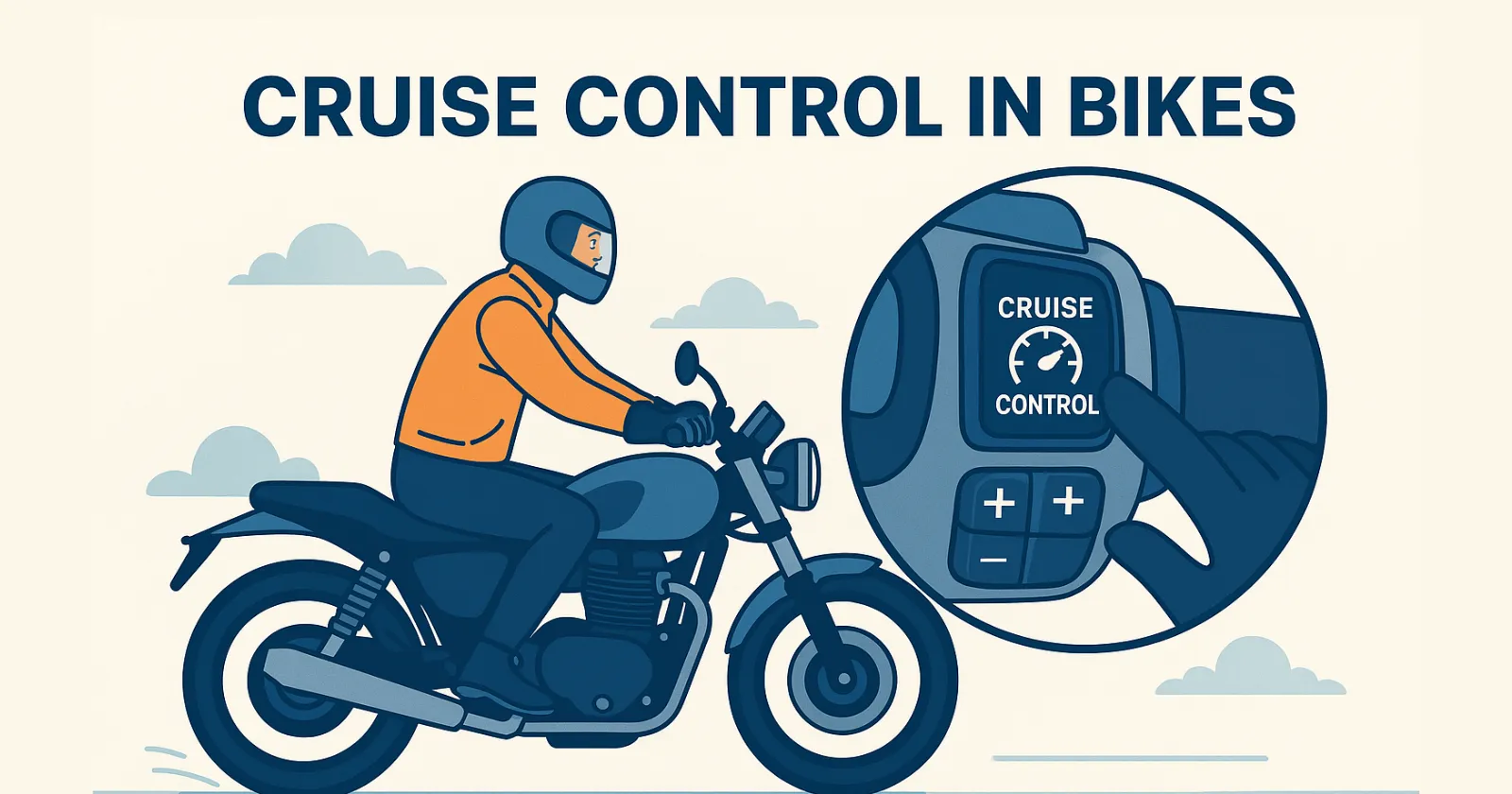
What is Cruise Control in Bikes?
Cruise control is a system that lets you lock your bike’s speed so you don’t have to keep the throttle open manually. Once activated, the bike continues at the chosen speed until you either brake, clutch, or turn off the cruise control manually.
It is particularly useful on long, straight highways where constant-speed riding is common. This can reduce fatigue, improve comfort, and sometimes even save fuel.
How to Use Cruise Control on Bikes
Using cruise control in bikes is simple once you get the hang of it. First, accelerate to your desired speed, usually on a clear, straight road. Then, press the cruise control button or switch, and the system will maintain that speed without you holding the throttle. Keep your hands ready to take control anytime, as tapping the brakes, clutch, or throttle will disengage it instantly.
Cruise control is best used on highways, not in traffic, as it helps reduce hand fatigue and makes long rides more comfortable.
How Cruise Control Works on Bikes
Here’s how cruise control works on bikes.
- Set Your Speed: You reach the speed you want (usually above 40–50 km/h).
- Activate Cruise Control: Using a button or switch on the handlebar, you engage the system.
- Bike Maintains Speed: The system keeps the throttle steady, and the bike continues at that speed.
- Deactivate Anytime: You can turn it off by braking, pulling the clutch, or pressing the cruise control off switch.
Types of Cruise Control in Bikes
There are two types of cruise control in bikes, which are as follows.
1. Mechanical Cruise Control
Mechanical cruise control is the most basic form of cruise control found on motorcycles. It is often available as an aftermarket accessory rather than a built-in feature from the factory. It works by physically locking the throttle grip in place using a clamp, friction device, or throttle lock. This allows the rider to hold a steady speed without continuously twisting the throttle.
It’s especially popular among budget-conscious riders or those who own bikes that do not come with factory-fitted electronic cruise control. However, it requires manual adjustment and constant attention because it cannot automatically adapt to road conditions, slopes, or traffic changes.
2. Electronic Cruise Control
Electronic cruise control is a modern, more advanced version found mainly in premium motorcycles and some mid-range touring bikes. Instead of physically locking the throttle, it works through the motorcycle’s Electronic Control Unit (ECU) and sensors. When activated, the system electronically controls the throttle to maintain a set speed.
It can automatically adjust throttle input for uphill or downhill riding, which ensures smooth performance and consistent speed. It is also safer and more accurate than mechanical systems, as it disengages instantly when the rider brakes, pulls the clutch, or cancels it manually.
Difference Between Mechanical and Electronic Cruise Control in Bikes
| Feature | Mechanical Cruise Control | Electronic Cruise Control |
| How it Works | Locks the throttle grip in place using a physical clamp or friction device. | Uses ECU and sensors to electronically control and maintain speed. |
| Cost | Low-cost, usually aftermarket. | Higher cost, mostly factory-fitted in premium or mid-range bikes. |
| Ease of Use | Requires manual setting and adjustment. | Simple push-button activation with automatic control. |
| Accuracy | Less accurate, speed may vary with slopes. | Highly accurate, maintains constant speed even on slopes. |
| Safety | Needs constant rider attention. | It is safer, disengages automatically with brakes or clutch. |
| Adaptability | Cannot adapt to uphill/downhill automatically. | Automatically adjusts for inclines and declines. |
| Best For | Budget riders, aftermarket installation. | Long-distance touring, premium motorcycle owners. |
When to Use Cruise Control in India
On smooth highways
Use it on smooth highways because cruise control works best on wide, open, and well-maintained highways where speed remains steady for long stretches. It helps reduce fatigue and allows for a more relaxed ride over hours of continuous travel.
On long-distance touring
When you keep a steady speed without having to twist the throttle, your hands and wrists get much-needed relief. This makes your ride more enjoyable and less tiring, especially on multi-hour road trips.
During late-night highway rides when traffic is minimal
With fewer vehicles around, cruise control can help you maintain a consistent speed without frequent acceleration or braking. This also improves fuel efficiency since your bike is running at an optimal speed.
When maintaining a fixed speed to follow speed limits and avoid fines
It can help you stick to legal speed limits on monitored expressways. This is especially useful in areas with speed cameras and automated fine systems.
When Not to Use Cruise Control
- In heavy city traffic where constant speed is impossible: Frequent braking and gear changes will make cruise control useless and even risky. You need full manual control to react quickly to unpredictable traffic.
- On wet or slippery roads, where control needs to be quick and precise: Rain, mud, or oil spills reduce tyre grip, and cruise control may not adjust quickly enough. Manual control gives you better stability and quicker reaction times.
- On twisty mountain roads where speed changes often: Sharp curves and steep gradients require constant throttle adjustments. Cruise control can make cornering less safe in these conditions.
- During crowded market areas or near pedestrian crossings: Sudden appearances of people, animals, or vehicles make cruise control risky. You need full control to slow down instantly when required.
Common Mistakes While Using Cruise Control
Listed below are some mistakes you must avoid while using cruise control.
- Engaging at Low Speeds: Cruise control is designed for smooth, consistent speeds, usually above 40–50 km/h. So, using it in slow or stop-and-go traffic can reduce its effectiveness and increase risk.
- Not Cancelling in Time: If you don’t disengage cruise control before turns, traffic stops, or obstacles, you may overshoot your intended path. That is why it is vital to be proactive in cancelling it when necessary.
- Overconfidence: Some riders mistakenly think cruise control can “ride the bike” for them. In reality, you must still steer, balance, and make judgment calls just like normal riding.
- Ignoring Gear Selection: Cruise control functions more smoothly in higher gears where the engine maintains steady RPM. In lower gears, speed fluctuations may feel jerky.
Final Words
Cruise control in bikes is a feature designed to make highway rides more comfortable and less tiring. While it is not a substitute for rider awareness, it can be a big help during long journeys. For Indian riders, its real benefits shine on open highways and touring routes rather than in daily city commutes.
If you love long-distance riding or often travel between cities, a bike with cruise control can be a smart choice. Just remember to use it wisely, stay alert, and adapt to the road conditions. With proper use, cruise control can make your rides smoother, safer, and more enjoyable.
Frequently Asked Questions