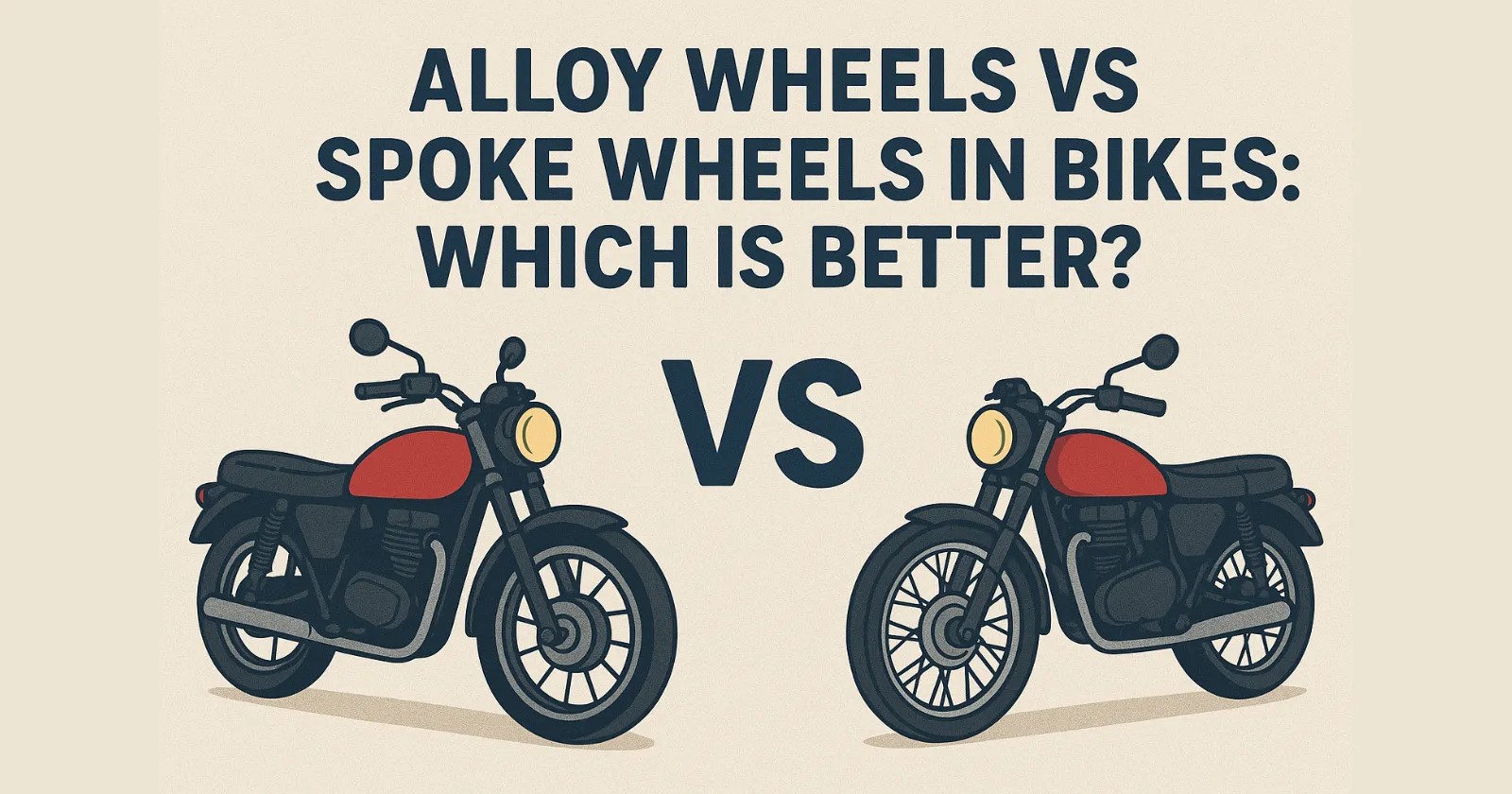
What are Alloy Wheels in Bikes?
Alloy wheels are usually made from aluminium or magnesium alloys. These wheels are cast or forged in one solid shape and are far smoother-looking and lighter. They are most commonly seen on modern commuter and sport bikes. Alloy wheels are designed for tubeless tyres, which help avoid frequent punctures.
Pros and Cons of Alloy Wheels
Pros of Alloy Wheels:
- Lightweight: These wheels weigh less than spokes, improving bike acceleration, handling, and even fuel mileage.
- Tubeless Tyre Compatible: With tubeless tyres, small punctures can be plugged quickly without removing the wheel.
- Low Maintenance: No need for periodic tuning. Once mounted, they require little upkeep.
- Modern Look: Sleek and sporty, alloy wheels enhance a bike’s appearance for city and highway riders.
Cons of Alloy Wheels:
- Less Forgiving on Bumps: Alloy wheels don’t flex, so they may crack or dent even from a pothole impact.
- Expensive to Repair: If damaged, alloy wheels usually need full replacement, which costs more.
- Not Ideal for Off-road: They lack the flexibility needed for rough terrain; better suited to smoother roads.
What are Spoke Wheels in Bikes?
Spoke wheels use lots of slim metal wires, spokes, which connect the wheel hub to the rim. The spokes flex and absorb shocks, making them strong over rough roads. Most older bikes and adventure bikes use these traditional wheels. Spoke wheels are simple in design and easy to repair by replacing individual spokes if one breaks.
Pros and Cons of Spoke Wheels
Pros of Spoke Wheels:
- Flexible and Tough: Spoke wheels bend slightly under pressure, which helps absorb shocks when riding on bad roads or off-road trails.
- Easy Repairs: If a spoke breaks, you only need to replace that one. You don’t have to change the whole wheel.
- Classic Look: They suit retro and adventure-style bikes and add a timeless appeal.
- Budget Friendly: Spoke wheels usually cost less to manufacture and replace.
Cons of Spoke Wheels:
- Heavier Weight: Being made of steel, these wheels weigh more, which may slightly reduce acceleration and fuel efficiency in the riders’ experience.
- Tube-Type Tyres: Most spoke wheels use tyre tubes, making tyre puncture fixes cumbersome since you need to remove the entire wheel.
- Regular Truing Needed: Spokes may loosen over time, requiring regular tightening (“truing”) for safe riding.
Difference between Alloy Wheels and Spoke Wheels in Bikes
| Feature | Alloy Wheels | Spoke Wheels |
| Material | Aluminium or magnesium alloy | Steel spokes with a metal hub and rim |
| Weight | Lightweight | Heavier than alloy wheels |
| Tyre Type | Supports tubeless tyres | Usually needs tube-type tyres |
| Maintenance | Low maintenance | Needs regular spoke tightening (truing) |
| Shock Absorption | Less flexible, can crack on impact | Flexes and absorbs shocks well |
| Repair Cost | Expensive to repair or replace | Cheap and easy to repair |
| Look and Style | Modern, sleek appearance | Classic, retro look |
| Ideal Usage | City roads and highways | Off-road, village roads, rough terrain |
| Fuel Efficiency | Slightly better due to lighter weight | Slightly lower due to a heavier build |
| Repair Availability | Needs specialised service for major repairs | Local mechanics can handle most repairs |
Which One Should You Choose?
Choosing between alloy and spoke wheels depends on where you ride most, what kind of roads you face, and how much maintenance you're comfortable with.
Below is a quick rundown of tips that will help you pick a wheel type that will suit your riding.
Best For Everyday City Riding?
Alloy wheels are great for smooth city roads, lighter and compatible with tubeless tyres. They also look stylish and are found in most modern commuter bikes.
Best For Off-road or Adventure Trips?
Spoke wheels handle bumps and potholes better; they can be fixed even in remote places. They flex more, which helps prevent damage when riding on bad or uneven roads.
Best for Fuel Economy?
Alloy wheels slightly improve mileage due to their lighter weight. Less weight means the engine doesn’t have to work as hard, saving fuel over time.
Best for Easy Repairs?
Spoke wheels win here. If one spoke breaks, only that needs replacing. Local mechanics can easily repair them without needing special tools.
Final Thoughts
Spoke wheels and alloy wheels each serve a clear purpose:
- Go for spoke wheels if you ride on rough roads, want easy and cheap repairs, or like a vintage look.
- Choose alloy wheels if you ride mostly on paved city roads, want tubeless tyres for easy puncture fixes, and prefer low-maintenance styling.
Your choice should reflect where you ride, how you ride, and how much maintenance you’re willing to do. Either wheel style can provide safe, reliable riding when matched to your needs.
Frequently Asked Questions