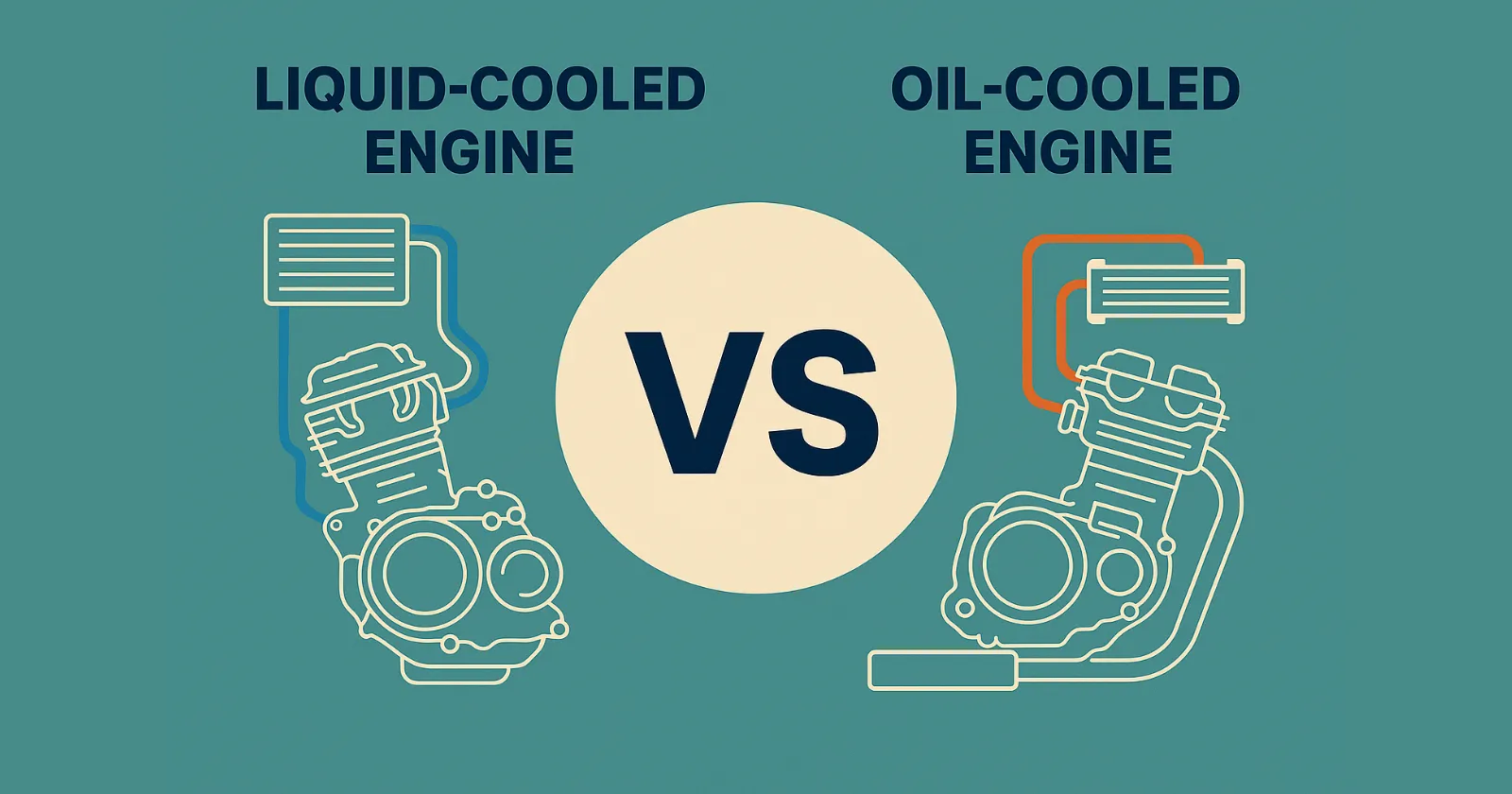
What is Liquid Cooling in Bikes?
Liquid cooling is a system that uses a special coolant (a mix of water and antifreeze) to keep your bike’s engine temperature in control. The coolant flows around the engine through pipes and absorbs the heat. It then passes through a radiator, where the heat is released into the air.
This method is more advanced and found in many modern bikes. It helps maintain a steady temperature even when you ride long distances, go fast, or get stuck in traffic. Liquid-cooled bikes usually run smoother and are less likely to overheat.
What is Oil Cooling in Bikes?
Oil cooling uses engine oil to absorb and carry away the heat from the engine. In oil-cooled bikes, the oil flows through an extra unit called an oil cooler, like a mini radiator, which cools the oil down before it returns to the engine.
It’s a step above air cooling but not as advanced as liquid cooling. Oil cooling keeps the engine from getting too hot in moderate conditions like daily city rides or short highway runs. It’s often used in bikes between 125 cc to 250 cc.
Liquid and Oil Cooling – What is Different?
The biggest difference is in how they manage engine heat. Liquid cooling uses a coolant fluid and a large radiator to control temperature, while oil cooling uses engine oil and a smaller cooler.
Liquid cooling is more effective for high-speed or high-performance bikes, especially when the engine runs hot for longer periods. Oil cooling is simpler and lighter, making it ideal for commuters or mid-range bikes that don’t generate too much heat.
Difference between Liquid and Oil Cooling
Liquid cooling systems are more expensive and complex, but they protect the engine better. Oil cooling is cheaper and easier to maintain, but may not work well in very hot conditions or during long highway rides.
| Feature | Liquid Cooling | Oil Cooling |
| Cooling Medium | Coolant (water + antifreeze) | Engine oil |
| Extra Components | Radiator, coolant pump, hoses | Oil cooler |
| Cooling Efficiency | High (best for high-performance bikes) | Moderate (suits city or short rides) |
| Maintenance | More complex, needs a coolant top-up | Easier, needs an oil change on time |
| Cost | More expensive | Cheaper |
| Common In | Sports and touring bikes | Commuter and mid-range bikes |
| Risk of Overheating | Low, even in traffic | Medium, if overused or in a hot climate |
Pros and Cons of Liquid and Oil Cooling
Pros of Liquid Cooling
- Keeps the engine temperature stable
- Best for high-speed, long-distance riding
- Reduces engine noise and vibration
- Helps the engine perform better for longer
Cons of Liquid Cooling
- More expensive to maintain and repair
- Needs coolant change and regular checks
- Adds more weight to the bike
Pros of Oil Cooling
- Simple and cost-effective system
- Works well for city riding and moderate speeds
- Fewer parts, easier to maintain
Cons of Oil Cooling
- Not ideal for long rides or hot weather
- Less effective than liquid cooling
- The engine may heat up quicker under pressure
Which Bike is Best for You? Oil-Cooled or Liquid-Cooled Bike?
Here is a list of a few things that will help you select the right bike for yourself.
1. For regular riding (100cc – 200cc bikes)
If you ride for short distances and in moderate traffic, then you can think of buying oil-cooled engines.
2. For frequent road trips and local rides
You can consider any of these. However, it would be best if you pick a liquid-cooled bike as it will provide good protection at high speeds.
For those who travel long distances or seldom ride in the mountains, liquid-cooled bikes would be the ideal fit.
4. For those living in hot and humid areas
Go for liquid-cooled bikes as they are better at reducing heat. Also, it will offer you a smooth ride.
5. For those looking for low maintenance option
If you are looking for one that does not need frequent servicing, then you can consider a bike with an oil-cooling engine.
6. For budget-conscious buyers
If you are on a tight budget, count on an oil-cooled bike. However, you should not compromise on cooling needs. If your ride involves heavy use in a tough environment, then make sure to go for a liquid-cooled bike.
Cost Comparison of Oil-Cooled Bike and Liquid-Cooled Bike
Here’s a detailed comparison of both bikes in terms of cost.
1. Initial purchase price
Oil-cooled bikes are affordable, whereas liquid-cooled bikes are expensive.
2. Maintenance costs
Oil-cooled bikes require standard oil changes. The annual maintenance is cheaper.
Liquid-cooled bikes need regular coolant replacement (every 15,000–30,000 km or 1–2 years). Also, the radiator and hoses need occasional cleaning. Further, if the pump fails or coolant leaks, it will add to repair costs.
3. Long-term running costs
Oil-cooled bikes seldom need part replacement that are related to cooling.
Bikes with a liquid-cooling engine are more expensive to maintain.
4. Resale value
Oil-cooled bikes are simple. If they are well-maintained, they will have good resale value.
Liquid-cooled ones are considered modern bikes. They have better resale among premium bike buyers.
5. Spare parts and repairs
Oil-cooled bike’s spare parts are cheaper and readily available. Also, basic repairs of these bikes can be done by most local mechanics.
When it comes to the liquid-cooled bike, some parts, such as pumps or radiators, have to be sourced from an authorised service centre. Moreover, its repair takes more time and money.
Final Thoughts
Now you already know that both oil-cooled and liquid-cooled bikes have their own unique roles. An oil-cooled bike is a low-maintenance option for everyday riding, whereas a liquid-cooled bike delivers stable performance.
When choosing your next bike, make sure you match the cooling system to your actual riding patterns, like regular riding and occasional touring. Choose the bike with the right cooling system to make your ride smooth.
Frequently Asked Questions