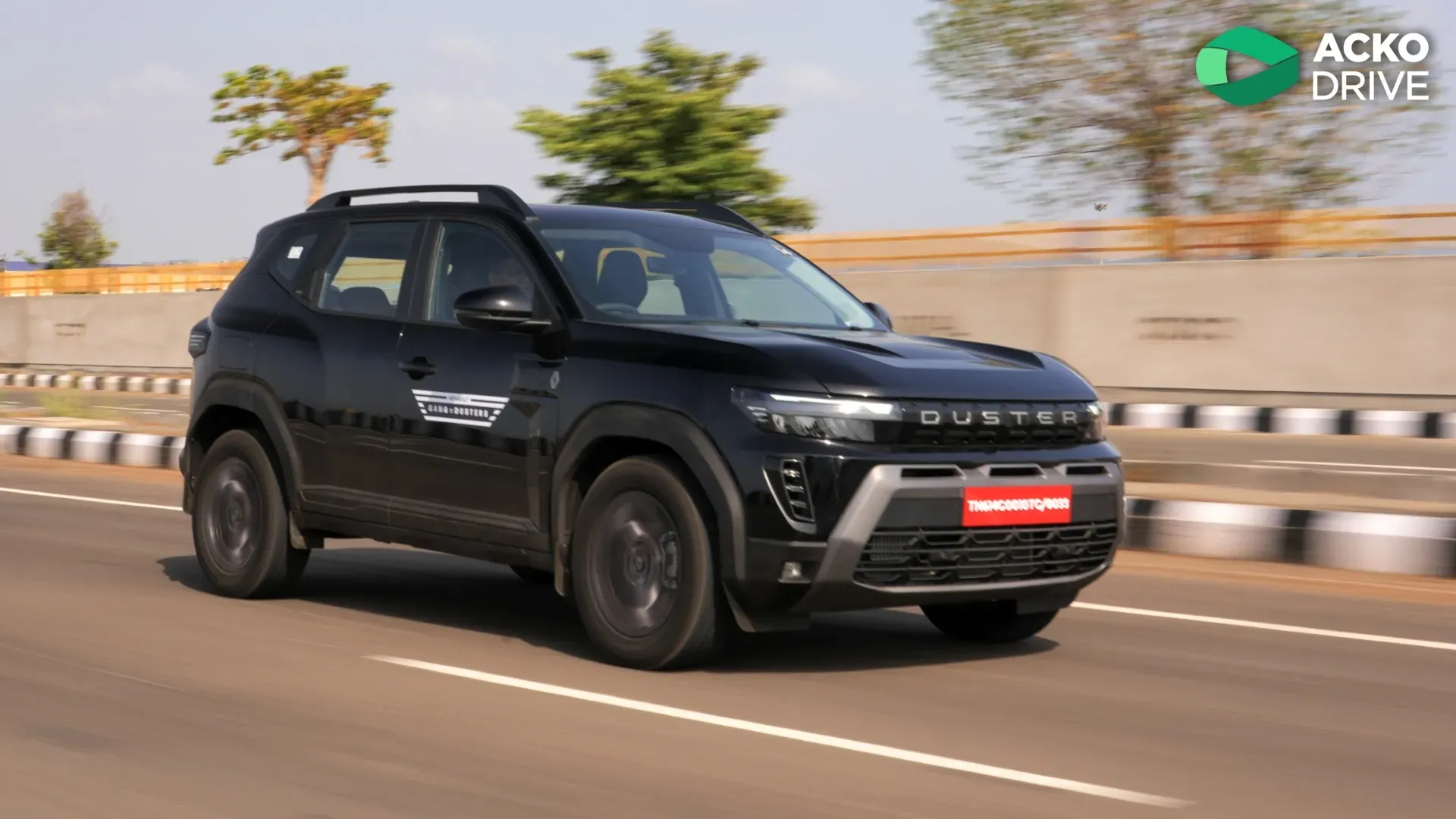


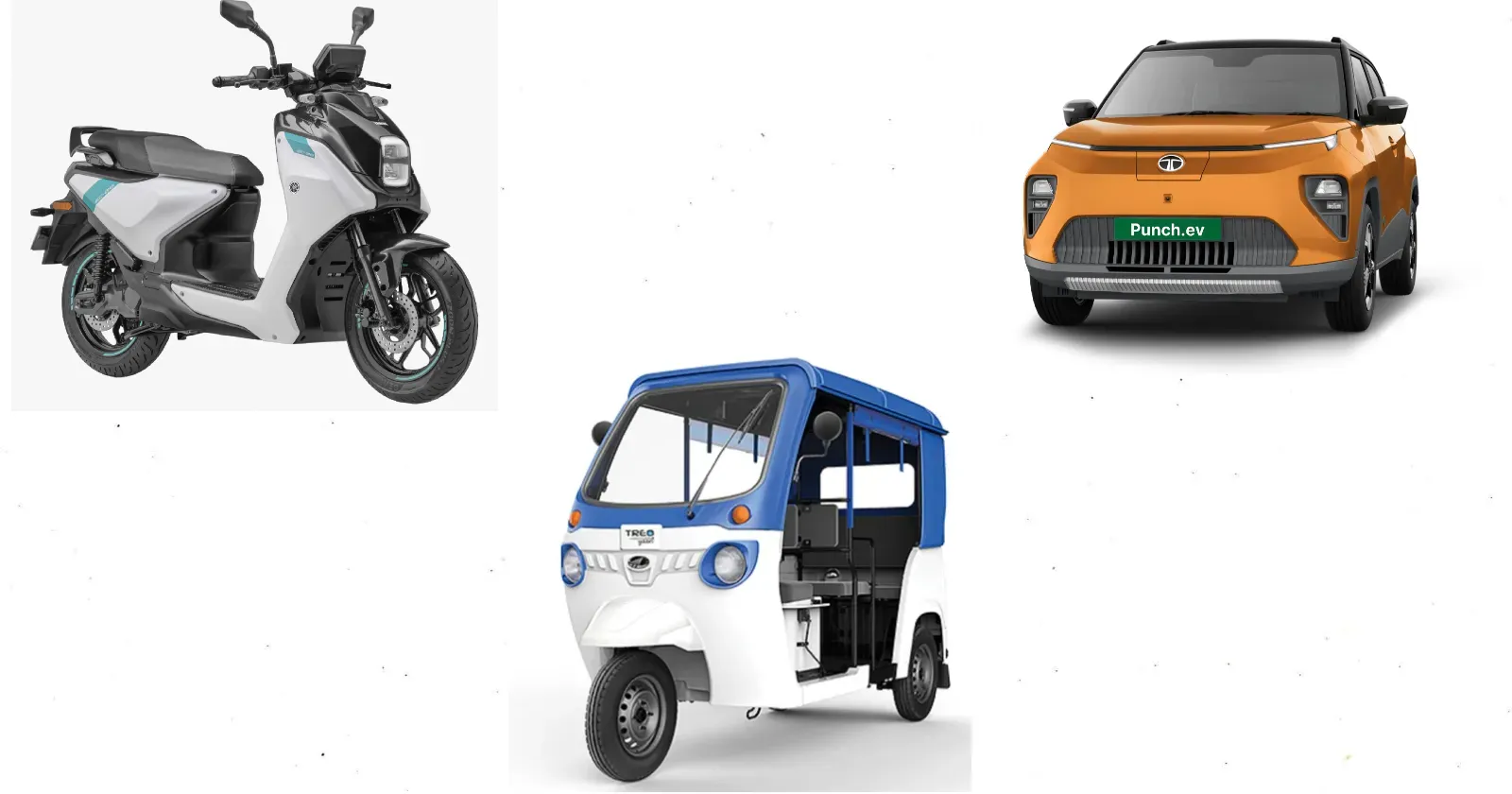
Electric cars accounted for 3.5 percent of total passenger vehicle retail sales in February, up from 3 percent a year earlier.
Electric vehicle (EV) adoption in India continued to expand in February 2026, with most segments recording strong year-on-year (YoY) growth even as retail volumes declined slightly compared with the previous month. Data released by the Federation of Automobile Dealers Associations (FADA) shows that electric two-wheelers, passenger vehicles and commercial vehicles all saw healthy annual increases, reflecting a steady shift toward electrified mobility.
However, most segments reported a sequential decline in February compared with January. This suggests a short-term slowdown following a stronger start to the year, rather than any structural weakening in EV demand.
Among the four segments, electric three-wheelers remain the most electrified part of India’s automotive market, with EV penetration well above 50 percent. Passenger vehicles and commercial vehicles, by contrast, are still at an early stage of electrification but are gradually expanding their share.
Commenting on the latest EV retail sales data, C. S. Vigneshwar, President, FADA, said, "The MoM softness visible in a few EV categories is largely a reflection of the shorter month and high January base, and does not dilute the structural direction of India’s EV transition. Importantly, India’s EV story is being built on a stronger foundation — improving product choices, expanding charging ecosystem, better financing comfort and growing consumer confidence."
Electric two-wheelers continue to drive EV adoption
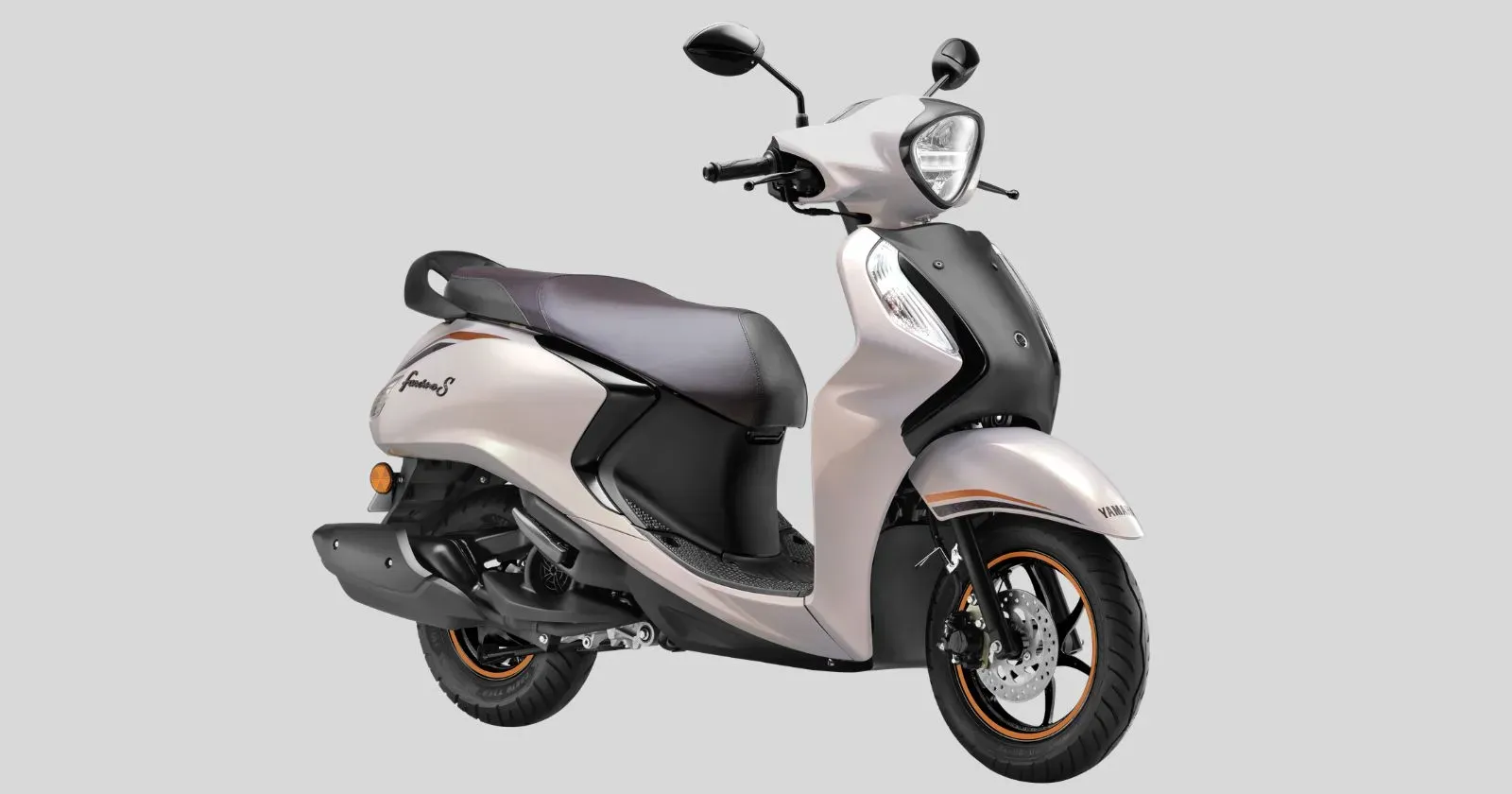
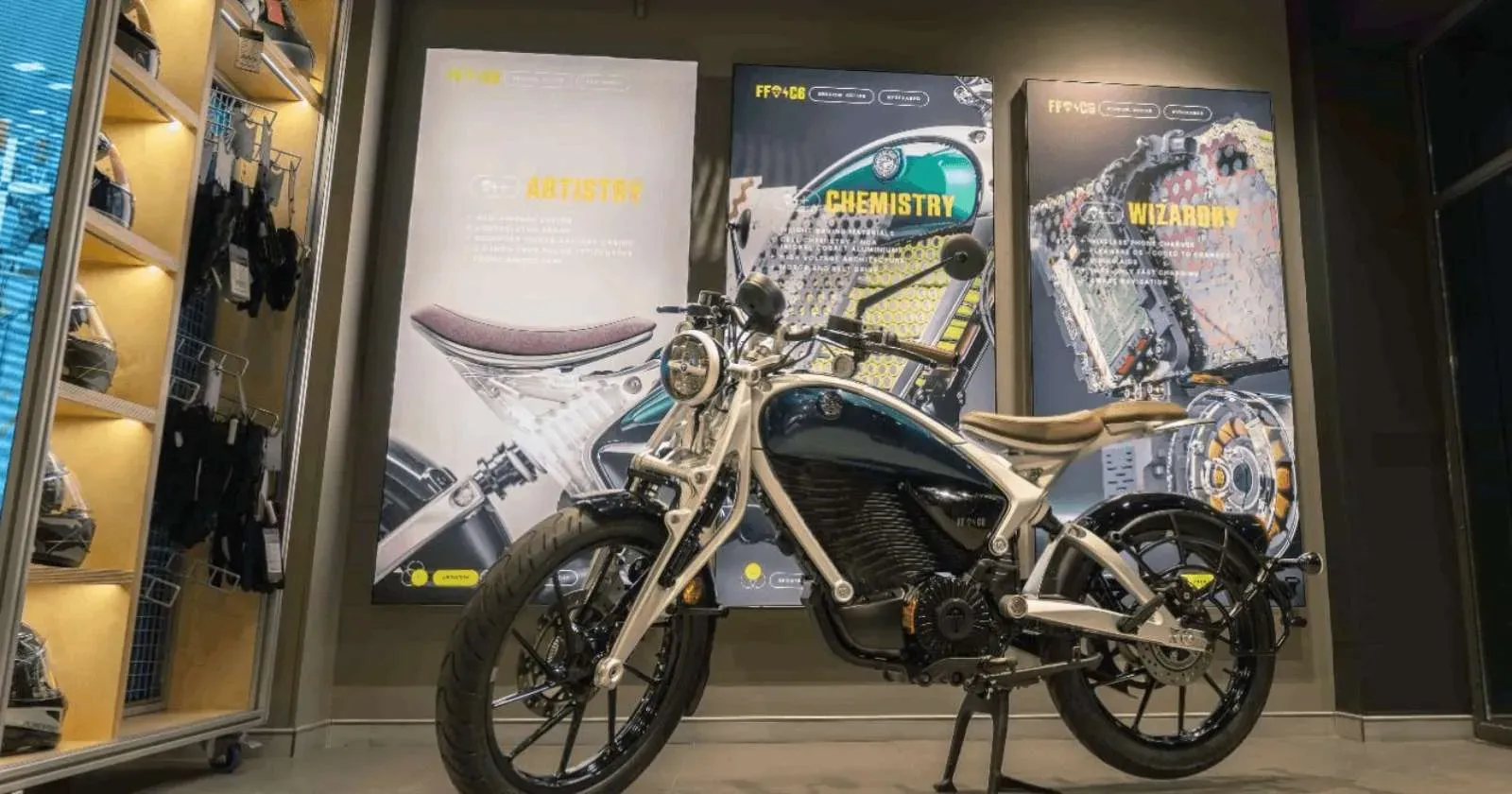
Electric two-wheelers remain the largest contributor to India’s EV market by volume. Retail sales in this category reached 111,709 units in February 2026, representing a 45.6 percent increase YoY although volumes declined 9 percent compared with January. The segment continues to see intense competition between established manufacturers and newer EV-focused companies.
TVS Motor Company retained its leadership position in February with 31,614 units sold, followed by Bajaj Auto and Ather Energy. Traditional motorcycle manufacturers appear to be gaining momentum as they expand their electric offerings. Hero MotoCorp, for instance, posted more than 360 percent YoY growth, reflecting increased traction for its EV portfolio.
At the same time, the market remained dynamic. Ola Electric recorded a sharp 47 percent month-on-month (MoM) decline and a 54 percent YoY drop, suggesting increasing competitive pressure as more established players strengthen their EV presence. Newer entrants such as River Mobility and Bgauss Auto also reported strong growth from a relatively smaller base, highlighting the continued expansion of the segment.
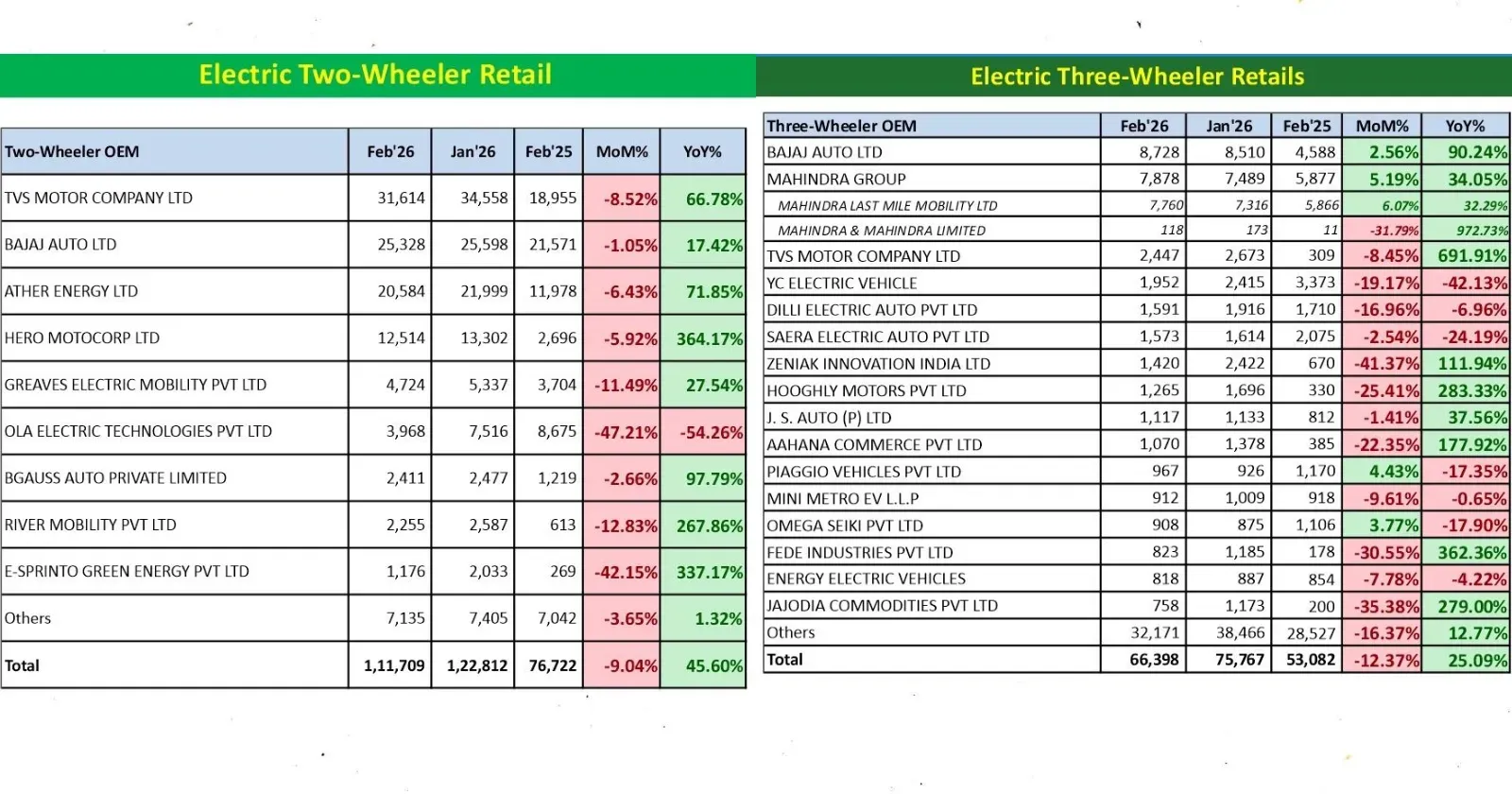
Electric three-wheelers remain the most sought-after EV category in India. In February 2026, EVs accounted for 56.7 percent of total three-wheeler retail sales, underscoring how rapidly electrification has taken hold in this segment. Retail sales reached 66,398 units, up 25 percent YoY, though volumes declined 12 percent compared with January.
Among manufacturers, Bajaj Auto led the market with 8,728 units, while Mahindra Group followed closely with 7,878 units. Within Mahindra’s lineup, its last-mile mobility arm continued to contribute the bulk of the company’s three-wheeler EV sales.
Also READ: BYD Unveils Blade Battery 2.0 with 1,000 km Range and Ultra-Fast Charging
Another notable development was the rapid scaling of established OEMs. TVS Motor Company posted nearly 700 percent YoY growth, reflecting the company’s aggressive push into the electric three-wheeler space. Despite the presence of major manufacturers, the segment remains fragmented. A large “others” category — comprising numerous smaller and regional players — accounted for more than 32,000 units, highlighting the continued role of smaller manufacturers in this market.
Passenger vehicle EV adoption gradually expanding
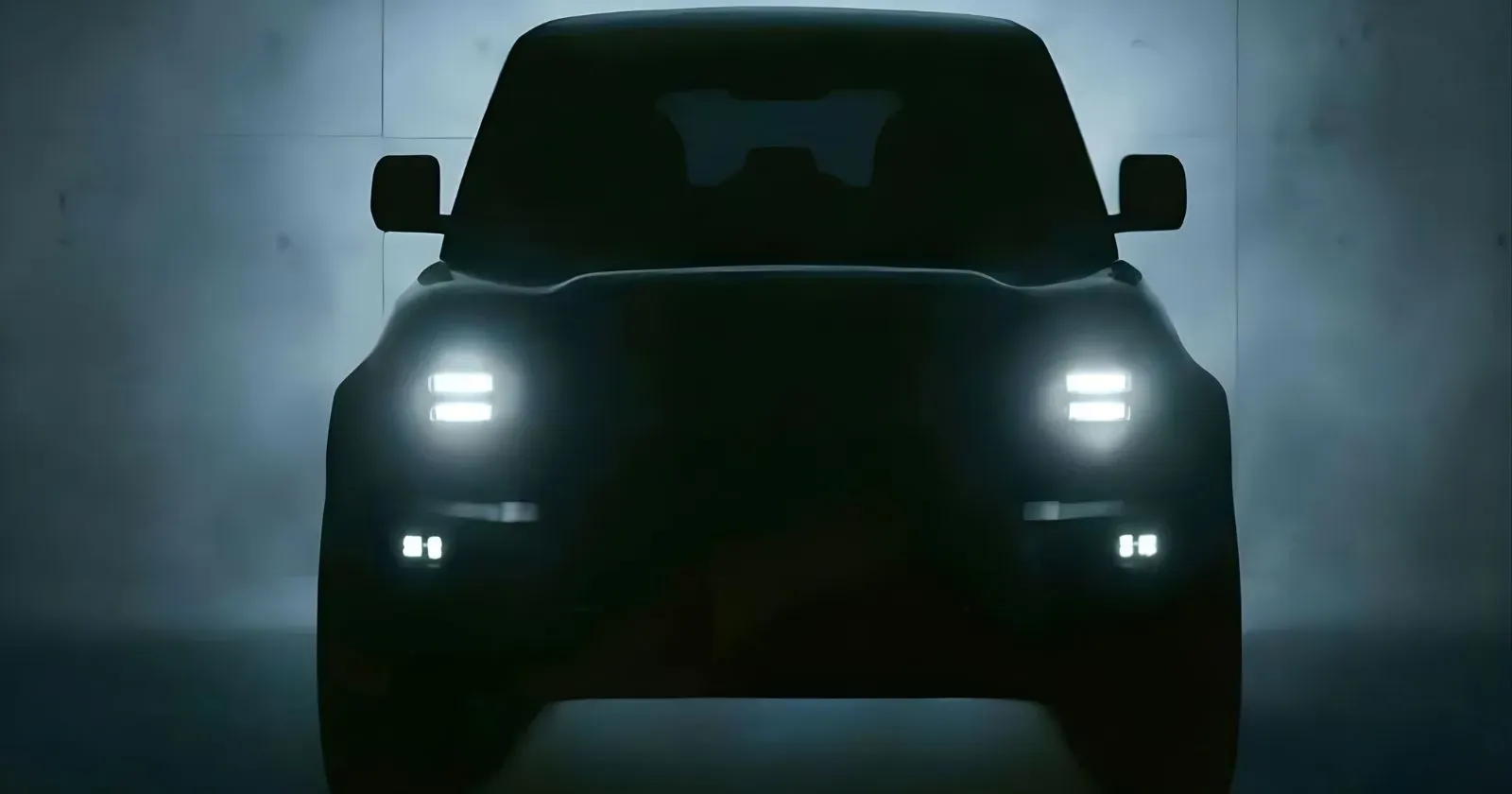
Electric passenger vehicles remain a relatively small but steadily growing part of India’s automotive market. In February 2026, EVs accounted for 3.5 percent of total passenger vehicle retail sales, up from 3 percent a year earlier. Total EV passenger vehicle retail sales stood at 13,733 units, representing 44.5 percent YoY growth. However, the segment experienced a 25.6 percent decline MoM, reflecting softer demand after stronger January volumes.
Tata Motors continued to dominate the segment with 5,568 units, maintaining its position as India’s largest electric car seller. Mahindra & Mahindra recorded one of the fastest growth rates in the category, with over 470 percent YoY expansion, indicating rising acceptance of its electric models.
Meanwhile, global EV brands are gradually increasing their presence in the Indian market. Companies such as BYD, BMW and Kia reported steady volumes during the month. VinFast also registered early sales in the country as it began to establish its footprint. However, several major players saw month-on-month declines in February, including JSW MG Motor India and Tata Motors, suggesting temporary demand fluctuations rather than a structural slowdown.
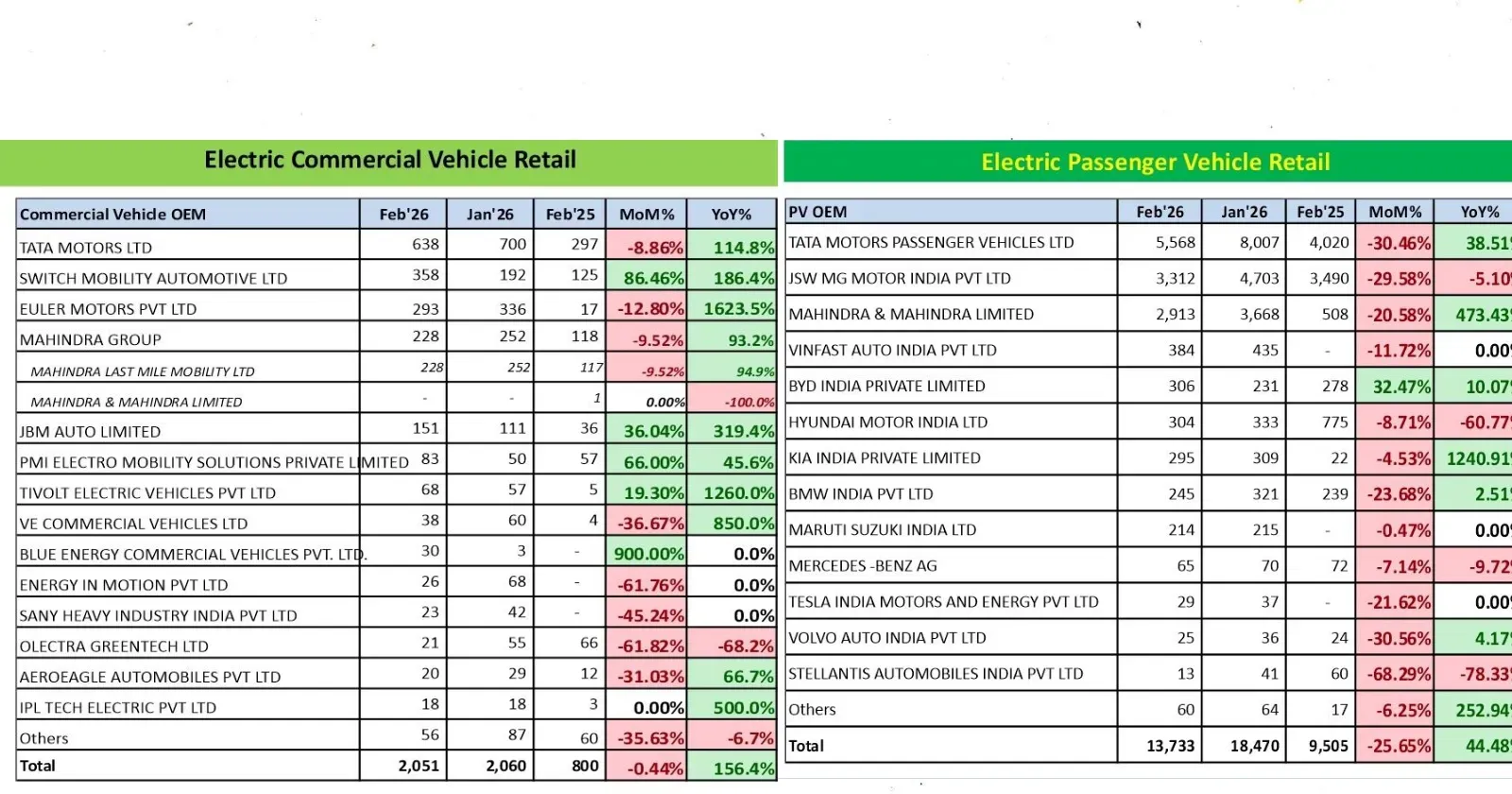
The electric commercial vehicle segment remains relatively small but is expanding quickly. Retail sales reached 2,051 units in February 2026, marking a 156 percent increase compared with the same month last year. MoM volumes were largely stable, declining only 0.44 percent. EV penetration in the commercial vehicle segment rose to 2.03 percent, almost doubling from 1.02 percent in February 2025.
Tata Motors remained the segment leader with 638 units, benefiting from its early investments in electric cargo and fleet vehicles. Several emerging manufacturers also reported rapid growth. Euler Motors recorded an impressive 1,600 percent year-on-year increase, while Switch Mobility posted 186 percent growth during the same period.
The segment is being driven largely by last-mile logistics and urban cargo transport, where electric vehicles offer lower operating costs and are increasingly preferred by fleet operators.